EXPLORING YOUR BIBLE

4%

Pacific Press Publishing Association · Mountain View, California, U. S. A. · Jul 8, 1930

FromSigns of the Times, Vol. 57, No. 26.

Read the full edition

EXPLORING YOUR BIBLE

with the guidance of an expert Bible teacher
Miss ROSE E. BOOSE

God's Old Testament Dwelling Place

MAY I ask you once more to take your Bibles and seek a quiet place, and we will continue to study the unfolding of the wonderful plan of redemption as revealed in the Old Testament.
From Eden to the Exodus the service by which the people approached unto God was very simple, consisting of the offering of a lamb for sin, upon an altar made of rough stones. The father of each family acted as the priest, or mediator, between his family and God.
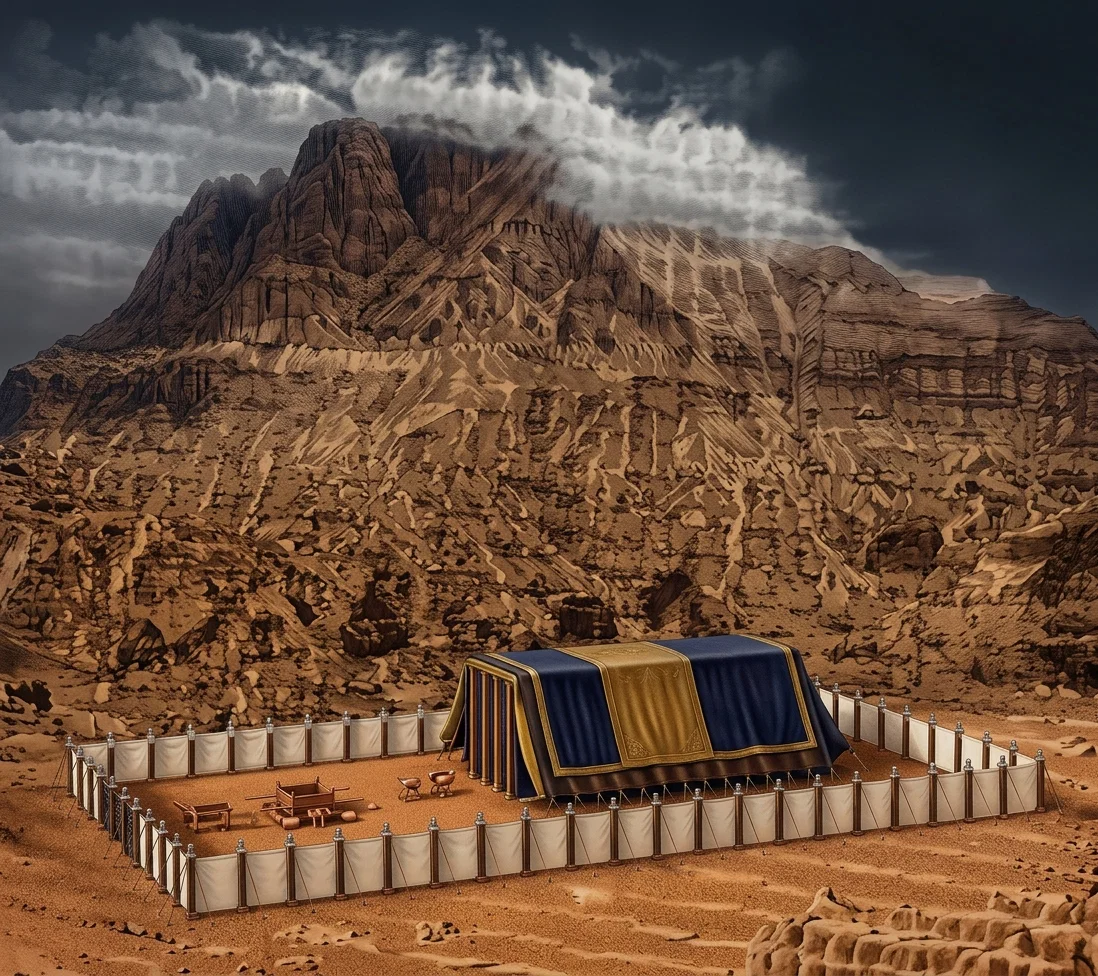
When God led Israel out of Egypt, He asked them to make a sanctuary, or dwelling place, for Him. He desired to dwell with them in order to reveal more fully His great love. In Exodus 25:1-8 we read in part: “Speak unto the children of Israel, that they bring Me an offering: of every man that giveth it willingly with his heart ye shall take My offering. And let them make Me a sanctuary; that I may dwell among them.” Explicit instructions were given as to the manner of its construction, which are found in Exodus, chapters 25-27, 30, 35-40.

HAD TWO APARTMENTS

The sanctuary was a portable structure, consisting of two apartments, which were separated by a beautiful curtain; and the entire structure was surrounded by a court. In the court was the altar of burnt offering and the laver. The first apartment was called the holy place, in which were the table of shewbread, the golden candlestick, and the altar of incense. Beyond the veil was the inner or most holy place. This contained the ark, which had for a covering the mercy seat, with the two cherubim, all made of pure gold. The cherubim were placed one at each end, and their wings overshadowed the mercy seat.
In the ark was the law of God. We read in Deuteronomy 10:1-5: “At that time the Lord said unto me, Hew thee two tables of stone like unto the first, and come up unto Me into the mount. . . . And I will write on the tables the words that were in the first tables which thou brakest, and thou shalt put them in the ark. And I made an ark, . . . and hewed two tables of stone like unto the first, and went up into the mount. . . . And He wrote on the tables . . . the Ten Commandments. . . . And I turned myself and came down from the mount, and put the tables in the ark which I had made; and there they be, as the Lord commanded me.”

THE HOLY SHEKINAH

When the sanctuary was completed, “the glory of the Lord filled the tabernacle” (Exodus 40:34) and the visible presence of God settled in the most holy place, between the cherubim, above the mercy seat, the place designated by God to be His dwelling place. (Exodus 25:22; Psalm 99:1.) The Hebrews spoke of this visible glory as the Holy Shekinah, which means the Divine Presence.
The sanctuary would be meaningless without the priesthood, and God Himself chose the one best qualified to serve in that capacity. Moses was commanded, “Take thou unto thee Aaron thy brother, and his sons with him.” “And thou shalt . . . anoint them, and consecrate them, and sanctify them, that they may minister unto Me in the priest’s office.” Exodus 28:1, 41. After their consecration, which lasted seven days, and is fully described in Exodus 29 and Leviticus 8, God publicly accepted them by sending fire to consume the first offering made by Aaron for the people in the capacity of their high priest. (Leviticus 9:2-6, 22-24.) From this time Aaron was the earthly mediator appointed of God to minister between Him and the people.
There was a daily round of service conducted in the sanctuary, which is described in Exodus 29:38-46. It consisted of the offering of two lambs daily, one in the morning and one in the evening. At the same time incense was offered in the first apartment, and the entire congregation met at the entrance of the court for prayers. (Luke 1:8-10.)

FAITH IN CHRIST

The morning and evening offering offered for the congregation at the time of prayers was a daily reminder to them of the sacrifice of Christ, and that only through His death could they have access to God. Romans 5:10 tells us: “We were reconciled to God by the death of His Son,” the Lamb of reconciliation; and again, we are “saved by His life,” of which the fragrant incense was a beautiful type, for we read that the Father was “well pleased” with the life of Christ. (Matthew 3:17; Hebrews 1:9; Ephesians 5:2.)
This daily service was for the whole congregation, and did not deal with the individual sins; nor was it a direct means of manifesting individual faith in the Lamb of God, who was represented by these offerings. In Leviticus the fourth chapter we learn of the manner in which this individual approach was effected. The need for the sin offering is presented thus: “If a soul shall sin through ignorance against any of the commandments of the Lord concerning things which ought not to be done, and shall do against any of them;” “if his sin, wherein he hath sinned, come to his knowledge; he shall bring his offering.” Leviticus 4:2, 23. Again, in Leviticus 5:3-5 it is clearly stated that the guilt is charged when the transgression comes to one’s knowledge. “When he knoweth of it, then shall he be guilty. . . . And it shall be, when he shall be guilty in one of these things, that he shall confess that he hath sinned in that thing.”
The tabernacle in the wilderness
The congregation was divided into four groups: the priests, the congregation, the rulers, and the common people. The manner for the priests to present their individual sin offerings was this: “If the priest that is anointed do sin; . . . then let him bring for his sin, which he hath sinned, a young bullock without blemish unto the Lord for a sin offering. And he shall bring the bullock unto the door of the tabernacle of the congregation before the Lord; and shall lay his hand upon the bullock’s head, and kill the bullock before the Lord. And the priest that is anointed shall take of the bullock’s blood, . . . and sprinkle of the blood seven times before the Lord, before the veil of the sanctuary.” Leviticus 4:3-12. When the priest placed his hand upon the head of the bullock, he confessed his sins and in figure transferred his sins to the innocent victim. The bullock was slain. He died instead of the priest who had sinned, and the blood was presented to the Lord for an atonement. We read: “The life of the flesh is in the blood: it is the blood that maketh an atonement for the soul.” Leviticus 17:11.
The offering for the congregation is recorded in Leviticus 4:13-21. This also required a bullock for an offering. The elders, who represented the people, confessed the sin, and the sins were transferred to the sanctuary by the sprinkling of the blood, in the same manner as that of the priests.
The offering for the rulers is given inverses 22-26, and for the common people in verses 27-35. The only difference in these offerings is this: the rulers brought a male goat and the common people a female. “When a ruler hath sinned, . . . if his sin . . . come to his knowledge; he shall bring his offering, a kid of the goats, a male without blemish.” He then confessed his sin on the goat and slew it. The blood of this offering was poured at the bottom of the altar of burnt offering. According to Leviticus 6:25-30 the priest who offered this sin offering was to eat part of the flesh, thus voluntarily taking the sins of the people upon himself, and the “priest shall make an atonement for him as concerning his sin, and it shall be forgiven him.” Leviticus 4:26. Here we see that not only was the lamb a type of Christ, as our sin offering; but the priest typifies Christ, when he takes upon himself, through the eating of the sinful flesh, the infirmities of the people and enters into the presence of God in their behalf. It is said of Christ, “He hath made Him to be sin for us, who knew no sin; that we might be made the righteousness of God in Him.” 2 Corinthians 5:21. And when He ascended on high, He was “set on the right hand of the throne of the Majesty in the heavens,” there “to appear in the presence of God for us.” Hebrews 8:1; 9:24.
In this manner all the sins that were confessed were transferred, or registered, in the sanctuary. Those of the priests and congregation were taken by the sprinkled blood before the veil; and the priest carried the sins of the rulers and the common people in his own body to make an atonement for them.
These sins were not to be kept on record, as it were, indefinitely, but God graciously provided means whereby they were removed from the sanctuary, never again to be remembered. The service in which this was accomplished was ordained for the tenth day of the seventh month, and was called the day of atonement. This subject will be considered in our next study.