A VERY OLD IDEA

3%

Pacific Press Publishing Association · Mountain View, California, U.S.A. · Oct 28, 1930

FromSigns of the Times, Vol. 57, No. 42.

Read the full edition

A VERY OLD IDEA

From the time that men began to form themselves into nations, it has been their nature and their ambition to get as much power into their hands as possible, and to extend the borders of their domains as far as they possibly could. No great ruler seems to be satisfied with what he has; he is always dreaming of ways and means of extending his power and dominion to the fullest possible extent. To the most ambitious, nothing short of the dominion of the whole world would satisfy. For this reason, from time to time men have dreamed of subduing all the smaller nations and forming for themselves a universal kingdom.

A VERY OLD IDEA

This is not a new thing by any means, for even as far back as the Flood men seem to have been obsessed with this universal kingdom idea. We read in the Old Testament Scriptures of Nimrod, one of the great-grandsons of Noah, who undertook to unite all the people under one government and, with himself at the head, to set up a kingdom that he hoped would eventually occupy the whole world. He aspired to becoming a world-wide monarch. God showed His displeasure in the plans of this man by destroying the great tower that he and his men had built and scattering them to the four corners of the earth.
From that time on down to this, various men have had the same dream that Nimrod had, and at various times in the world's history have undertaken to unite the scattered tribes of the earth under one central control. Nebuchadnezzar, king of Babylon, who flourished about six hundred years before Christ, was the first man really to make much progress in this direction. He seems to have gathered under his control at least one hundred twenty provinces, comprising most of the then-known world. But even during his lifetime God made known to him that his kingdom would not stand forever, and that his dream of establishing a universal and everlasting kingdom would come to naught. Later on, Medo-Persia, Grecia, and Rome in their turn tried the same thing, and each met the same fate. Rome was hopelessly divided up into a number of small states, only the remnants of which are found in Europe to-day.

WORLD-RENOWNED RELIGIOUS LEADERS

At different times great kings and military leaders have undertaken to unite these scattered states and build up another great world-wide kingdom. Charlemagne of France tried it; later on Napoleon tried it, and both of them failed in accomplishing what they set out to do. The last man to give a trial to such a plan was William of Germany. He, too, failed in his purpose, and in the struggle lost his power altogether.
Just as great kings and political leaders have, at different times in the history of the world, arisen and for a time exercised considerable influence in the earth, so also there have at various times and in different places arisen great and influential religious leaders. The influences of some of these men have spread over many countries and for many centuries. Some of these have been bad and some have been good. Greatness and goodness do not always go together. Any man who is able to influence the world to such an extent that he is deified in the minds of the people of his time, could be said, in a way, to be a great man. But it does not necessarily follow that because he was a great and influential man his teachings are good. That noted Frenchman, Rousseau, who lived in the eighteenth century, was a wonderful man, and had an immense influence over education. His ideas along educational lines were adopted by leading educationalists of his time, and in this way he affected the education of the children of most of the world during the nineteenth century. It was also largely due to his efforts that the French Revolution took place. From an intellectual viewpoint he was certainly a great man, but it is said of him that his character was anything but good, that he was a sensualist and full of despicable meanness.
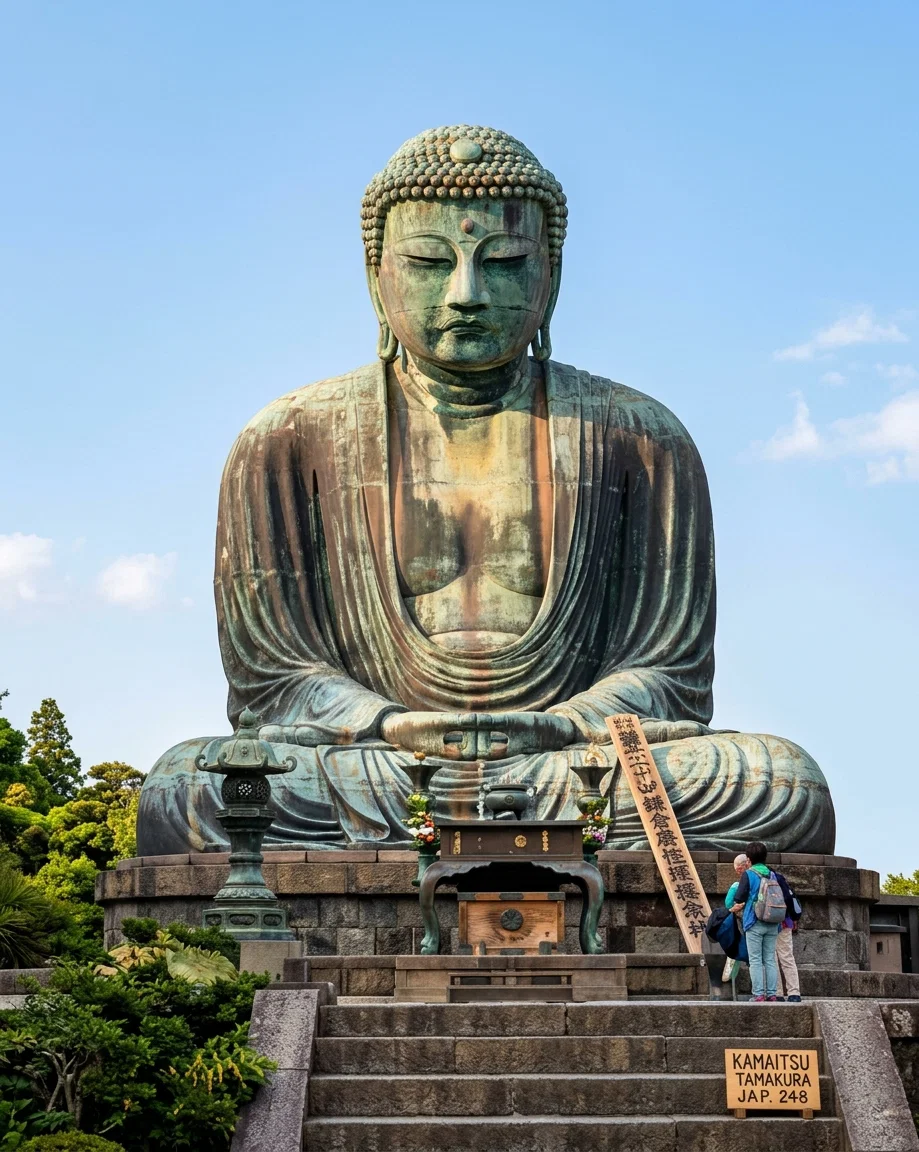
There have even been founders of religions that have held, for centuries, multitudes of men; but if we compare them with Christian standards and morals, they fall very short of what every man should strive to be. Plato and Socrates of Greece, Confucius in China, and Buddha in India are four great teachers who have given systems of thought and morality that have lasted for centuries. These systems, though they are the greatest examples of what mortal man can offer to the world, all have their weaknesses and limitations. They are the children of their age. They sum up and collect together the best aspirations and ideals of their fellow countrymen, but they do not present a perfect plan for man's salvation.

LIMITED SYSTEMS OF RELIGION

After all, what more could be expected of these leaders than what they did, for they were only men, surrounded and influenced by their fellow men. They felt the great need of some system of religion that would help their people. What they gave to their people was of necessity more or less of a national nature. It could have been nothing else. What Buddha taught was more suitable for the people of a country like India than any other, and probably he would not have been accepted by any other people or in any other time than that in which he lived, even in India.
In like manner, the teachings of Plato and Socrates would not have been acceptable to anyone except the Greeks. They were Greeks, and Greeks understood and appreciated their teachings; outside of that country they probably would not have been accepted at all. Mohammedanism and Hinduism appealed to the people of Arabia and India, but it is not likely that these religious systems would have been accepted in other countries as they were in these. They are of necessity local in their nature, and all show the same limitations and weaknesses, in that they leave out the all-important factor of providing for lost and sinful man a satisfactory way of escaping from the penalty of his sins. No mediator, no sacrifice, no Saviour, is provided for men. And this is the very thing that is needed by all men, whether they be Greeks, Indians, Arabs, Europeans, Chinese, or any other nationality. The religion that provides this very important thing is the true religion, the universal religion,—the religion that is needed, not by just some particular section or portion of the earth, but by all the world.
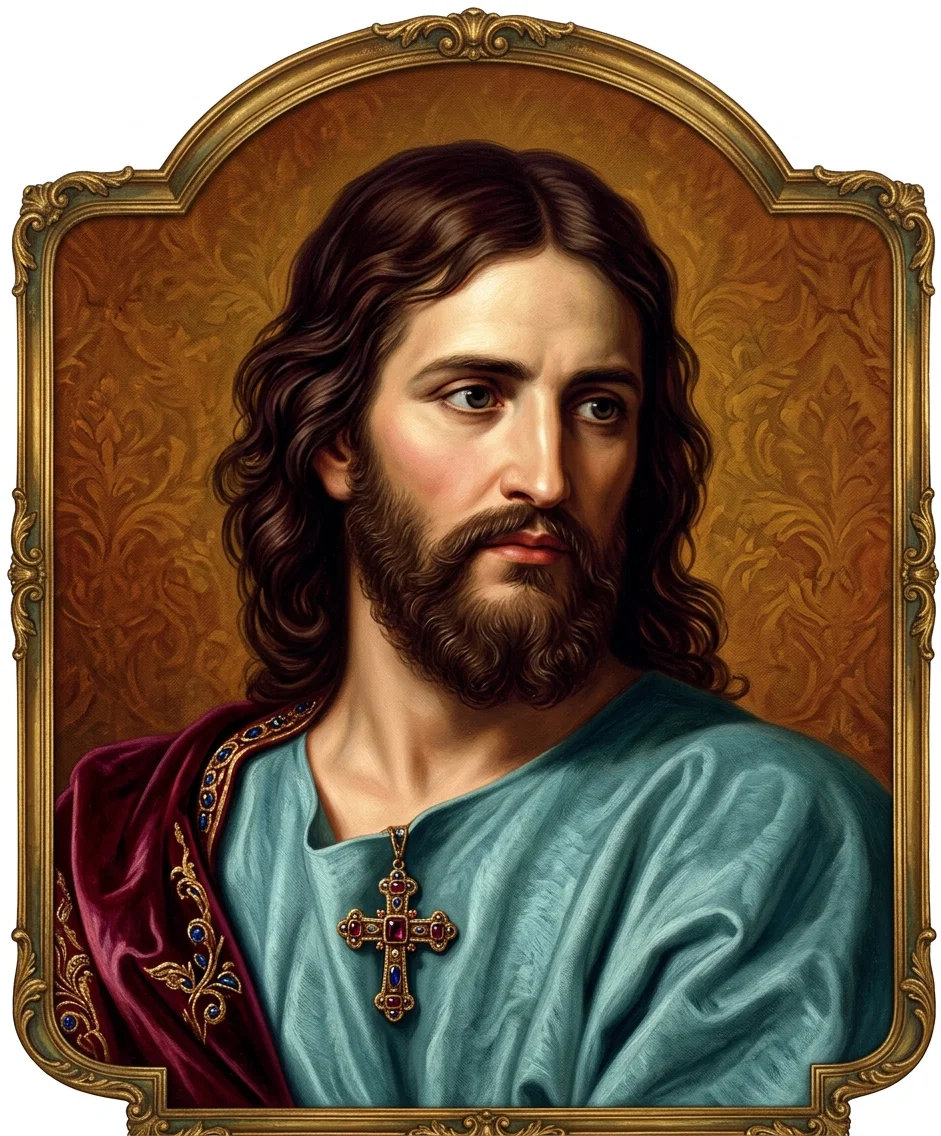
Christ is the founder of Christianity. His religion, like Himself, is free from the limitations seen in the other religions of the world. He is the only one in all the history of the human family who challenges these limitations. He stood free from the spirit of His age, from the political strife and commotion that were paramount in His time, and was separated from the customs and usages of His people and His country. The methods of thought popular in His day did not appeal to Him. So different was He from the popular teachers and leaders of His day that He was not understood, and was even rejected by many of His own people. The things that He taught, however, were applicable to His people and to His time, as they are to the world to-day. They were universal in their nature, applicable to every race, and to all time. It has been well said that “Christianity does not compare itself with other religions. It challenges them.”
Our Lord Jesus Christ was born in Palestine, of Jewish parentage. His mother was of the royal house of King David. He was brought up a Jew, and knew the Jewish religion thoroughly. He studied it as a boy; and as a young man, while toiling away at the carpenter’s bench with Joseph, the study of the Jewish religion was His constant theme. At the age of twelve He astonished and baffled the rabbis and teachers of the law at Jerusalem. Though He was so thoroughly grounded in the tenets of His mother’s religion, He was not limited by His country’s ways of thought, or by the circumstances of the age in which He lived.
Of Christ alone can it be said that He could have been born and lived in any other country than Palestine. He could have been born in England, in Africa, or in China. He could have lived in any age of this world’s history, and yet His life would have been just the same as it was, and His teachings would have been just what they were. He would have met the same death that He met, would have been resurrected just the same, and we would have had the same gospel story that we have now. Jesus was not the Saviour because He was a Jew or because He was born in Palestine, but because He was a perfect man, the Son of God. The only reason He was born in Palestine and brought up as a Jew was that God chose that race as the one in which He would have His Son be born. He could have chosen any other race or any other country, and the results would have been just the same.

NOT LIMITED BY NATIONALISM

Every other religious leader that has ever arisen has been hampered and limited by the fact that he was closely tied and influenced by his own national ideas and the spirit of his time. Christ was not so, and for this reason He stands aloof and alone from all other founders of religious systems. This is why His claims to be the world's Saviour are hard to stifle or reject. Though He was a Jew, He had no Jewish outlook. He was above and beyond a national religion. He never spoke to the Jews as Jews, but as men, as members of the human race, just as He would have spoken to anyone else.
The universal nature of Christ, the Founder of Christianity—because He was not restricted or limited by the national ideas and aspirations of the nation in which He happened to be born—is the reason that the religion of Jesus Christ is capable of being accepted and lived by all the nations of the earth. It had its beginning among the Jews of Palestine, because Jesus was a Jew. If He had been a Chinese, Christianity would have had its beginning in China. The apostles would have been Chinese, and we would have had the gospels in the Chinese language, but the principles of the religion would have been just the same.

CHRISTIANITY WIDESPREAD

From the Jews Christianity went to the Greeks and to the Romans. The English people received it from the Roman Empire. It came to them in a Latin dress, and they had to translate it into their own forms of thought, and absorb it. From the English and other European nations it has gone to India, China, Africa, Japan, and the islands of the sea. It has been passed on to the nations of the world in more or less of a European dress because of the fact that the Europeans have taken it to them. This does not mean, however, that because the Europeans have brought Christianity to India, or China, it is a European religion. It is the religion of Jesus Christ; and just as He was a man who stood far above and beyond any
and all national ideals and conceptions, so His religion is for all nations, and is not to be tied down by the national ideals and limitations of any nation.
Those to whom it appeals, no matter what their nationality, are to translate its principles into their mode of thought, and absorb it into their national life, just as did the Greeks and Romans who received it from the Jews, and as did the English who received it from the Romans. Even if a nation receives Christianity from an alien race, yet it can make it its own possession. In doing this, however, each nation must be careful not to let its ambition to make the religion of Jesus Christ its very own and to free it from the peculiarities of the nation that brought it cause it to leave out Jesus. Jesus the Saviour, the great Sacrifice for sin, the resurrected Christ, must remain forever the central factor in Christianity wherever it goes.

CHRIST THE UNIVERSAL KING

The fact that Jesus Christ could be the founder of a religion and a church that can suit all nations, no matter what they are in civilization or how different they may be in racial characteristics, is what makes Him the universal King and makes it possible for Him to become the one and only Saviour of the world. At the present time, in every continent, and among every race in the world, Jesus Christ is accepted and followed. What other religion can make such a claim? He speaks to them all—English, Germans, Chinese, Indians, or Africans—as men, who share the common humanity with Himself.
Yes, Jesus is the universal King, and His religion, Christianity, is the universal religion. It was intended for the whole world, and to the whole world it must go. One of the last things that Jesus said just before His return to heaven was, “This gospel of the kingdom shall be preached in all the world for a witness unto all nations; and then shall the end come.” Matthew 24:14.
John, one of the disciples of Christ, in prophetic vision looked down through the ages and saw a great religious movement on in the
An image of the Buddha, or Hindu sage, who lived and taught his ideas of religion about the sixth century before Christ. The influence of Buddhism is limited to areas in India and east and central Asia.

A Universal Religion

(Continued from page 9)
world and, in describing what he saw, said, “I saw another angel fly in the midst of heaven, having the everlasting gospel to preach unto them that dwell on the earth, and to every nation, and kindred, and tongue, and people, saying with a loud voice, Fear God, and give glory to Him; for the hour of His judgment is come: and worship Him that made heaven, and earth, and the sea, and the fountains of waters.” Revelation 14:6, 7.
The gospel of the kingdom of Christ is making rapid strides in the earth to-day. It will not be long until the prophecies of Christ and of John will be completely fulfilled and the name of Christ will be honored and exalted throughout the universe of God.
Christ, whose system of religion has entered every country under the sun and whose influence is felt all over the world regardless of racial distinctions and social exclusiveness.