Some Results in Chile

2%

Review and Herald Publishing Association · Washington, D.C. · Nov 5, 1903

FromReview and Herald, Vol. 80, No. 44.

Read the full edition

Some Results in Chile

H. F. KETRING
One who has the privilege of going from place to place with this message of mercy has many opportunities of seeing the manifold ways in which the Lord works to impress souls with his truth. My family and I spent one winter in the north, much of the time in Copiapo. Brother Davis, one of our missionary canvassers, had spent a few weeks of faithful labor here, as the result of which a small company of Sabbath-keepers was raised up. They are all native Chileans, and of the poorer classes, as are the majority of those who are converted in this country. Working for them is different from working for the poor classes at home, as this field has been held under the debasing and superstitious influence of the Church of Rome for so many centuries that they are drunken with the wine of Babylon. But the power of the gospel, the complete and thorough conversion, appears like a greater miracle, and the way the Lord works to enlighten them causes one to marvel.
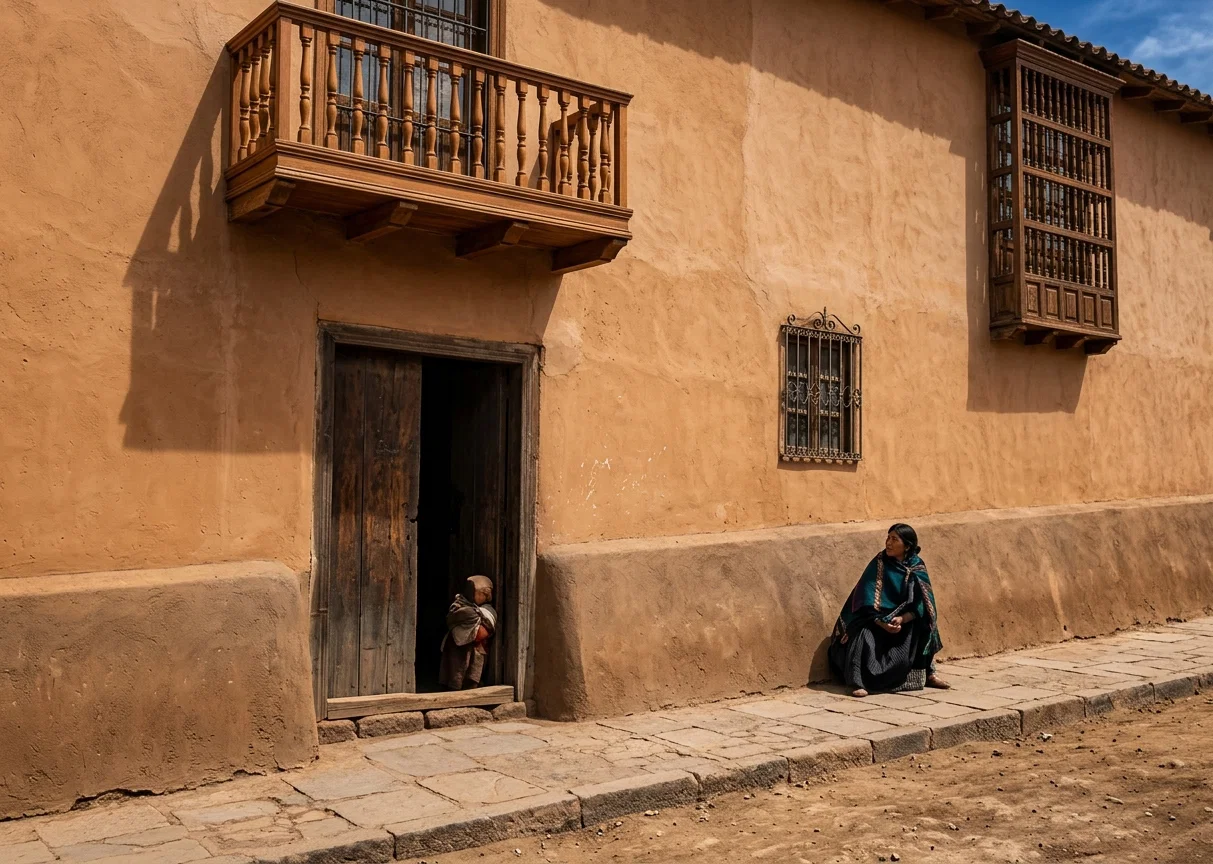
A HOME AMONG THE POOR IN CHILE
I will relate one circumstance, which will show what wonders God has wrought. After having been away from Copiapo, laboring in another part for a few weeks, I returned one Sunday to make my last visit with them. I went that evening to the house of one of the brethren, who bakes pies and sells them. A year before, when he began to observe the Sabbath, he could not read. Now he can read the Bible well, having learned by studying present truth. The week before I arrived, he received a letter from the pastor of his former church, calling him to appear before the consistory of the
church on Sunday evening, to answer for some matters pertaining to his Christian life. I went with him to the evening service at eight o'clock. After it was over, we met the pastor in the hall. He is an American. He spoke very coldly to me, and then asked the brother, in Spanish, if he wanted to remain for the consistory. He said that he did, and the pastor told him to go into the other room, but I was not permitted to be present with him. I told him that I would wait for him outside the church. For just an hour and a half I walked up and down in front of the building, praying for him, while he was answering for his faith before the pastor and two elders. When at last he came out, I could see by his countenance that he had gained a victory. He then told me the questions that were asked him, and the answers that he gave. They were as follows:—
Pastor.—Why do you not attend the services of the church?
Emmanuel.—Because I keep the Sabbath, and have to work on Sunday.
P.—But do you not recognize the work and resurrection of Christ?
E.—Christ did not come to abrogate the Sabbath.
P.—But the law and the Sabbath were for the Jews.
E.—“Fear God, and keep his commandments: for this is the whole duty of man.” Eccl. 12: 13.
P.—Who said that?
E.—Solomon.
P.—But that was for the olden times.
E.—Christ is the same yesterday, today, and forever.
P.—Then we are lost, because we do not keep the commandments?
E.—“Blessed are they that do his commandments, that they may have right to the tree of life, and may enter in through the gates into the city.” Rev. 22: 14.
P.—But we are under the covenant that God made with Abraham, which the Israelites broke.
E.—Who among the Israelites broke the covenant of God—those who observed the Sabbath, or those who did not?
P.—Those who did not.
E.—If the Israelites disobeyed the Sabbath, and thus broke God's covenant, would not we also break it by disobeying the Sabbath?
P.—But it is impossible to keep the law.
E.—It is impossible for a man to keep it in his own strength; but with God all things are possible.
P.—
E.—The psalmist said that his delight was in the law of God, and in his law doth he meditate day and night.
P.—
E.—The Lord also says that the Sabbath is his sign, or seal.
P.—But it says Sabbaths—plural.
E.—Show me.
P.—(Reading) “And hallow my Sabbaths; and they shall be a sign,” etc. Eze. 20: 20.
E.—But it does not say the Sabbaths; it says my Sabbaths, and every seventh day is the Lord's Sabbath.
P.—
E.—It was the custom of Paul to observe the Sabbath, and to preach on that day.
P.—Show me.
E.—(Reading Acts 17: 1, 2.)
P.—That was among the Jews.
E.—That was after the resurrection, and if Paul taught the people to keep Sunday, and had the custom himself of preaching on the Sabbath, his life was contrary to his preaching. But it does not say it was his custom to keep Sunday.
P.—The elder, then, your pastor [speaking of me] lives contrary to his preaching, for he came here to the service this evening.
E.—He came here to show the love of God.
P.—Then how do you show the love of God when you do not come?
E.—Does the love of God pertain only to the meeting-house? The Lord teaches me to manifest God in all places. If I meet you on the street, or in any other place, I love you just the same. But I have to work; and it is impossible for me to attend the services of your church on Sunday.
After telling him that they would again have a talk with him, they told him to go.
Who would not praise God for such a work? Who would say that laboring among these people does not pay? Who would refuse to say, “Here am I; sendme,” when the Lord calls for some to go and hunt out these people and teach them the truth? To be sure, all are not like this brother. But if one spent a whole year in hunting, and found only one, would it not be worth his labor, when our Saviour would have died had he known that only one would accept him? We need many workers who will come to Chile to find those who are willing to serve God. Are there not those who are waiting for a bidding from the Master?
Iquique, Chile.