Porto Rico

4%

Seventh-day Adventist Publishing Association · Battle Creek, Mich. · Oct 28, 1902

FromReview and Herald, Vol. 79, No. 43.

Read the full edition

Porto Rico

Its Needs and Possibilities

MRS. IDA M. FISCHER
LOOKING at it not only from a financial, but from a missionary point of view, no acquisition of territory by the United States presents a wider field than this little island.
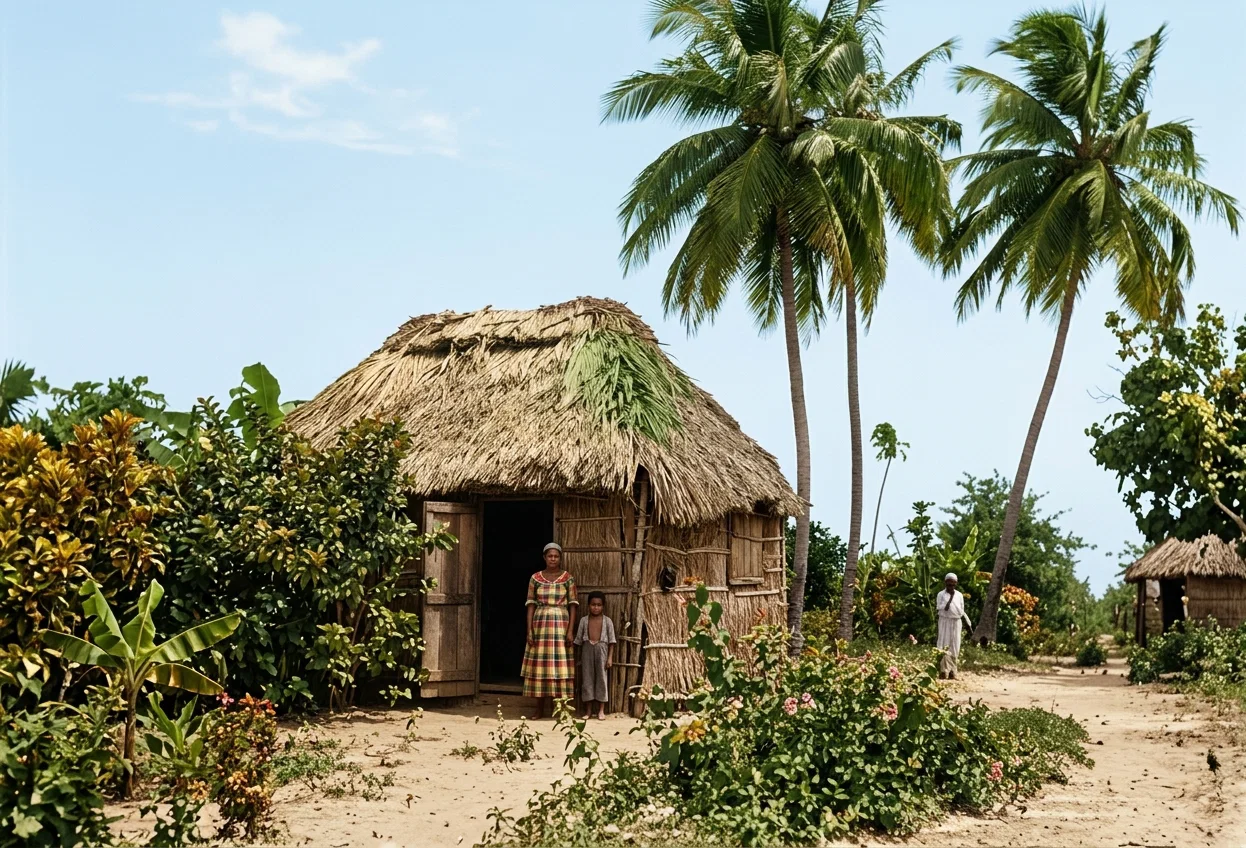
A PORTO RICAN HOME
A PORTO RICAN HOME
The towns and villages are almost entirely Spanish, in both architecture and people. San Juan, the capital, rising as it were out of the sea, with the massive walls of Morro Castle, Fort Cristobal, the Palace, Casa Blanca, and the barracks, presents a picture, Spanish indeed, in all its grandeur. The tourist does not fail to take the steamer for a trip along the coast to Ponce, the second city in size, San Juan claiming to be the first. Most of the way between the ranges of mountains and the water, the level country appears, where grows the palm in all its beauty. Sugar cane is cultivated, and the tall chimneys of the sugar factories can be seen along the shore.
Generally, the vessel anchors at Humacao, the town proper having been built five miles inland because of fear of pirates. The next stop is at Arroyo, the port of Guyama, where sugar is loaded on the vessel. After several hours more of sailing, the tourist finds himself in Ponce.
In order to complete the tour, an overland trip is taken on the military road. Here the student of nature is lost to everything but the beautiful scenery around him,—steep mountains, broken into innumerable ridges, and little valleys, void of any timber save palms, bananas, and small trees, which afford a shade for the coffee shrub.
All along the road the monotony of the scenery is relieved by the little shacks made of grass, which seem to swarm with humanity. Although simpler in construction than many of the huts in the heart of Africa, they bear the name of home.
After traveling about twenty miles on the military road, one soon comes to Coamo Hot Springs. This place is considered the health retreat of the island. Many diseases are claimed to be cured by bathing in these springs. In fact, the benefits to be derived from their waters are recognized by many.
“The next point of interest is Aibonito Pass, the highest altitude on the road. It was here that the American army received word that the treaty had been signed by Spain. That they were planning an attack cannot be doubted, but because of its inaccessible and impregnable position, this would have proved unsuccessful.”
Cayey, the center of the tobacco district, soon comes to view, and one is surprised to see this plant being cultivated on such slopes, places where one would think nothing could be grown. But this is a characteristic of the soil here; if the land doesn't grow one thing, it will another.
One of the many needs of Porto Rico is capital. It is said that “Dr. Brioso, a member of the Executive Council, made a statement to the effect that the estimated money per capita in circulation is less than three dollars, and that of over thirty million dollars in mortgage loans outstanding, about thirteen million dollars is at twelve per cent interest, and the rest at higher rates; and these loans are said to be amply secured, and the interest promptly paid.”
When we stop to consider the possibilities of the island from an agricultural view, its untouched resources in sugar, coffee, fruit, cotton, and perhaps rubber, we question why men with means are holding back. During the winter months in the States, fruits and all the green vegetables sold in American markets, could be shipped, and excellent prices would be paid for them.
Many fincas (small property) and haciendas (large farms) are now standing idle, because the owners do not care to live on them, and are afraid to trust them to others.
The natives and their needs should appeal to us as a people.
The inhabitants are divided into three classes: “the Spanish and those of Spanish blood comprising most of the planters, bankers, and business men, and owning the bulk of the property; the natives, of somewhat mixed blood, constituting probably three quarters of the population; and the emancipated slaves.”
These natives are very poor, living in only one-room shacks, their diet consisting mostly of plantains, bananas, and a little rice. As a general thing they are good natured, polite, and kindly, not prone to drunkenness. During my stay here, I have seen only two drunken Porto Ricans. While they are not total abstainers, they seem to realize some of the dangers associated with liquor. It is said that they never mix their drinks, and while they use liquor almost constantly, they never use it to excess.
“Many of them are quick and anxious to learn, but the policy of the Spanish government and hierarchy for four hundred years has been to keep them in ignorance and subjection, and it has not yet dawned upon the average peon that there may be open to him the same opportunities and possibilities as to the dominant race.”
It is estimated that nearly eighty per cent of the entire population are illiterate. Much has been done by the United States in establishing schools and furnishing good teachers, but they also need manual training. As one writer has said, “Half a dozen institutions like Hampton and Tuskegee would accomplish more beneficial results than a thousand libraries in the United States.”
Four hundred years of superstition and oppression have made it hard for the people to grasp the truths of the gospel; there are some who are seeking for light and peace. Many of them are willing to read if they only had the literature. As I go among the people, they manifest an interest in the literature shown them, and seem to regret that they are forced to say, “Yo tengo no dinero” (“I have no money”), and when given or loaned tracts or books, they seem almost to devour them.
That the principles of the message are leaving their impressions upon the minds of some is shown by the interest manifested in our work. We are anxious that the truth may take hold of this people, that the life and character of Christ may be manifested in their lives.
This is a needy field; surely the needs of this people must reach the hearts of those who are anxious to see the gospel go to every creature.
Mayaguez, Porto Rico.