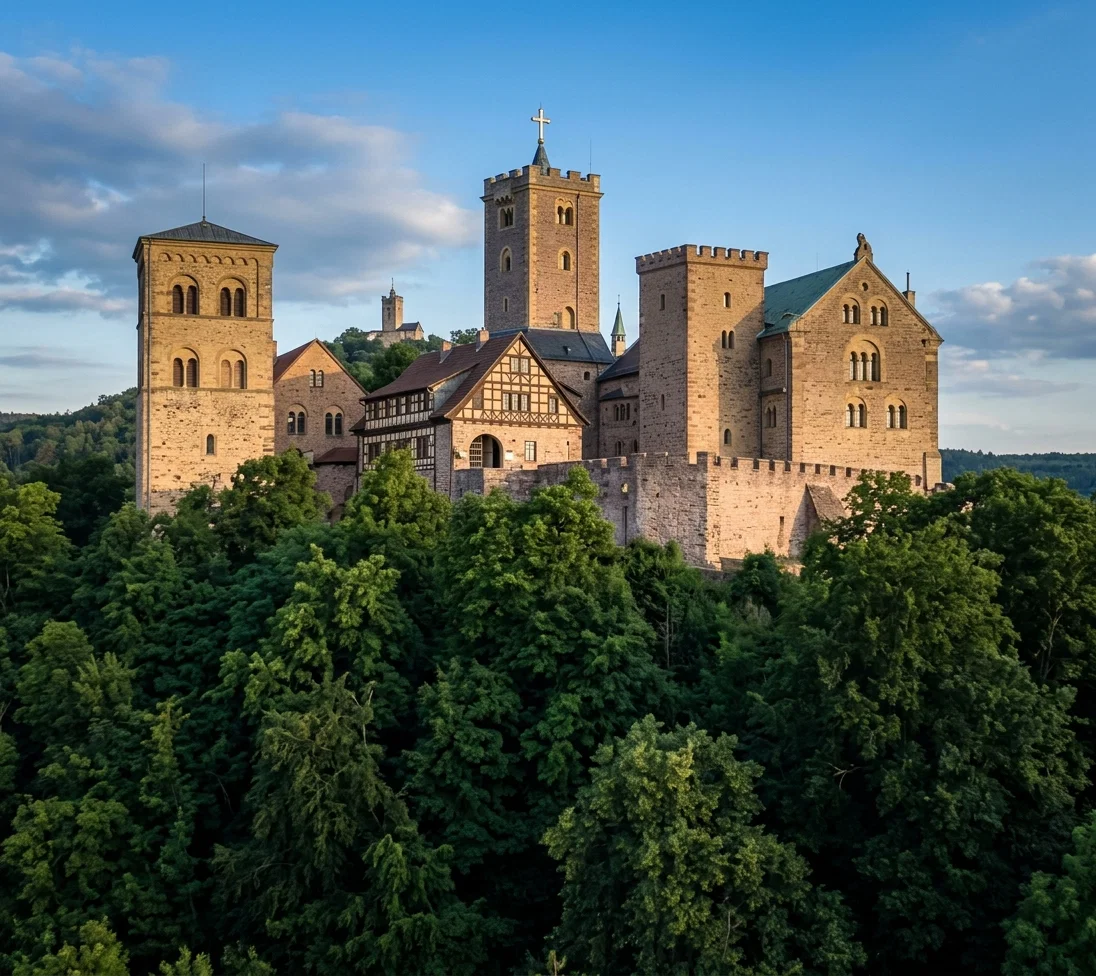
“About one hour before midnight they (the guards who had captured Luther) reached the foot of a mountain. The horses ascended slowly. On the summit was an old castle, surrounded on all sides, save that by which it was approached, by the black forests that cover the mountains of Thuringia. It was to this lofty and isolated fortress, named the Wartburg, where in former times the ancient landgraves had sheltered themselves, that Luther was conducted. The bolts were drawn back, the iron bars fell, the gates opened; the Reformer crossed the threshold; the doors were closed behind him. . . . ‘It was there,’ says Mathesius, his friend and biographer, ‘that the doctor abode, like St. Paul in his prison at Rome.’”—D’Aubigné’s History of the Reformation, Vol. II, pages 277, 278.