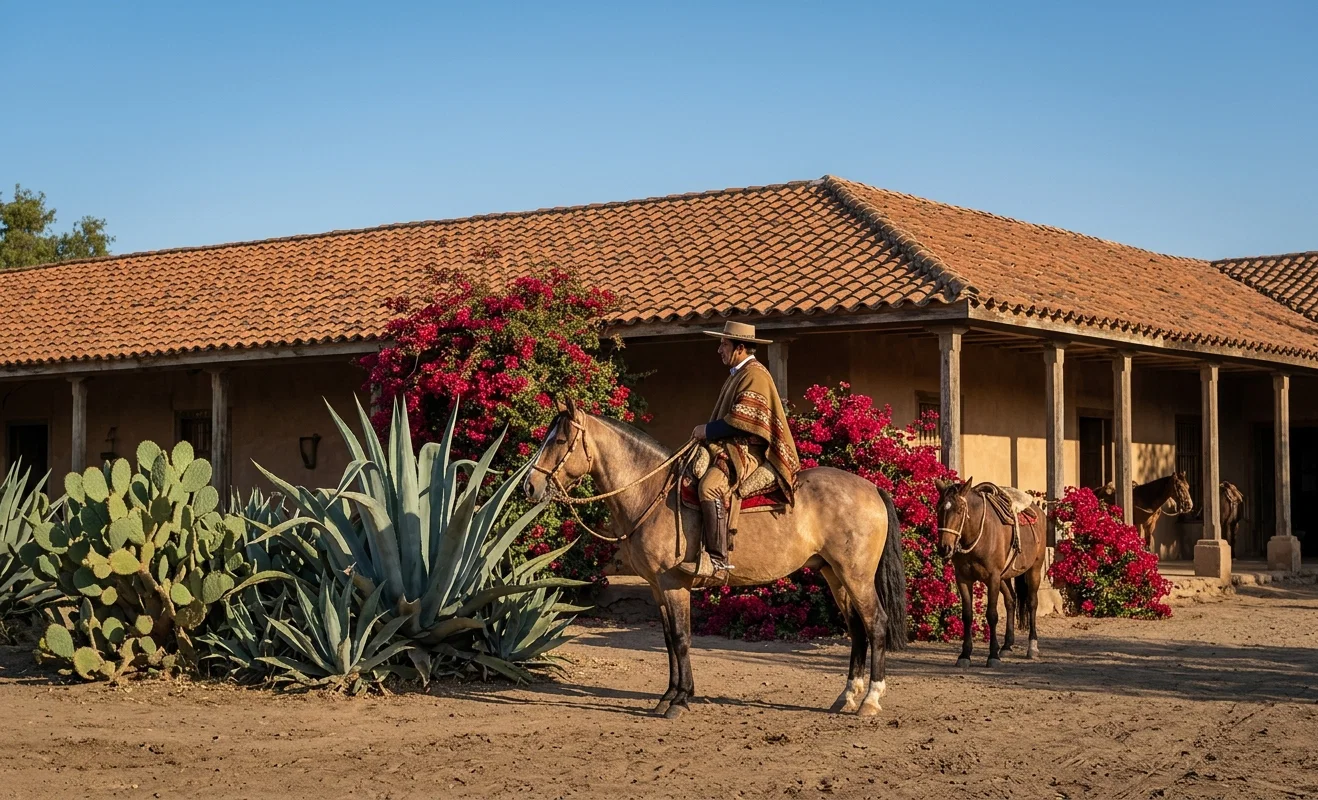
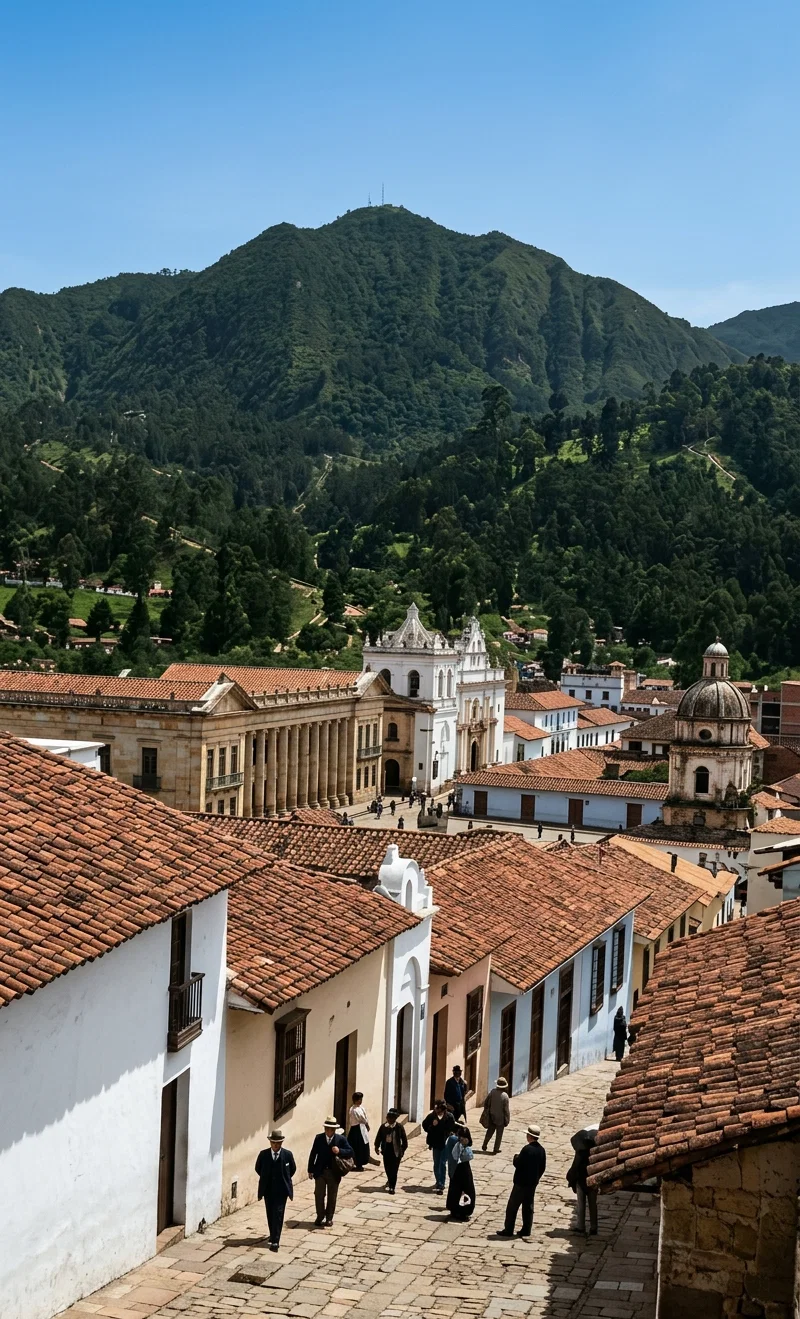
“Four thousand seven hundred miles long, and over three thousand wide—a stupendous continent, seven million square miles in area, nearly twice the size of Europe, containing one eighth of the land surface of the globe; the most magnificent system of river drainage in the world; a coast line eighteen thousand miles long; and two rocky-mountain chains of extraordinary magnitude and sublimity. It lies away in the western seas, between the Pacific and the Atlantic,—South America,—well called from a spiritual standpoint, the Neglected Continent.”
In this age of missionary enterprises, efforts have been made to carry the good news of salvation to various parts of the world. Following the explorer, and not infrequently conqueror, has gone the faithful missionary to bring a living Christ to the people. Explorations have been made with a special view to opening up new fields to missionary enterprise. In various lands mission stations have been established as centers of light and influence to draw men to the Saviour. For a hundred years and more, faithful messengers of God have gone to India, China, Japan, Africa, the North American Indians, the islands of the sea, and other darkened portions of the earth, to carry the gospel to their benighted inhabitants, until they may now be numbered by thousands. We are all glad of this, and wish that many more had gone. But one in the field will naturally inquire, “What has been done for South America?”
After the discovery of the Americas near the close of the fifteenth century, North America was opened up to the northern European nations, while South America was claimed by Spain and Portugal. The principles of the pure Protestant faith which resulted from the sixteenth century Reformation were brought by the Pilgrim Fathers and others to the British possessions of the new world, where, in the course of time, they obtained a firm foothold in civil as well as in private life, while South America was dominated by the See of Rome. For many years she held it under her complete control; and although the example of the United States in the recognition of better principles has done much to bring about a higher ideal in civil government, yet the blighting influence of Romish superstition and darkness is still only too plainly and painfully discernible. Where, in religious life, Romish superstition has lost its influence, unbelief and infidelity have taken its place. As regards the gospel, the people know nothing of it. Evidently the power to save from sin is unknown; and practically no effort has ever been made to evangelize them. It would seem as though South America was regarded as either being beyond hope, or else Catholicism was regarded as sufficient to save her. At any rate, she has been left to grope her way in darkness, “having no hope, and without God in the world.”
The total population of South America is approximately 37,000,000, divided among the several countries as follows:—Guianas, 390,000; Ecuador, 1,260,000; Peru, 3,000,000; Colombia, 4,200,000; Paraguay, 400,000; Bolivia, 1,450,000; Chili, 3,300,000; Brazil, 16,000,000; Uruguay, 750,000; Venezuela, 2,200,000; Argentina, 4,000,000.
Exclusive of the Guianas, there were in 1893, two hundred and sixteen Protestant missionaries of every class, including wives of the missionaries and helpers, among this vast number of people. Ecuador and Bolivia, with an aggregate population of three million, were, and as far as the writer knows, are still, without a single missionary. Venezuela had but one, while Uruguay and Paraguay each had five. Peru had nine, Colombia twelve, Argentina twenty-seven, Chili sixty-one, and Brazil one hundred and sixteen. This is an average of one missionary for every one hundred and seventy-five thousand of the people.
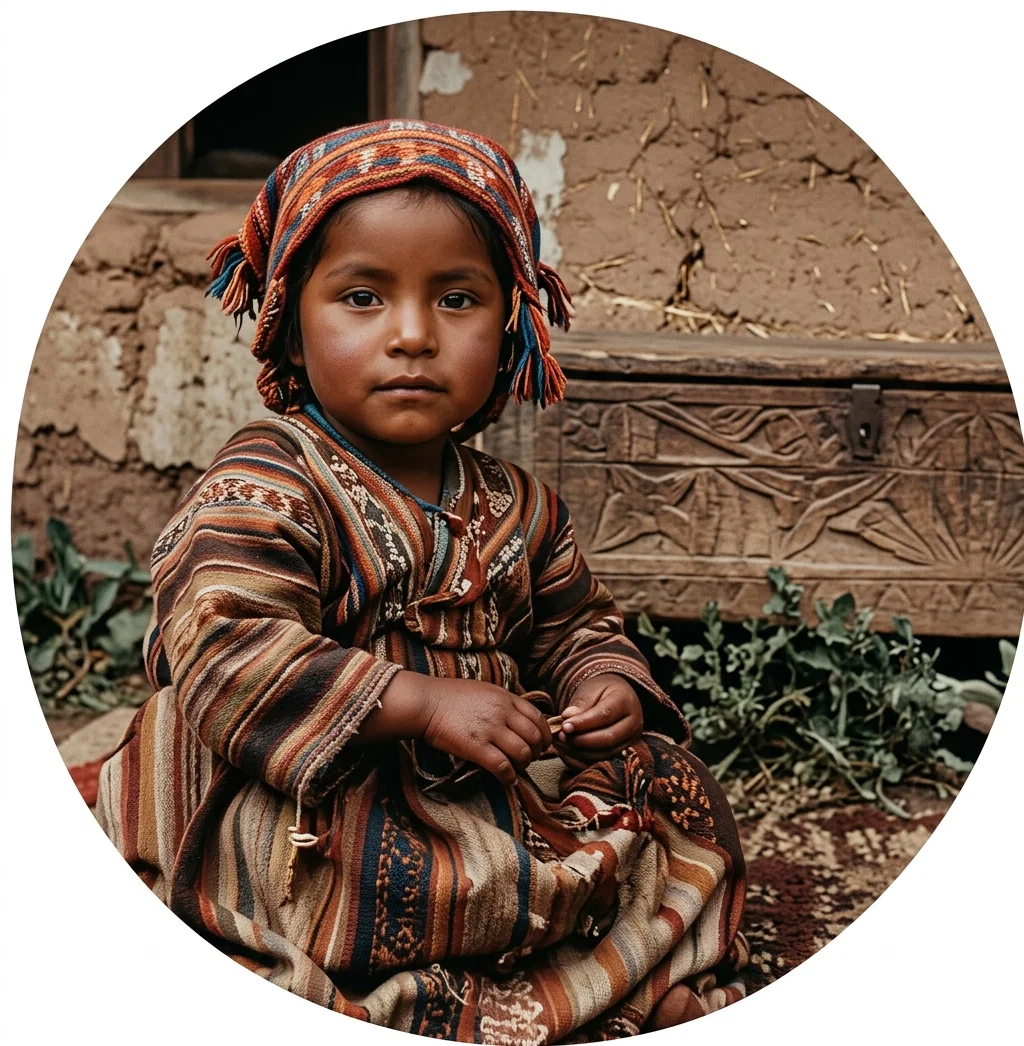
Besides the millions who have come from Southern Europe, or their immediate descendants, who have been reared in the bosom of Catholic superstition, and whose morals are indeed at a low ebb, there are five million Indians, who are still either in heathen darkness, or else have been further degraded by the influence of the papacy and Spanish and Portuguese civilization. While planting the visible cross everywhere, the early discoverers and conquerors of this vast region had one ruling mania—an insatiable lust for gold—one unalterable ambition—a determination to rule. To secure these, every principle of right and humanity was sacrificed. They came not to justify, but to condemn; not to save, but to destroy. Of the meaning of the cross in self-sacrifice, they knew nothing, and their history is one continuous story of the sacrifice of the lives of others. Millions of these aborigines perished through wars of conquest, wanton cruelties, and especially through forced labor (for they were literally worked to death), until nearly all whom the conquest had delivered into the hands of white employers had disappeared. Others, who fled to the mountains and forests, could not escape the epidemics that followed in the wake of the invaders. “Thus,” says one writer, “in the seventeenth century a great part of the natives perished.” Another says, “At the time of this mortality, it was supposed that the western aborigines were destined to disappear.”
But contrary to expectation, they survived. “After the period of decline,” says the author of “The Neglected Continent,” “the natives increased, some of the tribes advancing even at a more rapid rate than the whites, and to-day they display more vitality, more power of resisting the destructive forces, than the ‘red skins’ of North America. While the latter have either disappeared or been for the most part swept into ‘reserves,’ the former still constitute the substratum of the population in the land of their forefathers.”14
Of their present condition, Mr. Milne, of the American Bible Society, writes: ‘Since the Spanish conquest the progress of the Indian has been in the line of deterioration and moral degradation. Nor could it be otherwise: they are downtrodden by the landowners, who hold them as serfs; they are wronged by corrupt authorities, who always give the right to the man who has money; and they are oppressed by the Roman clergy, who can never drain contributions enough out of them, and who make the children render service to pay for masses for deceased parents and relatives.’
Up to 1894 attempts had been made in only four places to reach them with the gospel,—in the extreme south, in Paraguay, in Chili, and in the Amazon basin, the last of which, on account of climatic and other reasons, has been abandoned. Yet there are five millions of them, three millions of whom speak a single language,—the Quichau,—and who once formed the flourishing Inca empire, and over a million more who speak the Guarani. They are uneducated,—mentally, only children,—but not without latent intelligence. Only one of the Gospels has been translated into the former, and the sermon on the mount into the latter, language.
But if so little has been done in this field in the interests of the gospel in general, what shall we say for the special work for this time? A few of the countries have been entered, and the work has made a beginning. In Guiana, Brazil, Uruguay, Argentina, and Chili, seed has been sown, and the work has become established. In Paraguay, Elder E. W. Snyder has begun the work, and a few have accepted the faith. Elder Balada, of Chili, has gone to Lima, Peru, to begin the work, while other countries, as Bolivia and Ecuador, have not been touched. And what has been done for the millions of Indians?—Nothing, absolutely nothing. Shall not they, with the rest, hear the message?—Yes, for it is to go to every kindred, tongue, and people. From every tribe and nation there will be those who, because of the last message, will sing the song of Moses, the servant of God, and the song of the Lamb. A work must yet be done for all these people, and that in this generation. And who is to do it?—This people to whom God has intrusted it. The Lord has called us to do it. In the acceptance of Christ and his precious truth, we have assumed a work and a responsibility which we cannot lightly throw off.
‘In the great eternity beyond, among the many marvels that will burst upon the soul, this surely will be among the greatest, that the Son of God came to redeem the world, that certain individuals were chosen out from among mankind as a first fruits, that to them was committed the inconceivable honor of proclaiming the glad tidings of salvation to their fellow-creatures still in darkness, and that they did not do it.’