This was the challenging declaration of the Lambeth Conference, recently concluded in London, which has been reported especially for the “Signs of the Times” by
ARTHUR S. MAXWELL
Our London Correspondent
The Conference’s report on divorce and family life is also given in this article.
Judging by the reports in the daily press of many nations, it would seem as if the hundreds of bishops gathered together from all parts of the world for the great Lambeth Conference spent the whole month discussing the vexed question of birth control. On the contrary, this was but one of a large number of major matters considered, and it is a great pity that the general public should have been given such a warped impression of the Conference.
Immediately after the close of the Conference it was our privilege, in company with a few other representatives of the press, to interview the Archbishop of Canterbury himself at Lambeth Palace, at which time he explained briefly but forcefully the work accomplished, and pleaded with the press to give it a fair and balanced presentation to the public. For nearly an hour the archbishop discussed the labors of the Conference, outlining the steps it was necessary to traverse before certain decisions were reached, and afterwards giving opportunity for questions from his audience, which he answered with patience and care. He exhibited the utmost friendliness and courtesy; and as one listened, he could not but feel a deeper sympathy with the leaders of the church in their attempt to deal with the many problems that confront them.
THREE DOCUMENTS PUBLISHED
The labors of the bishops have resulted in the publication of three important documents.
First, they have prepared and issued an encyclical letter to “the faithful in Christ Jesus,” covering in well-chosen language the matters discussed. Then they have passed and published seventy-five resolutions touching upon various phases of the six great themes that were upon the Conference agenda. Thirdly, they have issued a booklet of no mean size containing the reports of the committees appointed to consider some of these matters in greater detail.
The encyclical and the resolutions were agreed to by the full assembly of bishops, and therefore are of the greater importance. The committee reports carry only the authority of the members who prepared them.
It will be remembered that the six great themes on the Conference agenda were:
The Christian Doctrine of God.
The Life and Witness of the Christian Community.
The Unity of the Church.
The Anglican Communion.
The Ministry.
Youth and Its Vocation.
On all of these subjects, with the possible exception of the last, the Conference had weighty things to say, which Christians of all denominations may read with interest and profit.
1. The Christian Doctrine of God. It was peculiarly timely and fitting that the Conference should devote a considerable portion of its time to emphasizing the need for a rediscovery of God.
“We are aware,” say the bishops in their encyclical, “of the extent to which the very thought of God seems to be passing away from the minds and hearts of many, even in nominally Christian nations. . . . Even where God is still acknowledged, He is often regarded as too elusive or remote to be relevant to the practical concerns of life. And it is not surprising that where belief in God has weakened, the sense of sin has in large measure disappeared, morality has shown signs of degenerating into little more than a recognition of the value of kindness, and the supreme good has almost come to be thought of in terms of comfort and excitement.”
RESPONSIBILITY OF THE CHURCH
Referring to the church’s responsibility in this matter, they say:
“The primary witness which the church is called to give is the witness of its faith in God, and we would have men everywhereFivelift their minds and hearts with new confidence and expectancy to Him as ultimate reality, to God in His majesty as creator, to God in His even greater majesty as redeemer.”
The freedom that men have won in recent years does not yield deep and lasting satisfaction. They are discovering, say the bishops, that “selfishness is self-defeating; that the heart of modern life, with all its exuberance of interest, is disquietingly devoid of conviction, and that once again experience proves personal happiness to be, in fact and not merely in pious word, linked with spiritual ideals and with moral standards and endeavors.”
“It is in view of such facts and circumstances that we declare our belief that the church is at this time being called to fresh effort to proclaim to all men, at once more thoughtfully and more ardently, the gospel of God with which it has been intrusted.”
SIN IS CAUSE OF FAILURE
“We know but too well that the root of our failure to behold God, and to manifest Him to the world, is sin; that what we have to deal with is primarily not imperfect thinking but evil wills. Yet, if our proclamation of the gospel of God is to have its proper appeal to the world of to-day, we must see to it that we ourselves are thinking about Him as persistently, as largely, and as worthily as we can.”
It is cheering, particularly to the evangelical mind, to read some of their final conclusions on this matter:
“If, however, our vision of God’s glory is thus to be renewed, it will involve for most of us, clergy and laity alike, a new readiness to read and ponder afresh, with some of the many aids which modern research gives us, the Bible, and in particular the New Testament.
“But we must not only do what we can, to read and think. We must pursue—some of us, perhaps, as a new act of faith in God, and all of us with new devotion and diligence—the practice of personal prayer and strive to grow in the ability to pray. Not only will more serious thinking about our holy religion and about life thus quicken our prayers, but prayer can and will quicken our thought of and faith in God.”
CHURCH’S CHIEF DUTY
“Further, we recall our church people and all who own the name of Christ to the privilege and duty which are theirs of expressing their faith and receiving pardon and renewal through joining with the brethren regularly in the public worship of the church and especially in the blessed sacrament of the Holy Communion. The church’s chief duty is to love and worship God; and in that love and worship it gives its chief witness to the world.”
2. The Life and Witness of the Christian Community. Under this heading the Conference made it its first business to consider the tremendously important theme of marriage and sex. As we have remarked above, the daily press seized upon one resolution in this section and magnified it almost to the exclusion of all else. But it was a gross misrepresentation of the bishops’ intention and meaning. In this phase of the report are many beautiful statements that deserve far wider publicity. Listen to this on the sacredness of family life and the fundamental evil of divorce:
“What many church people need to recognize is that Christ’s community has been commissioned to set a standard of life which is not that of the world. Too often has the standard of Christians been assimilated to that of the surrounding society or of the spirit of the age. But the tremendous commission of the Head of the church confronts us. ‘Ye are the salt of the earth.’ ‘Ye are the light of the world.’ No metaphors could be more searching. Salt and light, He says, and that in every place and relationship of life—first and foremost, in all that concerns the family.”
HOLY MARRIAGE GOD’S PLAN
“The beauty of family life is one of God’s most precious gifts, and its preservation is a paramount responsibility of the church. Its foundation is the lifelong union of husband and wife on which our Lord decisively set His seal. ‘One flesh,’ He said they were to be. Holy marriage is part of God’s plan for mankind. It follows that any community disregards this at its peril. Empires have perished before now because the dry rot of laxity and corruption in home life set in. To maintain the ideal of marriage is therefore to preserve the social health of the community. It is a national interest of supreme value. It follows that divorce is unnatural. It destroys the security of the union and the stability of the family. If there are children, they are deprived of the guardianship to which God called both their parents. To the defense of Christ’s standard of marriage we summon the members of the church, for on it depends all that makes the magic of the word home.
“Indeed we must lift the whole subject of sex into a pure and clear atmosphere. God would have us think of sex as of something sacred. Many influences in our day tend to concentrate attention on sex and not always upon its sacredness. Among the tasks that confront the church to-day none is more noble or more urgent than that of rescuing the whole subject from degradation in thought and conversation. We must set it in the light of the eternal issues of right and wrong, and reveal the noble origin of sex in the creative activity of a Father who is of purer eyes than to behold iniquity. We believe that the way to do this can be summed up in one word: education.”
RESOLUTIONS REGARDING MARRIAGE
The resolutions dealing with this matter are couched in the same elevated language: “The Conference believes that in the exalted view of marriage taught by our Lord is to be found the solution of the problems with which we are faced. His teaching is reinforced by certain elements which have found a new emphasis in modern life, particularly the sacredness of personality, the more equal partnership of men and women, and the biological importance of monogamy.
“The Conference believes that it is with this ideal in view that the church must deal with questions of divorce and with whatever threatens the security of woman and the stability of the home. Mindful of our Lord’s words, ‘What therefore God hath joined together, let not man put asunder,’ it reaffirms as our Lord’s principle and standard of marriage, a lifelong and indissoluble union, for better, for worse, of one man with one woman, to the exclusion of all others on either side, and calls on all Christian people to maintain and bear witness to this standard.”
RESOLUTIONS ON PARENTHOOD
We believe that it is in the light of these resolutions and of the portion of the encyclical quoted above, that the resolutions on parenthood and birth control should be read:
“The Conference affirms (a) the duty of parenthood as the glory of married life; (b) the benefit of a family as a joy in itself, as a vital contribution to the nation’s welfare, and as a means of character building for both parents and children; (c) the privilege of discipline and sacrifice to this end.
“Where there is a clearly felt moral obligation to limit or avoid parenthood, the method must be decided on Christian principles. The primary and obvious method is complete abstinence from intercourse (as far as may be necessary) in a life of discipline and self-control lived in the power of the Holy Spirit. Nevertheless in those cases where there is such a clearly felt moral obligation to limit or avoid parenthood, and where there is a morally sound reason for avoiding complete abstinence, the Conference agrees that other methods may be used, provided that this is done in the light of the same Christian principles. The Conference records its strong condemnation of the use of any methods of conception control from motives of selfishness, luxury, or mere convenience.”
Facing the facts of the modern world as they are, it is difficult to see how more guardedly the bishops could have expressed themselves. Those who criticized them so fiercely would have difficulty in choosing more select and reasonable terms. And it must be borne in mind that these resolutions are intended for members of the Christian church. The world will ever fail to comprehend spiritual standards, for spiritual things are “spiritually discerned.”
(To be continued)
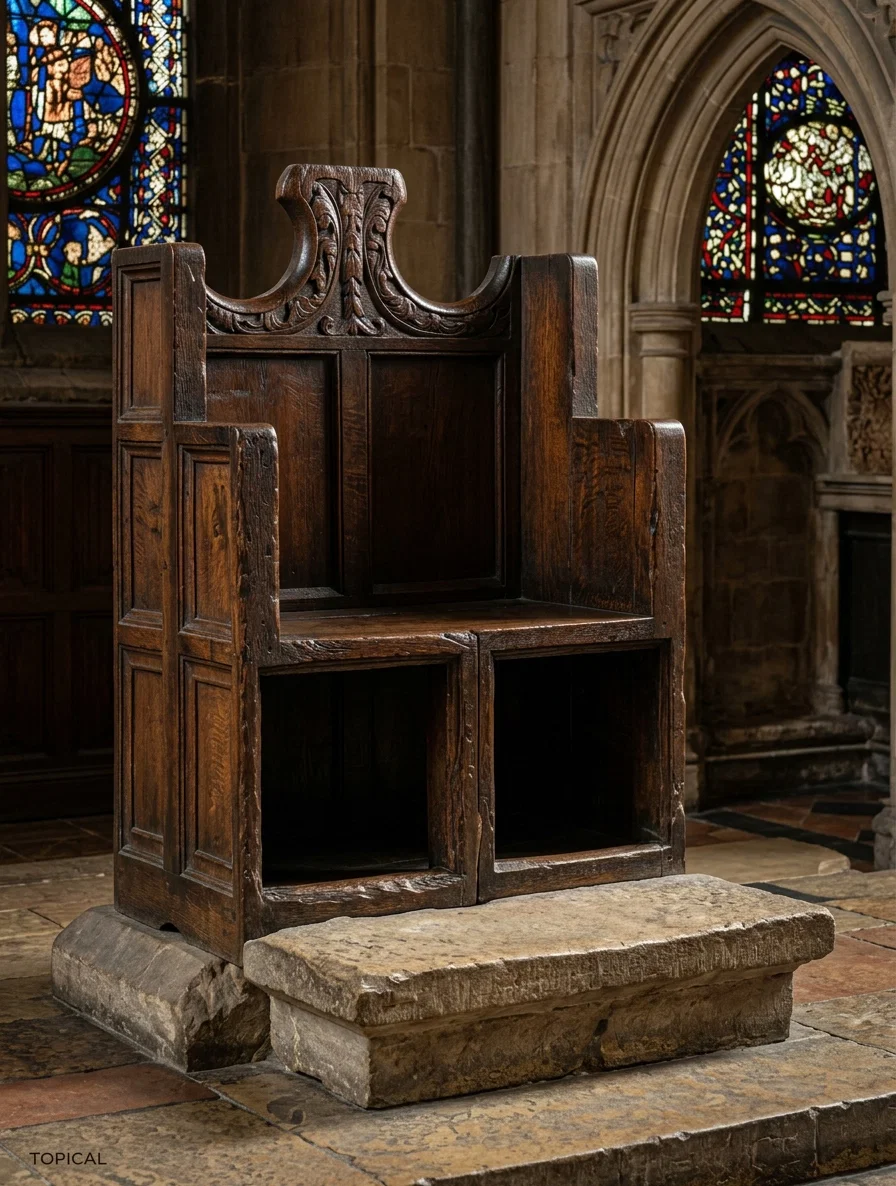
St. Augustine’s chair, where the Archbishop of Canterbury sits in great sessions of the church. The first archbishop was enthroned here in A. D. 597.
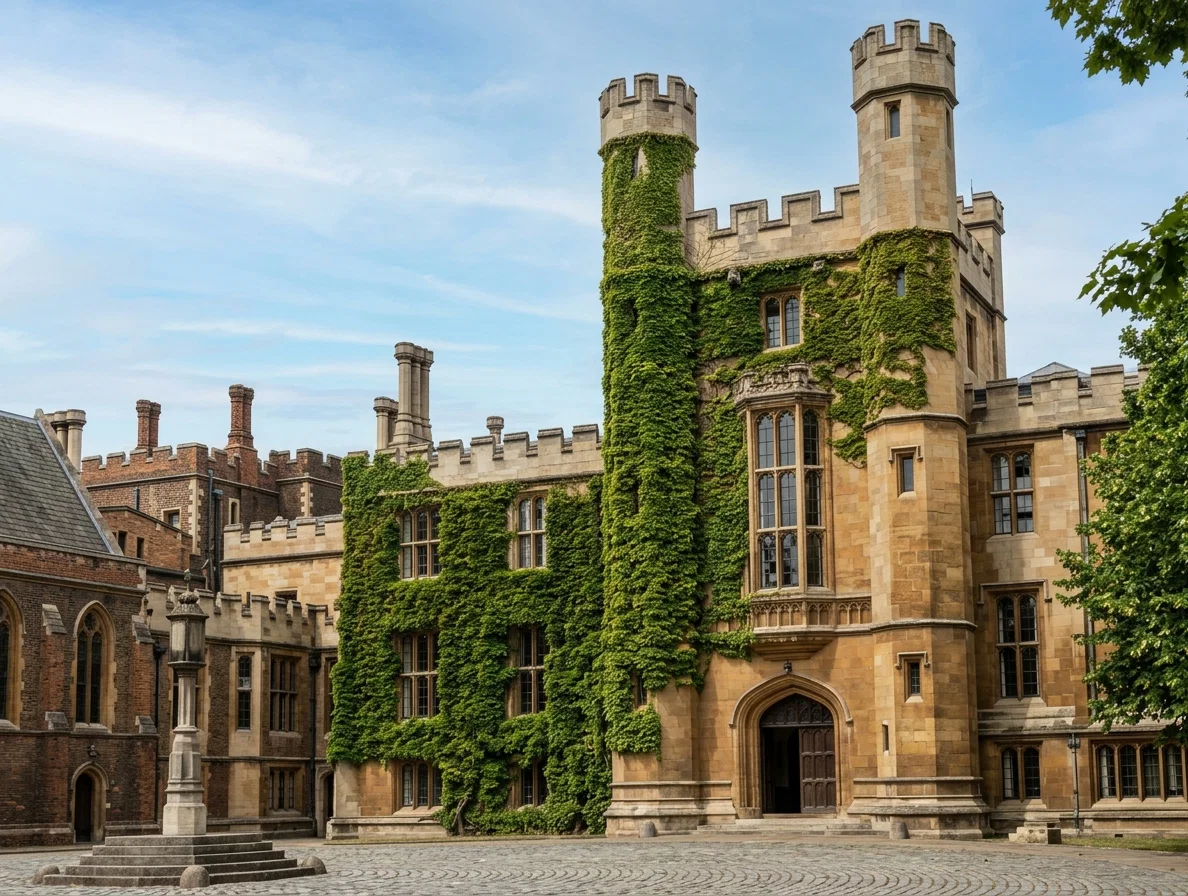
Lambeth Palace, where the Archbishop of Canterbury, the head of the Church of England, lives, and where many of the sessions of the Lambeth Conference were held.