MRS. W. R. SMITH

7%

Review and Herald Publishing Association · Takoma Park Station, Washington, D. C. · Jun 27, 1907

FromReview and Herald, Vol. 84, No. 26.

Read the full edition

MRS. W. R. SMITH

Korea

MRS. W. R. SMITH
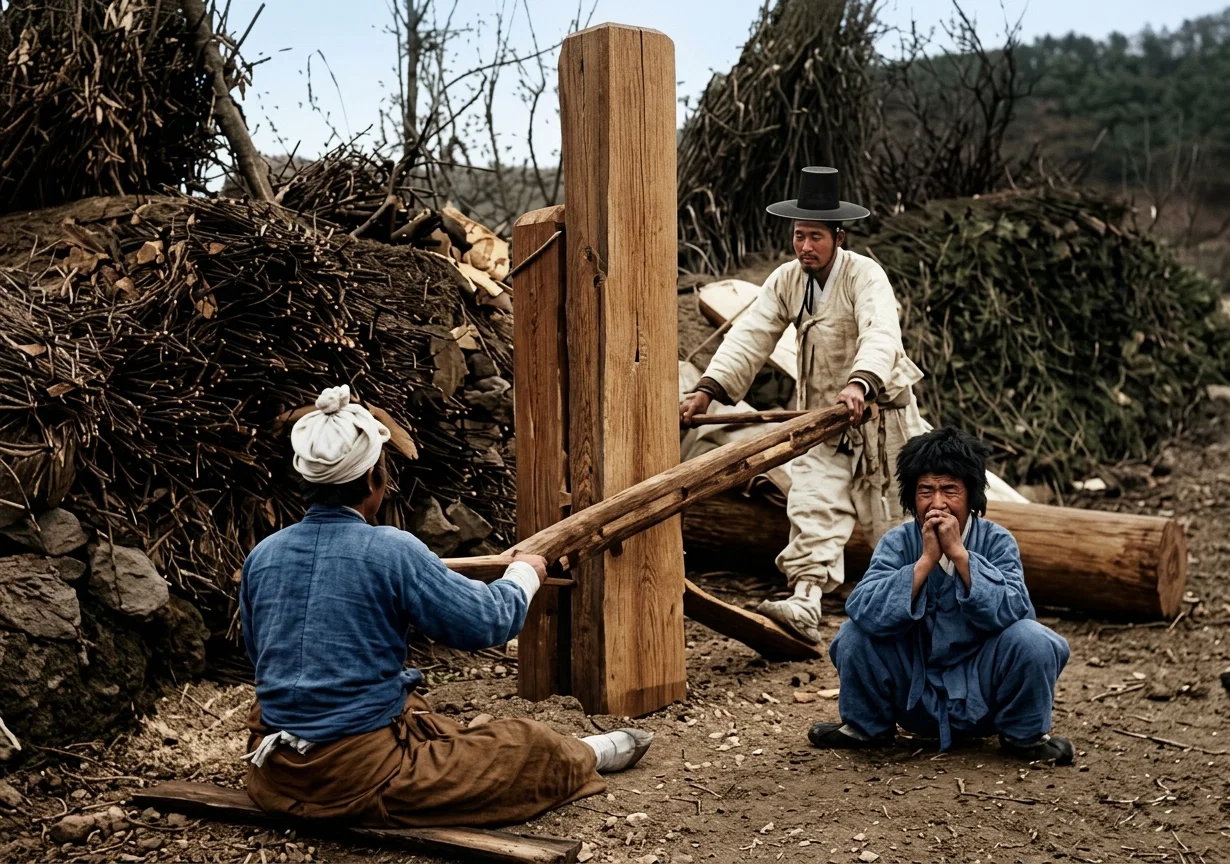
This, of all countries, is said to have customs the queerest of all to the westerner. The houses are low and straw-thatched. The walls are built of mud, plastered onto a network of Kafir-corn, between heavy posts. The doors are frames, covered with oiled paper, to admit some light, but scarcely enough by which to read, especially in cloudy weather. Mother earth is the floor, covered with stiff straw mats. The rooms are small, about eight feet square. The floor of the kitchen is dug out about two feet lower than that of the living-room. In the side of the kitchen next to the living-room is a fireplace, in the top of which are large iron pots, built in with mud, for the purpose of cooking the food.
A KOREAN SAWMILL
A KOREAN SAWMILL
The same heat that cooks the food passes on through trenches under the floor of the other room, making its exit at one common hole at the opposite side of that room. Thus the room is kept quite comfortable. But two meals a day are cooked. Breakfast is eaten between eight and nine o’clock, and supper late in the evening, leaving the floor warm for the night. A lunch is often served at about one o’clock.
The floor, with a thick cotton comfort for a covering, serves as a bed, and is quite warm—so warm that I have found it impossible to sleep until nearly midnight, when the floor begins to cool.
The low flue—when there is a flue at all—draws poorly; so the kitchen is very black and smoky. The women, with their babies tied on their backs, have to spend considerable time in the smoke, which no doubt is one cause of so much eye trouble among this people.
The principal food of the Koreans is rice, with pickled turnip and cabbage for relish. Some beans, dried fish, eggs, and meat are eaten. Also, a taffy, made from malt extract from Kafir-corn and barley, is freely eaten. They say that their food does not digest well unless they eat some of this taffy.
Noon seems to be the calling hour. One is met at the door with the greeting, “Have you come in peace?” The salutation returned, “I have come in peace,” the invitation is given to enter; but the shoes are left outside. Introductions are not given by a third party. A stranger introduces himself, although he may be in company with a friend of the host. There is a certain routine of questions asked, such as, “Where is your home? Are your parents living? How old are they? How old are you? Have you a son?” and often many others.
Korean women are secluded, as in some of the other Eastern countries. Those of the high class in the cities never go on the streets during daylight. They are married very young, and we have been told that an unmarried girl over fourteen years of age is scarcely to be found. A man or boy that is married can always be known by his topknot and hat. Before marriage he goes bare-headed, and wears his hair braided down his back.
Girls are not sent to school; therefore, but few of the women are able to read. The ambition of men is to be able to read Chinese characters, and to live without work. We try to impress upon their minds, by precept and example, that labor is ennobling. Some have told us that they know it is bad not to work; “but,” they say, “what would the other people say, should we work?” A school where the young people could be taught to labor with their hands, as well as be instructed in the principles of truth for this time, is greatly needed. In the country, away from the large cities, land is quite cheap. The climate varies from very warm in the southern part to cold in the northern.
The truth is still finding its way into some hearts. One week ago last Sabbath (March 30) fifteen men were baptized. We ask that this field may be remembered in your prayers.
Soonan, Korea.