G. F. JONES

13%

Review and Herald Publishing Association · Takoma Park Station, Washington, D. C. · Apr 18, 1907

FromReview and Herald, Vol. 84, No. 16.

Read the full edition

G. F. JONES

Sumatra

G. F. JONES

As I landed in different places on the west coast of Sumatra, I was struck with the rare beauty of the country. Not only is it beautiful, but it possesses a variety of life that captivates the mind of the romantic person, the adventurer, the scientist, and the gold-seeker, as well as the missionary. In the cities live the intellectual European, and also the heathen. In the villages are the natives, who grow rice and other necessaries, but who live in slavish fear of the European, and are, therefore, harmless. To this class the Netherlands India government forbids missionaries. If this law continues in force, there will be need for such workers as were Peter and John when they were straitly charged by the rulers “not to speak at all nor teach in the name of Jesus,” but when the Lord opened the prison doors, saying, “Go, stand and speak in the temple all the words of this life.” The third angel’s message, fully accepted and preached, must in this generation develop every phase of Christian experience, and the faithful must meet persecution, such as was endured by the apostles, the martyrs of the Dark Ages, and all the faithful who earnestly contended for the faith once delivered to the saints. These are trying days for the Christian worker, and glorious days, also.
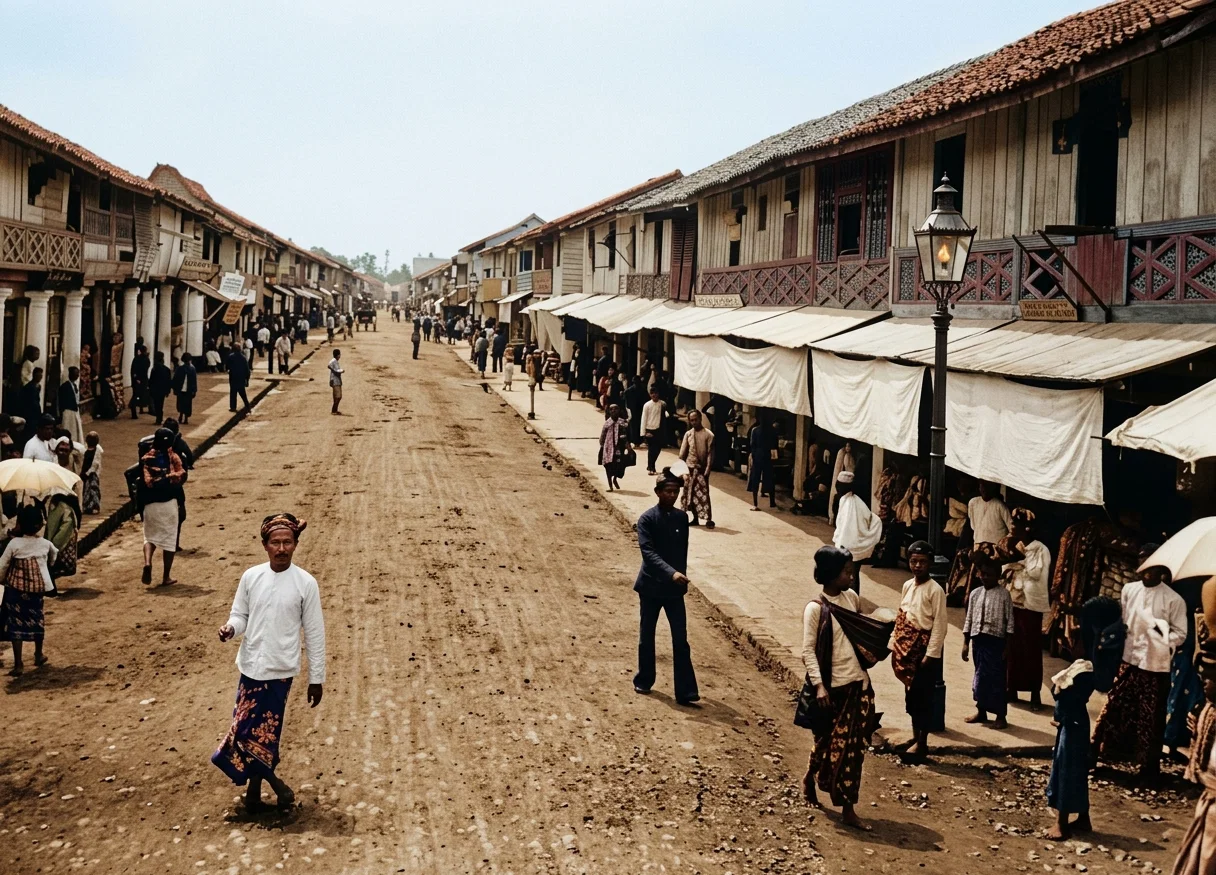
PALEMBANG, SUMATRA
PALEMBANG, SUMATRA
These humble natives, when called before any Dutch officer, remain with bended knees, and are in the habit of not passing a European without bending the body until he has passed them. As the Lord is the ruler among the nations, the strict rule of the Dutch over these people must have been necessary to keep down the fanatical Mohammedan spirit. They are now humiliated, and are doubtless made ready to receive with meekness the engrafted word which is able to save their souls and to translate them to the glorious liberty of the sons of God. We are not in these nations to find fault with their method of governing, or to offer one word of criticism, but to preach the Word. “Known unto God are all his works from the beginning of the world.” The children of Israel’s preparation for deliverance was their hard bondage in Egypt; the Christian’s chastisement is also his training for the kingdom of God.
The Chinese in Sumatra are all of the merchant, and not of the coolie, caste, and are not permitted to take the bread out of the native’s mouth by doing his work. So they are strictly shut up to their own business of getting a livelihood. But they are eager for an education and reform, and erroneously think that to become a Christian means to have the full liberty and privileges of a Dutchman. Many of them are anxious to turn Christians for this reason only. How can these poor people know what is the truth unless some one gives his time and life to help them? They would be grateful for such aid, and would give help to such an unselfish friend. I understand that the government, unlike the others, makes but few or no restrictions for the missionary to work among the Chinese, and they are eager inquirers just now. Faithful workers may from now to the close of probation be busily at work giving meat in due season. “Blessed is that servant, whom his Lord when he cometh shall find so doing.”
Sumatra is said to have a population of three millions. It is a rich, fertile country. Its mountains are covered with tropical forests of the rarest beauty, in which are beautifully plumaged birds, butterflies in all their fascinating beauty, squirrels and monkeys, tigers and other wild animals. There are also fanatical tribes and savages, to whom our message is to be carried in this generation, and that means that faithful, fearless, and unselfish workers are to take it to them. Now indeed is the accepted time; “behold, now is the day of salvation.” “He shall cause them that come out of Jacob to take root: Israel shall blossom and bud, and fill the face of the world with fruit.” This is an encouraging promise to the worker anywhere.