Hindu Worship in South Africa

10%

Review and Herald Publishing Association · Takoma Park Station, Washington, D. C. · Mar 7, 1907

FromReview and Herald, Vol. 84, No. 10.

Read the full edition

Hindu Worship in South Africa

J. F. OLMSTEAD
The Hindus, blinded by the superstition that has hung over them for centuries like a funeral pall, still bow down to their gods for help and protection; not knowing the true God, the Creator of all things, they worship the work of their hands. Although their minds are clouded with mysticism, and filled with heathen rites and customs, we were treated very kindly by the priest, who revealed to us their mystic shrine.
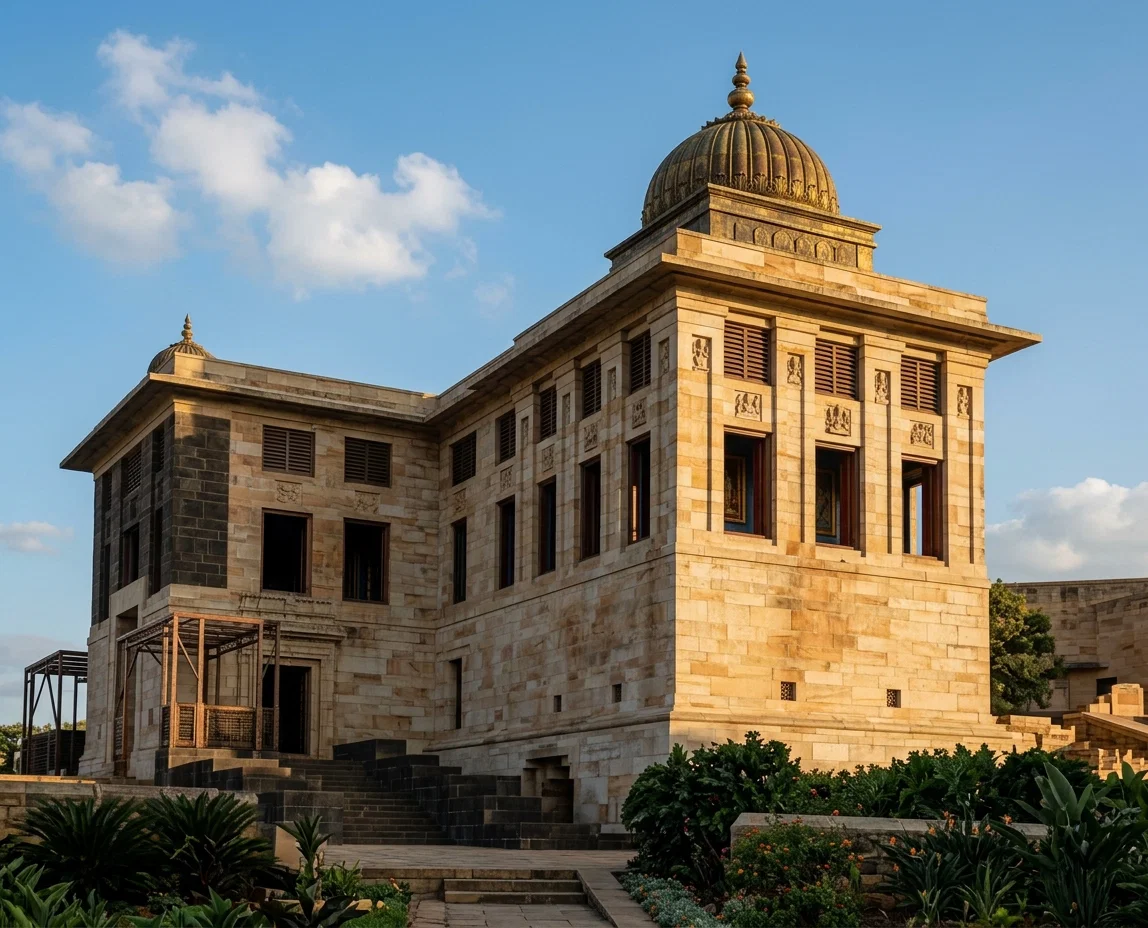
To give those who have never seen one an idea of a Hindu temple we shall briefly describe the only one in South Africa, located in Port Elizabeth. The building is quite small, and is divided into one large room and two small ones. Into the first, or large room, the Indians are allowed to assemble. The walls are covered with hideous-looking pictures, almost life size, colored red. Some represent rational phases of life, others the supernatural, and their meaning is a mystery to the uninitiated. From the first room we were taken by the priest into the second. The people are never allowed in this room, as it is used only by the priest, and also as a depository for their gods.
To our left as we entered were three small brass gods, standing in a row, ranging in height from twelve to sixteen inches. They were dressed to represent people, and looked very inoffensive, with outstretched hands, suggestive of asking, rather than of giving, help to those in need. In the corner toward the back was the elephant-headed god, made of some material resembling stone. The door between the second and third rooms had an iron grating around it, holding three rows of small cups, each cup containing about a tablespoonful of oil. On certain occasions these are filled and lighted; then the priest passes back and forth through the fire. The third room has in its center a cement block about three feet square, in front two steps of the same material. On the top step is something that looks very much like a short, thick spear. This is supposed to be pure gold, and is about two feet high, with only the point visible, the remainder being covered with red cloth. From behind this golden shaft running water flows out into an outside pool, where suppliants bathe in the "sacred water." A so-called "sacred" fire is always kept burning in a receptacle hanging from the ceiling which looks much like a censer. There are two of these, one on either side of the golden shaft, or principal god, but only one of these fires is kept burning at a time.
HINDU TEMPLE
HINDU TEMPLE
Before taking us into the temple, the priest made himself ready by putting a spot of white paste in the center of his forehead. He wears long hair, which is kept twisted, and is held in place by means of hair-pins, except at the front and top of the head, where it is kept shaved. His clothing consisted of what we would call in America a short-sleeved gauze undershirt, with the lower part of the body covered with a cloth so wound as to resemble a short skirt.
On the top of the temple are images of the peacock and "sacred calves." Live peafowl are also kept in the garden adjoining the temple. The Hindu idea of cleanliness in and around the temple is very meager; for much dirt and filth are seen, not only on the outside, but also in the rooms where the gods are kept.
What a blessing it is to know the true God, one we can always trust, knowing that he is able to keep what we have committed unto him against that day. When we see the advances of skepticism, infidelity, and heathenism, it makes us feel our great need of a living, personal acquaintance with a personal Saviour.
Kenilworth.