The Way to the Hakkas Opened

8%

Review and Herald Publishing Association · Takoma Park Station, Washington, D. C. · Nov 1, 1906

FromReview and Herald, Vol. 83, No. 44.

Read the full edition

The Way to the Hakkas Opened

E. H. WILBUR
IT is a source of constant encouragement to us to know of your interest in the work in China, and we are glad to be able to report that the last message is gaining ground here.
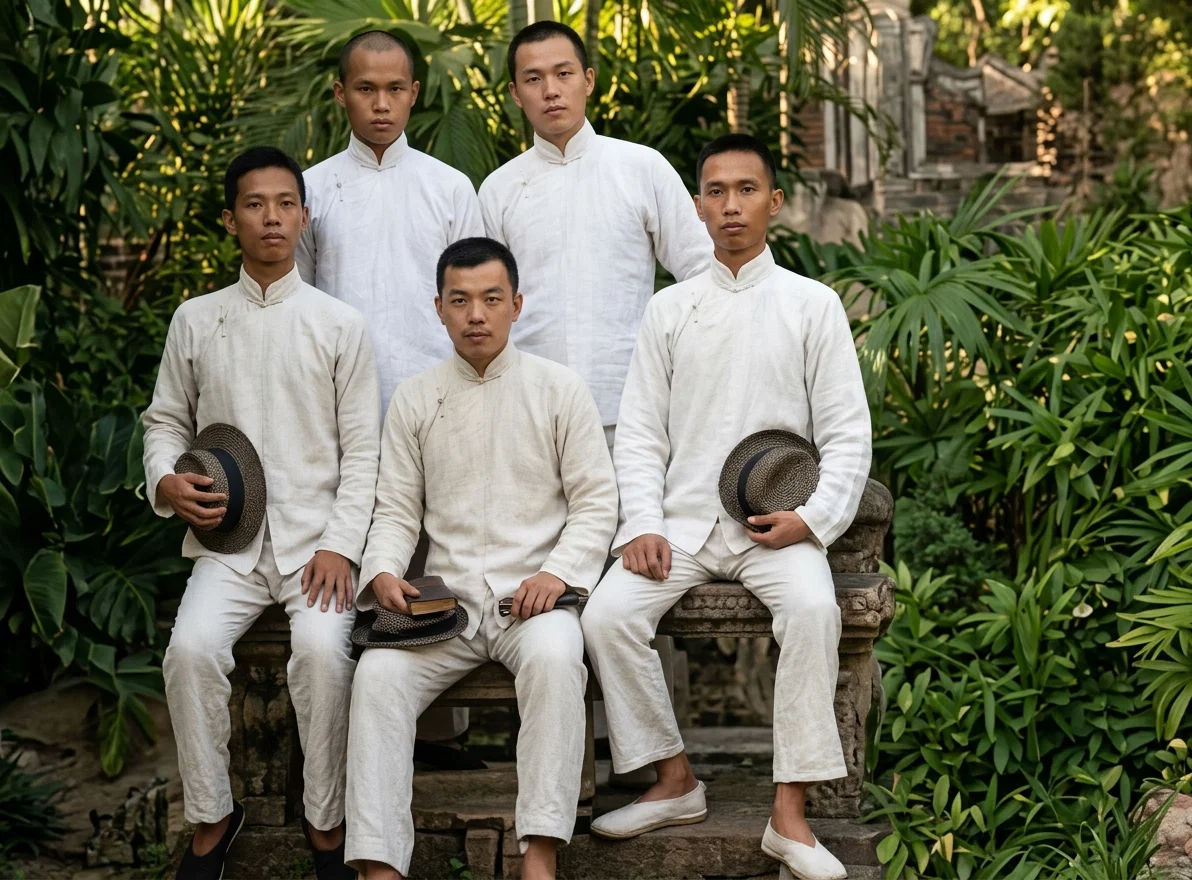
Sabbath, June 16, was another good day for the Canton church, when five young men, ranging from twenty to twenty-four years of age, followed their Lord in baptism. Four of these had formerly been connected with the Basel mission, but one had never professed Christianity before. Several months ago they came to our mission, desiring to be taught the Scriptures, and since that time our workers have held Bible studies with them three times daily, considering the various points of our faith.
THE FIVE HAKKA BRETHREN
With the baptism of these candidates, a new field has been opened to the message; for these young men are Hakkas, a people numbering about ten million in this and adjoining provinces, a population greater than that of the Central Union Conference in America. They are a hardy and industrious people, and take great interest in education. Very few of them have gone to America, but in the Malay Peninsula, and the islands of the sea, they are more numerous.
Of the five youth above referred to, one who has been in mission schools about fourteen years, gratuitously assisted us in the translation of a new tract on the signs of the second coming of Christ. Another has been teaching a class in the Sabbath-school. All have expressed a desire to have some part in the work, after further instruction. Just now, and during the months of July and August, while the heat is most intense here, they are having a vacation from their regular Bible classes, but three of them are spending the time selling our Chinese literature, and it is truly wonderful how the Lord is blessing them in this work.
It is one of the mysterious workings of Providence that these young men, whose home is about one hundred and fifty miles inland from Canton, and in a part of the province never visited by any of our workers, should hear of the truth. It came about on this wise: A Hakka student, named Lam, while attending the Methodist school in Singapore, met Brother Timothy, our Chinese preacher there, and from him received a copy of our Sabbath tract, in Chinese. Becoming convinced of the Sabbath truth, and having to return home on account of his health, he got our address, and came to Canton in August, 1905, remaining with us about ten days. I gave him several treatments, and held some Bible readings with him. (I have since learned that after his return home, he fully regained his health.)
Leaving us early in September, he visited the Basel mission theological school, not far from Hongkong, and distributed tracts among his former associates, two of whom are of the five who have now united with the Canton church. While Brother Lam himself has not yet united with us, he has repeatedly by letter expressed his desire to do so.
Now this new field has been opened to the message. The language is as different from the Cantonese as Portuguese is from Spanish. The Bible and other books are printed in their local dialect. Yet the language is not the only barrier that separates them from the Cantonese: the latter have a hatred of the Hakkas, which renders impracticable the working of the two classes together.
For more than three years, since I first learned of this people, I have been longing to see a way opened for them to receive the truth. Now the Lord has taken the matter in his own hands, and opened the way by sending us these young men. Soon they must go back to their own country, to hold up the light.
Shall we send them forth as sheep without a shepherd? Or has the Lord some consecrated minister and his wife in America, who would be glad to come and give their lives in helping this people to get a clear knowledge of the truth? I sincerely hope that suitable workers, of experience, will volunteer for service in this field, and that their coming will not be long delayed.
Canton.