In Peru

5%

Review and Herald Publishing Association · Takoma Park Station, Washington, D. C. · Aug 16, 1906

FromReview and Herald, Vol. 83, No. 33.

Read the full edition

In Peru

F. L. PERRY
PERU presents to us a most interesting field of labor. There are nearly four million people in this area of five hundred thousand square miles. Topographically, the country has three divisions—the coast, the Sierra, and the Montana. The mighty ranges of the Andes, like a great wall, attempt to bar the entrance to the interior.
Along the coast it seldom, if ever, rains, the nearest approach to rain being the falling of a heavy fog, or mist, which dampens the ground.
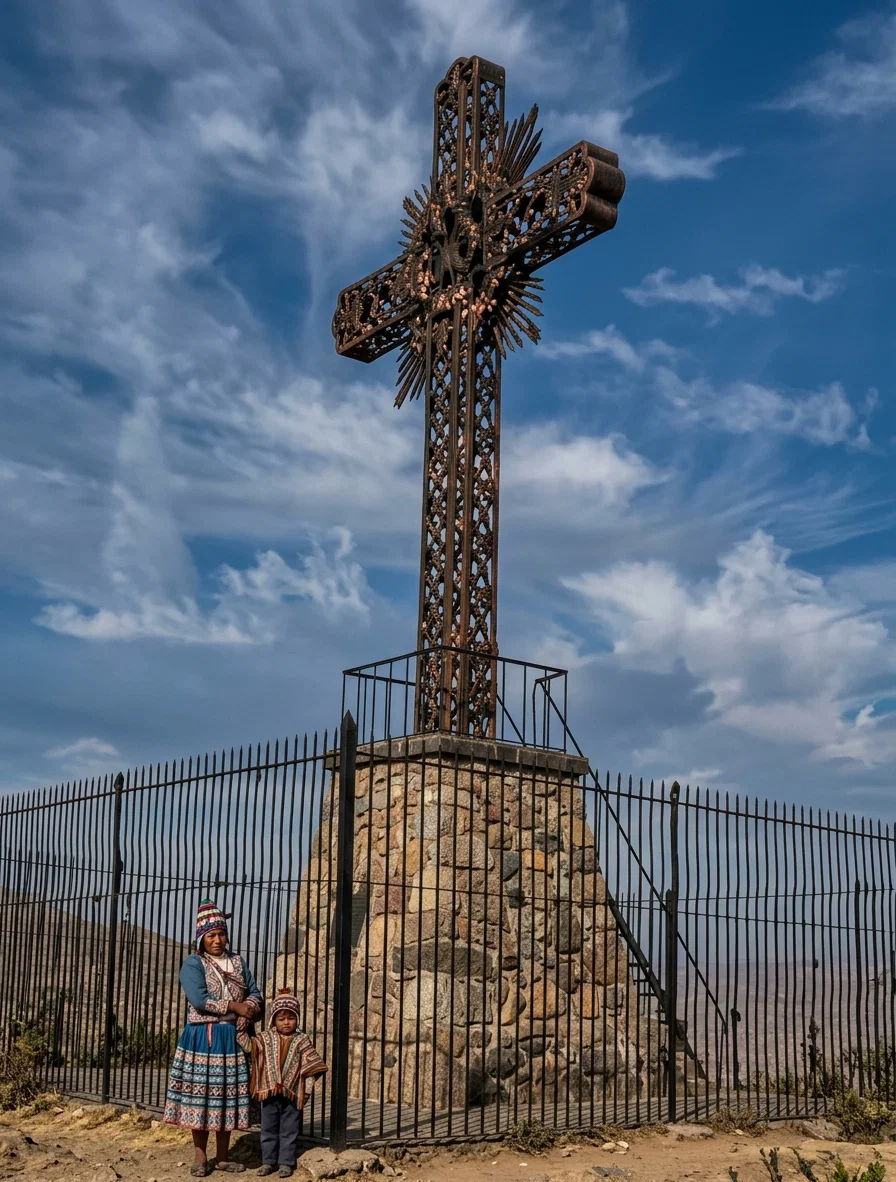
THE GREAT CRUCIFIX ON MT. CRISTOBAL, ERECTED IN MEMORY OF POPE LEO XIII
The many small streams that descend from the mountains make irrigation easy, and abundant crops are raised. We are now in the hot season. The days sometimes get very warm, but the nights are always cool.
The Sierra is the mountainous part of the country. Here the climate and vegetation vary with the altitude. There are many exceedingly productive valleys, which, with better methods of cultivation, would yield large crops. Here also mining is a principal industry. American capital is being invested in these mines, and engineers and mechanics from the States are coming to develop the resources of the country.
From the Andes the surface slopes eastward, toward the broad plains of Brazil. In this region are the sources of the Amazon and the other great rivers of South America. The country is covered with a dense growth of timber, and is sparsely settled.
In its varied resources of mine and soil, Peru has by nature been richly endowed. These treasures, however, are yet largely undeveloped. Almost every variety of climate and vegetation known the world over may be found in Peru. Its western border is the California of South America.
The inhabitants present almost as great a variety of types as the natural conditions. In the interior may be found almost heathen savages, native Indians, who have a language of their own. These form about fifty per cent of the population.
In the coast towns and principal cities there are many people as highly educated, as refined, and as intellectual as can be found anywhere in the world. Lima is a beautiful city, as modern, in most respects, as the cities of the United States. Its many beautiful stores are filled with the necessaries, and many of the luxuries of life. Its market-place is the nicest that I have ever seen. The city is lighted throughout with electricity, and has an excellent street-car service, and electric railways to neighboring villages. The sewerage and sanitary conditions are very good. Six miles inland, lying right at the foot of a mountain range, Lima is a picturesque city.
The message of Christ’s soon coming has entered it none too soon. Almost every day I am reminded of the Saviour’s words, “Look on the fields; for they are white already to harvest.” From the day when Pizarro’s priestly companion, with lying and malicious cunning, entrapped the unwary Inca, and afterward led him to the fire, these poor people have been dominated by the priests of Rome. Could the history of their rule be written, it would doubtless equal some of the darkest chapters in that of France or Spain. Here, darkness has covered the earth, and gross darkness the people. In Lima, the most enlightened and liberal part of Peru, images of Jesus, Mary, and the saints may be seen in almost every window. Men and women, especially on Sunday mornings, carry images through the streets, and these receive the adoration and contributions of many. The shopkeepers take advantage of this to perform their worship, and do penance, I suppose, for working on Sunday.
But the light of the everlasting gospel, which is to lighten all the world, could not be kept out of Peru. On the part of the learned and rich, there has been a turning away from Catholicism, and a liberal spirit has come in. They still acknowledge the church, but only in a nominal way. A prominent Peruvian said, in reply to my inquiry while en route, “Yes; we are all good Catholics, but we do not get excited about it.”
The other day I first witnessed the host being carried through the streets. As I was passing along, I heard a bell behind me. Turning, I saw a cab coming toward me. Inside was a priest, in his robes. The carriage was surrounded by men, bare-headed, carrying candles. As the priest passed along, all the men uncovered their heads, and the women dropped upon their knees, in reverence. I had no respect for this idolatry, and so manifested none. Such a mocking of the Lord made all my Protestant blood rise in indignation. A few years ago such “irreverence” would have brought a mob; but I was not molested, receiving only some angry looks.
Great prudence is necessary, even in Lima, in teaching the gospel. Only last Friday a Methodist colporteur, teaching in the street, was attacked by two priests, and roughly handled, and his books stolen. So far, we have had peace, for which we thank the Lord.
About three weeks ago I received a letter from a Brother Morales, who lived at Canete. He told of his work there. His wife taught a day-school, and he was a carpenter. He also held meetings in his house, and conducted a Sabbath-school. Brother Espinoza had done some work there. In some way the opposition of the people was aroused, and they tried to break into Brother Morales’ house. This was repeated until he found it necessary to close his meetings. He writes: “I hear that they are getting up a petition to prohibit us from holding meetings, for they fear a curse will rest upon them, if they let us go on. Also, our Brother Espinoza has gone to Lima, to bring you here, dear brother, to preach and explain the Holy Word. And as you are a stranger from a foreign land, I believe they will have more respect for you. . . . If you determine to come here, take all the measures necessary to protect yourself while preaching, for the priests tell the people that it is no sin to kill a heretic.” But as I could not preach in Spanish, and had no interpreter, I thought it useless to go.
A week ago Sabbath I went to Callao, six miles distant, as usual, to hold a Sabbath-school (returning in time to hold another in Lima in the afternoon). While we were praying, the door of Brother Espinoza’s house opened, and in came Brother Morales and his wife, tired and dusty. He had been attacked by twelve men, and severely beaten. The police then came and took him to the jail, where he remained five days. The jailer was a Mason, and as Brother Morales was a Protestant, supposed he was also a Mason, and so desired to help him.
On the fifth day he regained his liberty, by promising to leave Canete at once. He took time only to gather up his few belongings, and came to Callao, where he found us.
Besides the company in Lima there are, I am informed, scattered Sabbath-keepers in Truxillo, Callao, Pisco, Canete, and Chincha Alta. There are about thirteen who desire baptism.
We acknowledge the daily care of our Heavenly Father for us and for the work here. There are many perplexities. We need much of God’s wisdom and power.
Lima.