Along the Way in South America

6%

Review and Herald Publishing Association · Takoma Park Station, Washington, D. C. · Jun 28, 1906

FromReview and Herald, Vol. 83, No. 26.

Read the full edition

Along the Way in South America

W. A. SPICER
After the union conference meeting in Argentina, I accompanied Elder J. McCarthy to the newly organized mission field of Uruguay. Crossing the Rio Plata from Buenos Ayres, we reached Rosario Oriental by a coach ride of about thirty-five miles.
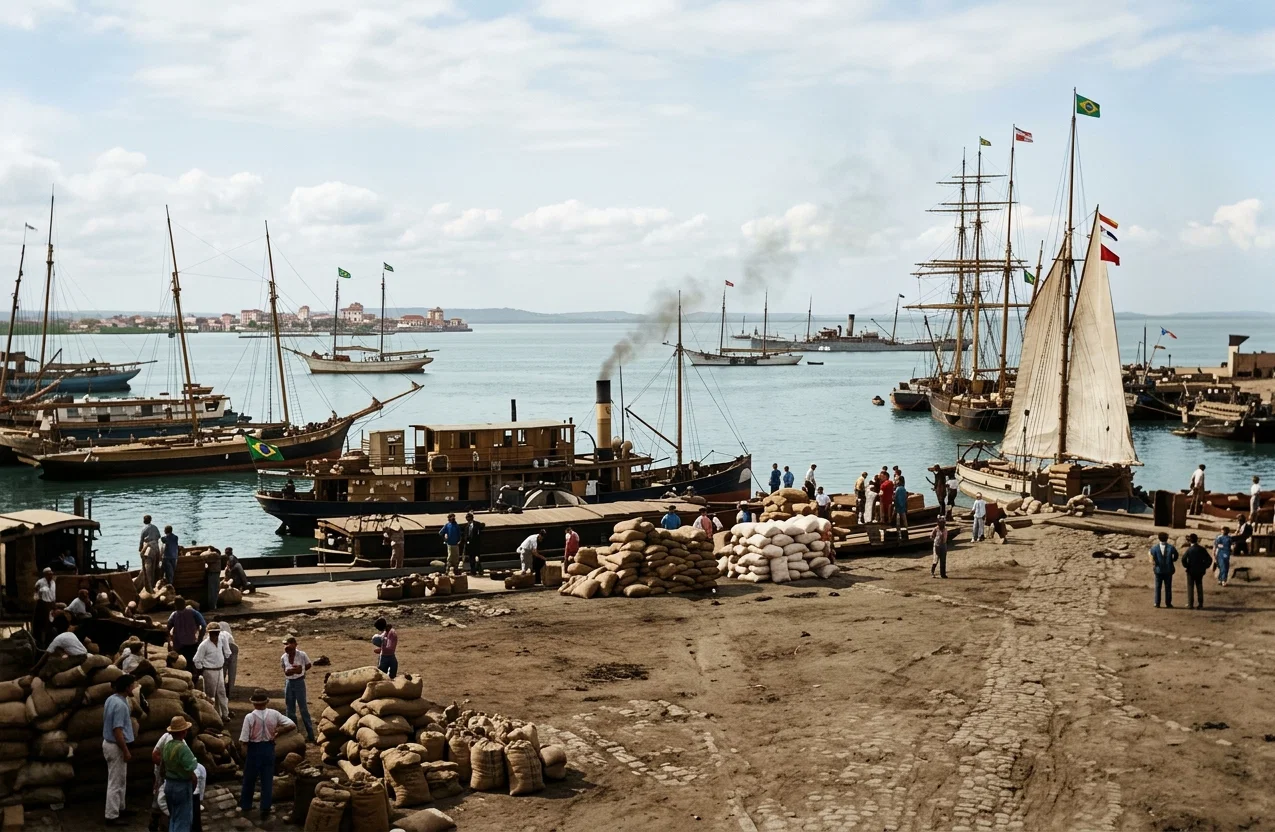
ON THE LAKE FRONT AT PORTO ALEGRE, THE CAPITAL OF RIO GRANDE DO SUL
This part of Uruguay is more pleasing to look at than the level plains of Argentina. Here the country is rolling, and to North American eyes the trees and hedges give a homelike look to the farms. Dairy farming is Uruguay’s specialty. Now, however, the country is suffering under a prolonged drought, and cattle are suffering for lack of food.
Our meeting place was in the edge of one of Uruguay’s Swiss colonies. Most of our people in this country are German-Swiss. Our services were translated into both Spanish and German. The young people of these Swiss colonies learn Spanish as they grow up, and from among these we are getting laborers for the Spanish-speaking peoples of South America.
About thirty-five adult believers were present, with a goodly number of children. We had a good Sabbath together. These brethren are hearty believers in the message, and will do their best, I believe, to carry out the plans for Uruguay in the general program of the forward movement in South America.
Uruguay has less than a hundred believers. But there are good interests developing. They propose to add one more laborer, making three, and then to develop their work as their own resources may increase. This field will soon grow into a conference, with the blessing of the Lord.
I was glad to greet these brethren, and renew acquaintance with Elder McCarthy, who was the first Sabbathkeeper from South America whom we saw in North America. He received the truth in the days of the pioneer canvassing work done by Brethren Stauffer, Snyder, and Nowlin, and came up to Battle Creek in 1893 to study the truth. He is of good courage still in this work.
Returning to Buenos Ayres, I joined Brethren Westphal, Graf, and Spies in the voyage to our first general meeting in southern Brazil. We experienced some of the inconveniences of travel in this vast field, with its few railway facilities We made the port of Rio Grande do Sul all right, but had to lie off the city three days, waiting for the lake steamer that was to take us to Porto Alegre at the upper end of Lake Patos. At last our boat came in, having been delayed on a sand-bar. On our own voyage upward the lake steamer again stuck fast in the sand, holding us back twelve hours. We reached Porto Alegre at last, on Friday morning, only to find that, being Good Friday, no river boats were running to take us on up the Taquary River to the place of meeting. The conference was to begin that night, but no reasonable offer could secure us transportation on Good Friday, and there was nothing to do but to wait, and so arrive a day late at Taquary.
The brethren are rejoiced that the reorganization of the territory, dividing it into several conferences and mission fields, will considerably lessen the amount of traveling on the part of those in charge of the work. Here is a pretty country, of rivers and hills and semitropical fruits. It is not so prosperous as Argentina, but more beautiful to look upon.
Porto Alegre, where we waited for our river boat, is a fine city of eighty thousand inhabitants. Once we had a German church here, but nearly all have moved away. In these cities there is much work to be done in Portuguese, and now our Brazilian work is turning more and more toward the twenty millions of Portuguese-speaking people.
Porto Alegre is the capital of the State of Rio Grande. It is evidently a prosperous city, a distributing point for one of the best farming States in Brazil. These cities are much alike. There is always the central plaza, or square, where the band plays and the people stroll, and then the streets lined with white plastered shops and houses, mostly low, with a liberal distribution of Catholic church buildings.
On this Friday we saw a typical religious procession, the people crowding the main street full from pavement to pavement. In front was carried a sheet, stained with blood, and then came a coffin to represent the tomb of Christ, followed by images of the saints. The whole city was given up to this modern idolatry. Flags on houses and shipping were at half-mast. Yet with all the religious earnestness, there is nothing that touches the life. And now that the Spirit of the Lord is stirring up honest hearts to inquire for truth, our people find Catholic hearts that long for something that has life and power to save.
At last we secured passage to Taquary, six hours up the river from Porto Alegre, and here our first Brazilian conference is opening with the blessing of the Lord. It is the largest meeting Brazil has ever had, and apparently all the brethren see light and encouragement in the plans for the future of the work in Brazil.
Taquary, Rio Grande.