There is a wide open door for our work in Cuba. I could plainly see this from the few days spent in the island on my homeward trip from the West Indies last winter. This “Pearl of the Antilles,” the largest and most populous of the West Indies, lies about ninety miles off the Florida reefs. For years we have heard the din of the furious struggle for political liberty which has been desolating that fair land. The struggle began in earnest just about the time that our message was rising. Now it is ended in the independence of the island from Spanish rule, and apparently the country is settling down to an era of peaceful, industrial development. Now is our time to go in with the message of soul-liberty by the gospel of Jesus Christ.
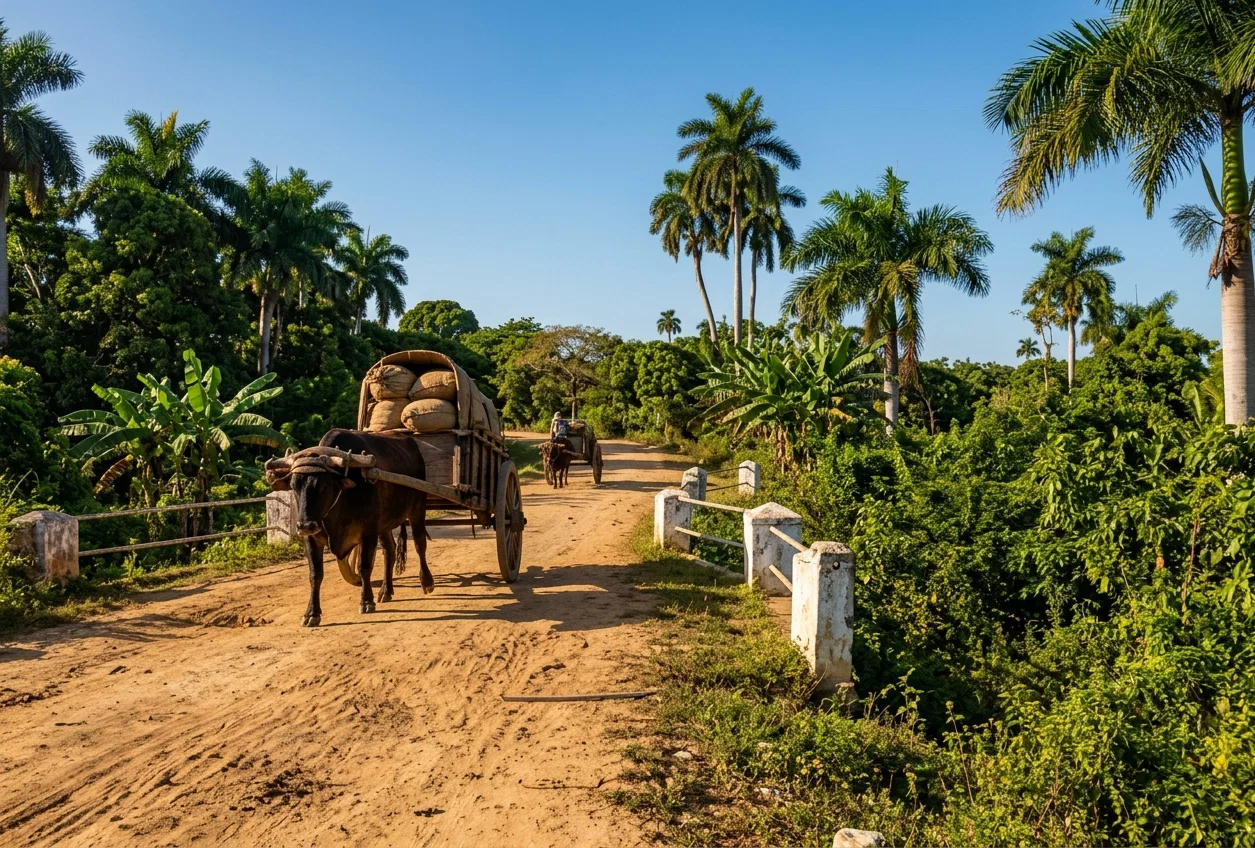
A CUBAN ROAD
I entered Cuba by the extreme southeastern port of Santiago, making the trip across from Jamaica in a little trading schooner. There is a stirring of new life and enterprise in this region, and doubtless the little sailboat will ere-long give place to a coasting steamer, and Cuba will be brought into closer touch with the islands to the southward. We were glad enough to glide into the beautiful bay of Santiago, after two days and a half of tossing about on the Caribbean. Morro Castle Fort, built high in the rocks at the right of the entrance, guards the narrow channel. It was down this passage that Cervera’s fleet made its dash for the open sea in the late war. All about are memorials of war time, suggesting how ready the children of this world are to pour out treasure and the life’s blood in fighting for the things of this world. Even more ready should be the children of the kingdom to pour out the choicest treasures and to endure hardness in the glorious service of Christ our leader. And here is a country close to our shores, where we have not as yet made any conquests for the third angel’s message.
It was a beautiful passage down the spacious Santiago Bay, with its wooded shores and rocky headlands. At the head of the bay, the city of Santiago forms a crescent around the water front, and runs back upon the hills. Considerable shipping rides in the harbor; for the province of Santiago is rich in minerals, and in timber and agricultural resources.
As our boat furled sails and dropped anchor off the city front, we were surrounded by boatmen soliciting patronage and driving bargains, in broken English.
A great impetus was given to the learning of English by the American occupation of Santiago, and no doubt within a few years it will be very commonly spoken by the younger generation. Santiago is a Spanish town. The old town, with its narrow, crooked streets, and walls of bluish tint, reminds one of pictures of old Seville. General Wood and his American soldiers made a new city out of it, the people tell us. Formerly it was a fever hole, the streets unpaved and muddy, and the pigs rooting about beneath the windows, these scavengers representing about the only sewerage system for the large town. Now the main streets are paved, and the whole aspect is one of neatness and thrift. The city has a population of forty thousand.
Strange tales the crooked little streets of the old town could tell if they had voice, for Santiago was the second city founded by the Spaniards in the new world. It was planted by the son of Columbus, on the second expedition of the Spanish fleet. The old plaza, or square, round which the ancient town was built, is still the heart of the city. These plazas are the breathing places for the people in the tropics. On the evenings when the band plays in the Plaza de Almas, half Santiago, apparently, comes out to promenade up and down, and round and round the square, or to sit on the benches and mounted cannon in the little park in the center of the plaza. It is a gay, thoughtless crowd, intent on merely passing away the time. There is nothing rude or boisterous about it; the people are polite, well dressed for the most part, and characterized by an air of grace and natural culture. Whether Spanish, Cuban, or creole, the easy manners of old Spain cast a pleasant spell over the evening crowd.
The stores do a thriving business late into the night. The leading shopkeepers are Spaniards, who make their money in Cuba, and then retire to Spain to spend their days. It takes a practiced eye to distinguish between the Spaniards and the Cubans of pure blood.
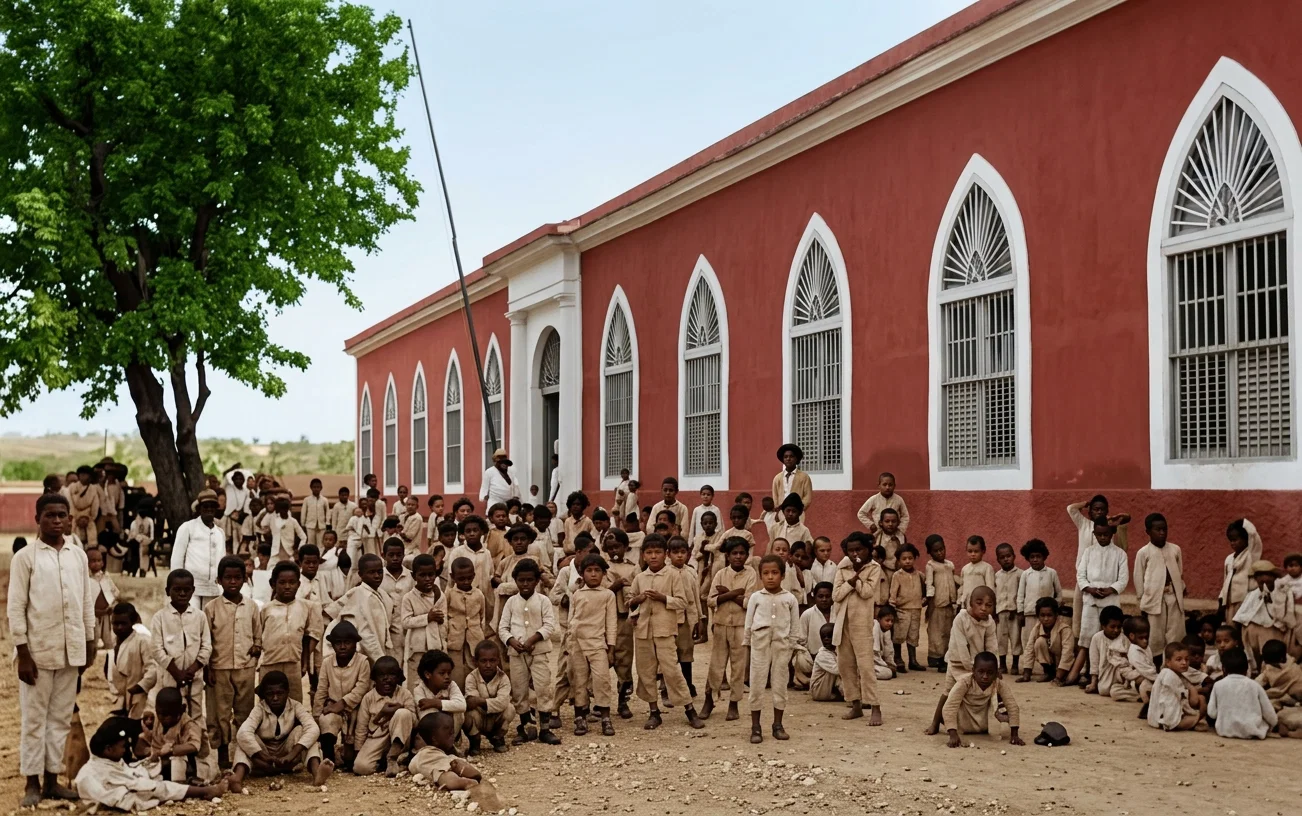
BOYS’ ORPHANAGE SCHOOL, SANTIAGO
The latter are the descendants of the old Spanish settlers of Cuba, generations ago, who have lost all connection with the home land. These white Cubans compose the mass of the population. The negro population, originally brought in as slaves, form about one third of the inhabitants. The American hotel proprietor gave the negro population a good name for sobriety and industry under proper conditions. The industries of the country have been ruined by revolution for so many years that this creole element has learned somewhat turbulent ways. They formed the bulk of the revolutionary forces, inasmuch as they could hold out indefinitely among the hills and forests, and so sustain the guerrilla warfare.
Santiago is the chief seat of the16Romish Church in Cuba. The great cathedral of San Pedro, with its square towers, flanks one side of the central plaza. I did not find it open while in the city. The attitude of the Spanish clergy during the fight for independence alienated the sympathies of the people to a great extent, and while on Sundays there are considerable numbers of women attending service, the church apparently has little influence over the masses of the population. The situation gives perfect liberty for the Protestant missionary. There is a Baptist church in Santiago, and the Methodists have just begun operations. The minister now holds services in his own house. Various denominations are beginning in Cuba, just as we have to begin in new places, by house-to-house work and cottage meetings. Then follow the little chapel and the school. I was told that advance guards of the Salvation Army had held street services in the city. They were allowed to do so freely, and sometimes the singers were invited into the private houses of the citizens to sing the gospel songs. We have so long associated Cuba with the repressive power of Roman ecclesiasticism that one can hardly understand that now the shackles are broken, and there is perfect liberty to preach the gospel of free salvation.
A school system is being rapidly built up by the government. Santiago was just finishing a thirty-thousand dollar high-school building when I was there. Spanish is, of course, the language of the schools, and yet I was told that English is given a place in many of them. Apparently the Cubans have yet to form the reading habit. I saw no bookstore in all my wanderings about Santiago. A fellow traveler also remarked upon this peculiarity. No doubt there are book-supply depots, but they are certainly not conspicuous. Romish domination has not encouraged education, and a large percentage of the people can not read. Already, however, the change has begun, and we ought to have at least one or two workers distributing good Spanish and English literature in the cities and country districts of Cuba.
Many Americans are going into the province of Santiago, establishing stock raising, agricultural, and other industries. The currency of the province is our American money almost altogether. The people prefer it to the Spanish silver, which is still used in the western provinces. A splendid military road runs over the hills westward from Santiago, and now that the farmers are recovering from the desolations of war time, the mule and ox wagons come lumbering into the cities with farm and garden produce. The palms along the roadways indicate the tropics, and yet the heat in Cuba is not intense, and the nights are cool. The climate is not at all a severe one. Though the Cubans preserve a light and trifling exterior, they at any rate have known how to suffer long and stoically amidst the throes of revolution; and one sees abundant evidence of a warm-hearted hospitality and spirit of comradeship, which shows that there is a gentle, earnest, loving side to these Cuban peoples. I must speak later of the central and western provinces.