Progress in Paraguay

6%

Seventh-day Adventist Publishing Association · Battle Creek, Mich. · Feb 17, 1903

FromReview and Herald, Vol. 80, No. 7.

Read the full edition

Progress in Paraguay

E. W. SNYDER
We came to this colony about four weeks ago, with the object of developing some interests awakened by the Christlicher Hausfreund, which had been sent to different addresses from time to time since our arrival in the country over two years ago.
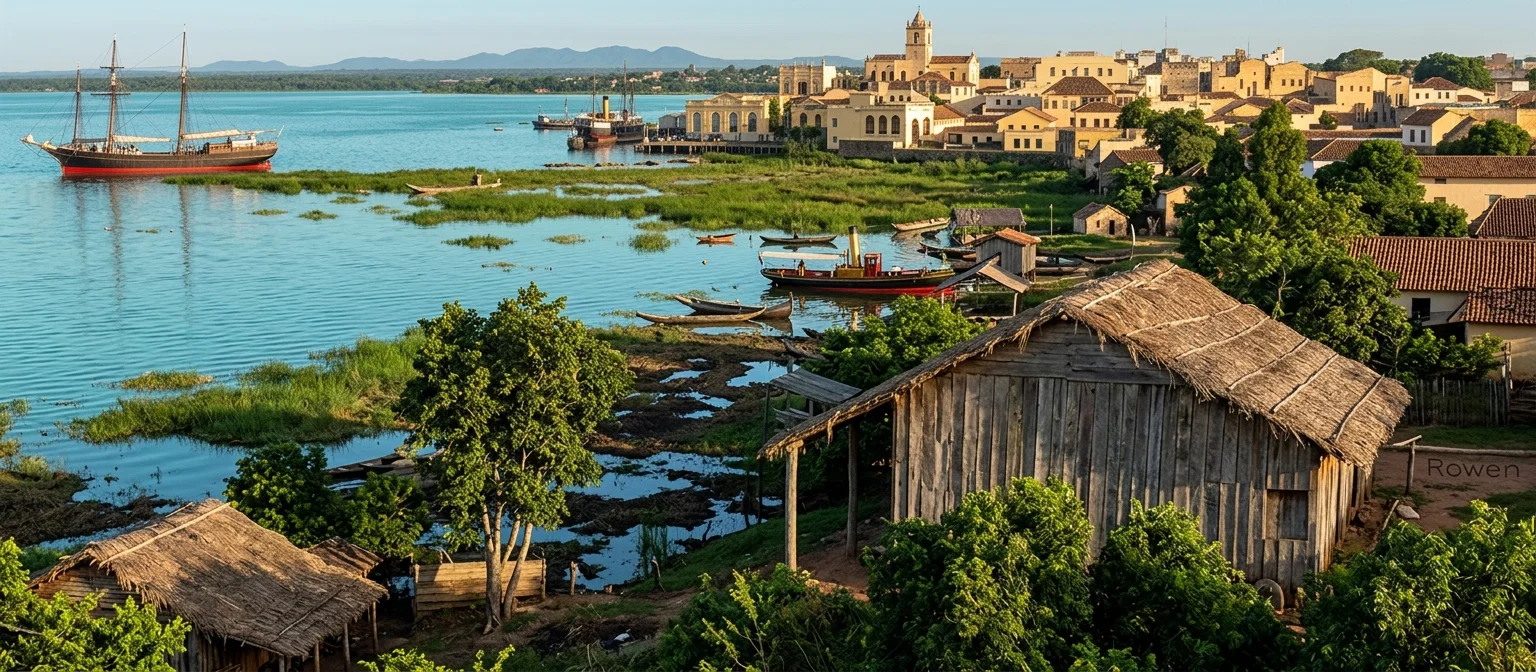
ASUNCION HARBOR
ASUNCION HARBOR
This colony was founded in 1881, and is the oldest and largest settlement of foreigners in Paraguay, numbering one thousand souls, more or less, nearly all being of German nationality. Situated on the northern shore of Lake Ipacaray, it is reached by steamer, which connects it with the nearest railroad station of the Paraguay Central. The water trip is about five and one-half miles long, and two hours more are required to make the journey to Asuncion.
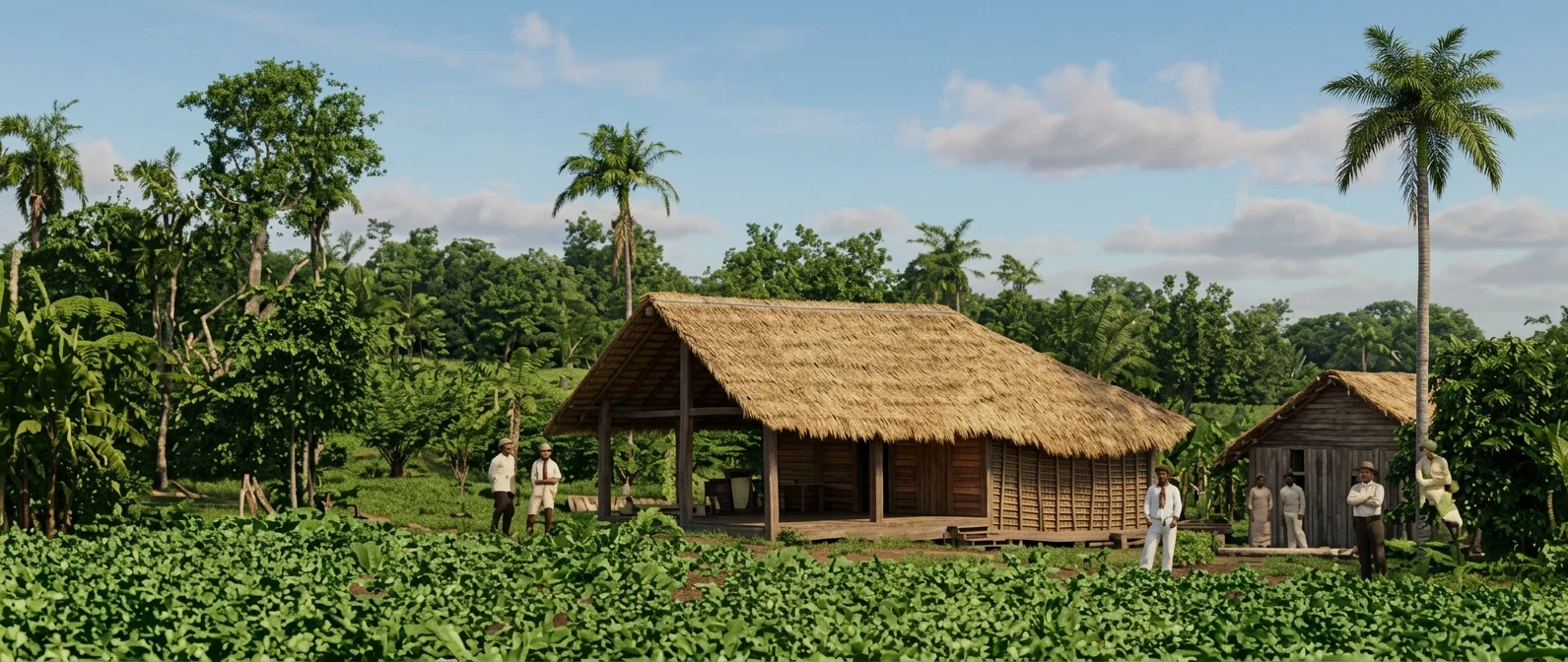
The damp, cloudy, dreary days of the Argentine winter drive many of the better-to-do Argentines to the sunny clime of Paraguay, during the months of June, July, and August; and San Bernardino, with its picturesque location on the lake shore, and with a range of mountains in the background, attracts a goodly number of these visitors. The income thus derived is the mainstay of the colony. The first impression of the village received by a North American on arriving, is that of a summer resort, the one-story brick structures, with roof of zinc and wide corridors or piazzas, presenting an attractive and comfortable appearance. The country around the village within a radius of seven or eight miles is settled by German farmers, the greater number of whom live by the cultivation of corn and vegetables and the making of butter and cheese, which are sold in the village and in Asuncion. Notwithstanding the accumulations that they have in the bank, nearly all live with few of the conveniences, to say nothing of comforts. Recently we had occasion to pass the night with one of this class. His house, a one-story brick structure, with floor of the same material and roof of straw thatch, consisted of one general living-room, and a small bedroom attached to one end. The furniture was scanty and very plain, consisting of a rough board bench, a table, and a few chairs, of the same material. A wardrobe, cold cupboard, and a few rough board beds completed the outfit. Their accustomed manner of eating indicated that table-cloths, as well as knives and forks, for general use, were considered superfluous, while inquiry solicited the fact that a wash-basin and towels were not to be had. In view of these facts, our surprise may be imagined when told that this man was considered a well-to-do colonist, with over ten thousand pesos Paraguayan currency in the bank.
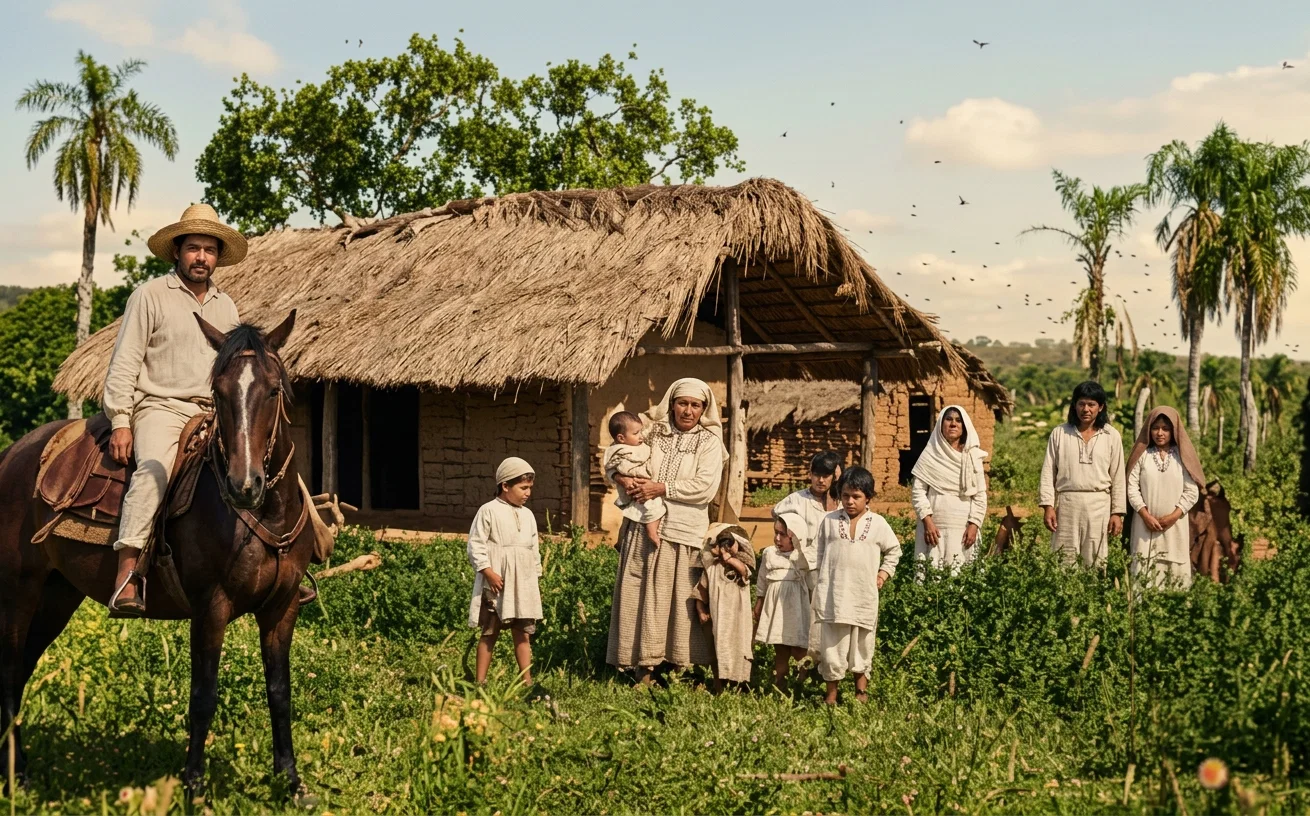
PARAGUAYAN FAMILY
PARAGUAYAN FAMILY
A COLONIST’S HOME
A COLONIST’S HOME
The spirit of covetousness and mammon worship rules here quite as generally as in the United States, although the folly of this spirit is more manifest here, from the fact that money has comparatively little purchasing power in supplying the highest-priced imported conveniences and comforts, since it has greatly depreciated in value. At present it is worth only about ten cents gold to the peso, which corresponds to the United States dollar. We are often made sad by the thought that these poor people will spend money for that which is not bread, and their labor for that which satisfies not.
With all the wealth one can accumulate, life in the interior of Paraguay is but a mere existence, tending to the development of the animal, to the deterioration of the intellectual and spiritual nature. The colonist on settling here finds his neighbors to be of the lower class of Paraguayans, living in ranchos. The climate being warm nearly the entire year, and cotton goods being expensive, clothing for Paraguayan children of both sexes, until of quite an advanced age, seems to be considered unnecessary. There is no recognized standard of purity and morality to serve as a basis on which to appeal to the people here. The would-be reformer in this country must undertake the up-hill work of creating a standard himself, by arousing public sentiment on the subject.
The difficulty of this reform work will be more apparent from the fact that in the native Paraguayan language no corresponding expressions to these virtues are found. The excessive and general use of tobacco among both men and women tends also to grossness, and to the obliteration of all sense of shame because of their degraded condition. These depressing influences surrounding the children of foreigners, together with the absence of almost all intellectual and moral influences in the home, will account for their degradation to almost the level of the native. One indication of this condition is the frequent elopements of daughters of foreign colonists with Paraguayan peons. However, the parents are not without responsibility inthese cases. Having come from Europe with the faith of the state church, which at best is but an empty form, they soon, under their depressing environment, lose sight of even this, and, like a drowning man grasping at straws, many of them find consolation in spiritism and theosophy.
These delusions are making an alarming headway all through this part of South America, their adherents in this colony numbering over one hundred families of foreigners. We are safe in saying that the individuals who have a daily Christian experience can be counted on the fingers of one's hands.
But in nature there is abundant evidence of that invisible Power that is constantly at work as man's servant to feed and clothe him. Footprints of this love are seen everywhere. The mountain, in the form of terrace on terrace, recedes from the back of the village, and is covered with perpetual green, dotted here and there with trees laden with beautiful pink and golden flowers, which in the distance appear like huge rose-bushes in bloom.
The country is covered with timber, and is well watered, in the latter respect reminding us of the mountain streams and springs of Pennsylvania. Severe droughts are almost unknown here, although during the months of August and January there is but little rain.
In all work the most primitive methods are employed. The greater part of the timber for building purposes is cut by hand, while the land is mainly cultivated with only the aid of a hoe. Hand cultivation is necessitated by the fact that in clearing the land only the small wood and brush are burned, while the trunks are left wherever they happen to fall, until they rot. Apparently, the stumps and tree trunks occupy as much space as the available land for cultivation. In places where the land will permit of plowing, we find the most primitive implement for this purpose in use. This may be described as a stick of timber about three by four inches thick and about twelve feet long, to one end of which is securely fastened a piece of wood about two feet long, which is so inserted as to make an acute angle with the main beam. The latter piece is usually covered with thin iron, and serves to scratch the ground. The plow, or scratcher, is guided by one vertical handle, and usually one man is employed to guide the plow, while another drives the oxen.
Owing to such primitive methods of cultivation, the individual farmer finds eight or ten acres sufficient for his purpose; and although his corn and other products bring good prices, owing to the small area cultivated, his income is necessarily small. Corn in the season of plenty sells at sixty-eight cents a bushel, and at the present time, owing to scarcity, it sells as high as $1.40 a bushel.
Before concluding, we can only express gratitude that the precious seed of the Word has found lodgment in some good and honest hearts, although the soil seems to be generally quite barren for the seed sowing. Four adults have begun to keep the Sabbath, while others are interested. The Harold and the Hausfreund are also coming into ten families from month to month, laden with present truth. We might be discouraged at the unfavorable situation, if we were not assured that where sin abounds, grace much more abounds. We are confident that the power of the Lord is present to heal all of sin and its consequences as verily as it was with the Saviour as he trod the earth. We solicit the prayers of all of like precious faith in behalf of this dark land.
Asuncion, Paraguay.