Glimpses of India

6%

Seventh-day Adventist Publishing Association · Battle Creek, Mich. · Dec 23, 1902

FromReview and Herald, Vol. 79, No. 51.

Read the full edition

Glimpses of India

MRS. D. A. ROBINSON
At the present day, caste is regarded by other nations of the world as the characteristic feature of the Hindus. The word itself is derived from a Portuguese word, “casta,” race, and as used by Europeans denotes the different classes into which Hindu society is divided. Indian caste is different from the civil and social distinctions of other nations in this respect; it is derived by birth alone. “It cannot be transferred from one class to another; neither can it be gained as a reward for the highest merit, nor bestowed as an honorary title by the most powerful monarch.” There are many stories as to its origin, but probably the first cause was the difference of race, then difference of employment was another cause, and difference of place a third cause.
There are four main divisions: (1) the Brahman, or priest; (2) the Rajput, or warrior; (3) the Vaisya, or husbandman; (4) and the Sudra, or servant caste. These have been subdivided into almost innumerable classes, or castes. The Brahman is the highest caste, andamong these about two thousand subdivisions are enumerated, which keep nearly as much aloof from one another as if they were distinct castes. There are “a thousand and one” regulations, nearly all childish and frivolous, and some of them leading to much suffering. Suppose a Brahman wishes to dine with a man of another caste; however good friends they may be, caste says, No, you must not do that, or you will be excommunicated. If a Brahman is thirsty and has no water but what is brought by a Sudra near him, he cannot drink it. He must not drink from a glass that has been used by a European, or even take a glass of pure water from the hands of a European. During famine, people dying of hunger have refused food offered by Europeans. Should the shadow of a European fall upon the food prepared for him, it must not be eaten.
The high caste man is defiled by the low caste man, but the low caste man is not defiled by contact with any one. So the higher one ascends in the scale, the more difficult does it become to keep from being polluted. For this reason, the Brahman, who is the highest of all, must cook his own food, and draw his own water. Brahman cooks are much sought after for the army, as there are some high caste men among the soldiers. A Brahman will even turn aside and spit if a low caste man should pass him on the street. The low caste man therefore has the advantage in some respects; for him he can go carelessly about the street without fear of some one touching him, or some one's shadow falling upon him; for he cannot be polluted. High caste does not imply wealth. Indeed, a low caste man, may, if wealthy, hire a high caste man as a servant; and under foreign rulers, being of low caste does not prevent one, if otherwise qualified, from rising to high power. Some of the native princes, it is said, are of low caste. The proudest rajah will do homage, though, to the man wearing the sacred thread, or bearing other marks of belonging to the sacred order of the Brahmans; for the poorest Brahman in all India is the superior of any man not of his own caste.
It would be a hopelessly long task to go into a description of the endless castes in India, so I will speak only of some in the servant class. Among the Sudras, the subdivisions are no less numerous. “Every trade or occupation in India is in reality a caste hereditary in certain families.” Hence, in a household it is necessary to have many servants. You must not think that the man who does your marketing and cooks for you will bring water or wood for you, or care for your lamps; and as for sweeping the floor, you could not offer him a greater insult than to ask him to do such a thing. So we have a bearer who takes care of the lamps, dusts the house, washes dishes, etc. Many also have a man, called a khitmagar, who assists the cook in preparing the meals, preparing the table, waiting on the table, washing dishes, etc. But none of these would sweep the floor; this must be done by a man of the sweeper caste, which is considered the lowest class. He is supposed to be willing to do the most menial work, and no other servant will touch utensils that he touches. He is the only one of the servants who will eat any food that has been upon the table of a European.
The washing for the family is done by a man belonging to the dhobee caste, who comes to the house for the soiled clothes, and after counting the pieces in your presence, takes them away, perhaps to some tank where others do the same work, washes and dries them, then takes them to his home, and after they are ironed, returns them to you; and you may think yourself very fortunate if on looking them over, you do not find that in some way articles bearing some name not your own be found among them, though the number may be correct. He cannot understand why one handkerchief is not as good as another, nor why you should insist on having your own towels or sheets.
Then there is the mali, or gardener, who sees that the table is supplied with flowers, and gathers whatever vegetables may be wanted, if you have ground sufficient to raise them. Each morning you will receive a visit from him to get your order; for he does not like to have any one else gather what he has tended, and besides, while he is picking peas or beans for you, why should he not gather a few handfuls for himself, to be taken to his own family when he returns? Surely he will enjoy them as much as the sahib, and is he not one of the sahib’s children?
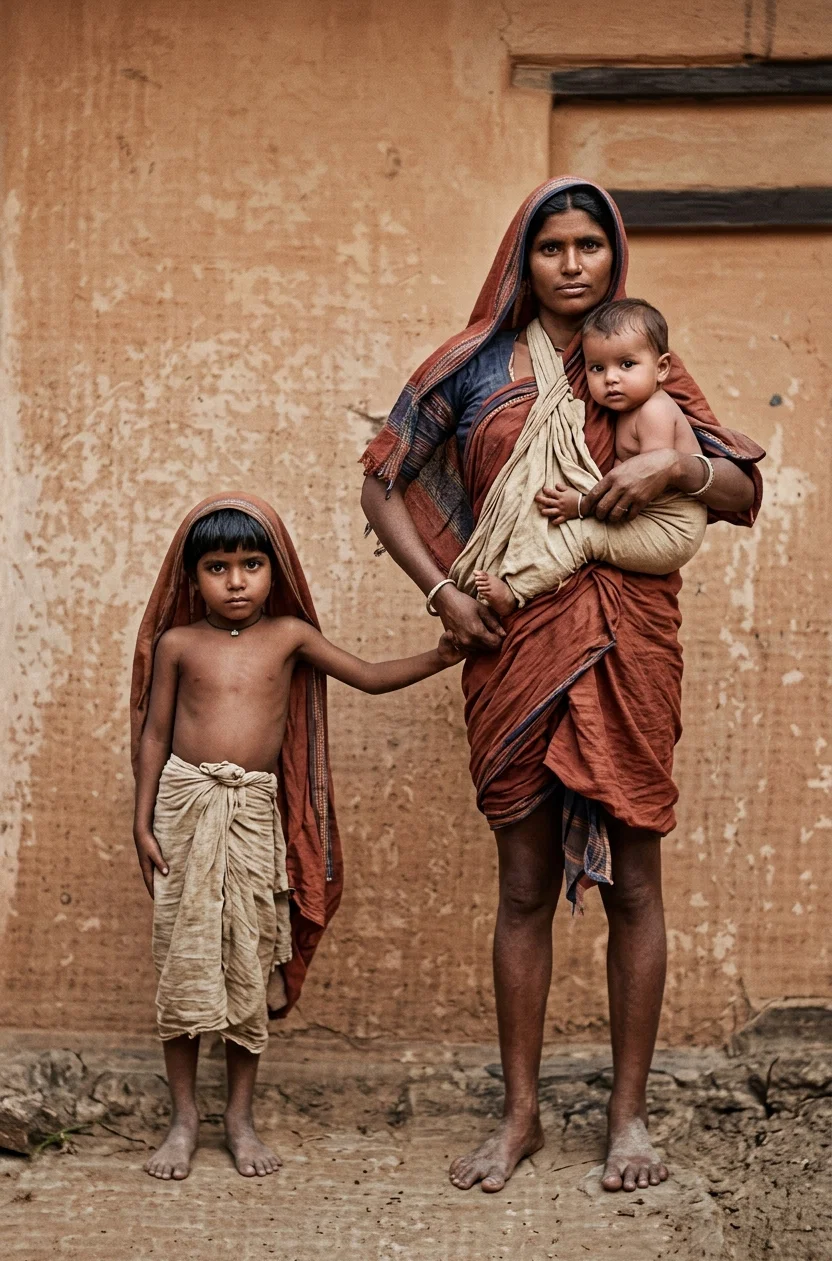
LOW. CASTE NATIVES OF RAJPUTANA
Should you wish to have sewing done, you would call in a dhurzie, or tailor, who will take your measure, give you a Butterick’s pattern book to choose a pattern from, then if you give him an old garment that fits you perfectly, he will take the work home, and in a few days bring your garment ready to wear, and rarely will it have to be altered if you have a good dhurzie. For family sewing you can hire a man by the month, to sit on the veranda and sew for you, which is a cheaper way.
People who wish to keep a horse and carriage, must have a groom, who will care for the horse, feed, harness, and drive it; but he could not cut the grass for it without breaking his caste, so a cooly is hired to go out and cut the grass, and bring it to the stable.
Many ladies have a maidservant, called an ayah, who takes care of the children, waits upon the mistress, etc. In many families where an ayah is kept, the young children speak and understand the language of the ayah before they do that of the mother.
If living in a city, a durwan, or gate keeper, is necessary, to protect you from thieves and disagreeable visitors. It is said that every durwan is a thief, who keeps away all other thieves. He is supposed not to let any one carry away things from the house, belonging to any one living there. In other words, he is responsible for the safe keeping of everything inside the gate.
A SERVANT
A SERVANT
I have spoken only of the house servants. As I said before, every trade or occupation is a caste by itself. There are the carpenters, furniture makers, workers in brass, copper, iron, etc., weavers of mats, straw carpets, etc., dealers in grain, shopkeepers of every kind imaginable, besides the almost innumerable company that work on the land. And among all this great number of human beings, very, very few of them have ever heard of the Saviour, or that “God so loved the world, that he gave his only begotten Son, that whosoever believeth in him should not perish, but have ever lasting life.” They have not been told that “God is no respecter of persons: but in every nation he that feareth him, and worketh righteousness, is accepted with him.” What can you do to help send this good news to them?
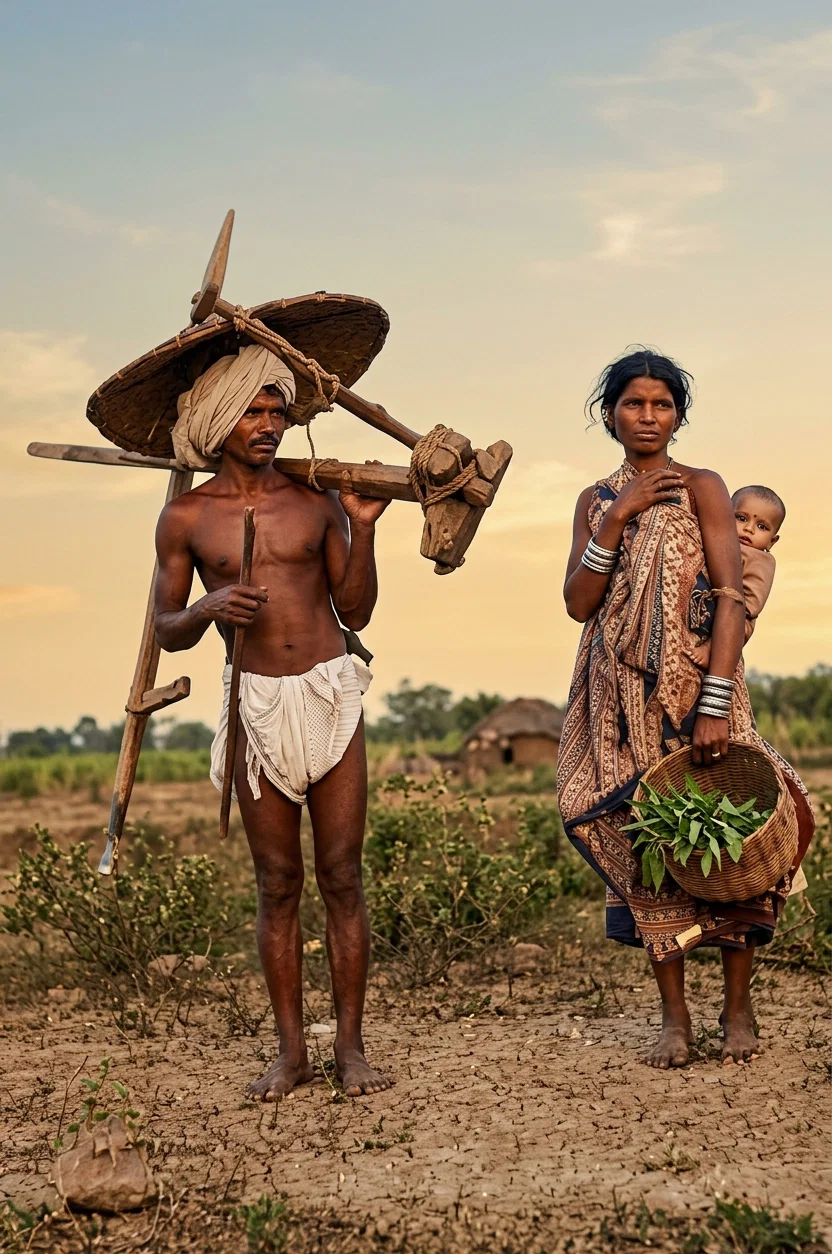
FARMERS WITH PLOW
FARMERS WITH PLOW