OTTO LUNDELL

11%

Seventh-day Adventist Publishing Association · Battle Creek, Mich. · Nov 4, 1902

FromReview and Herald, Vol. 79, No. 44.

Read the full edition

OTTO LUNDELL

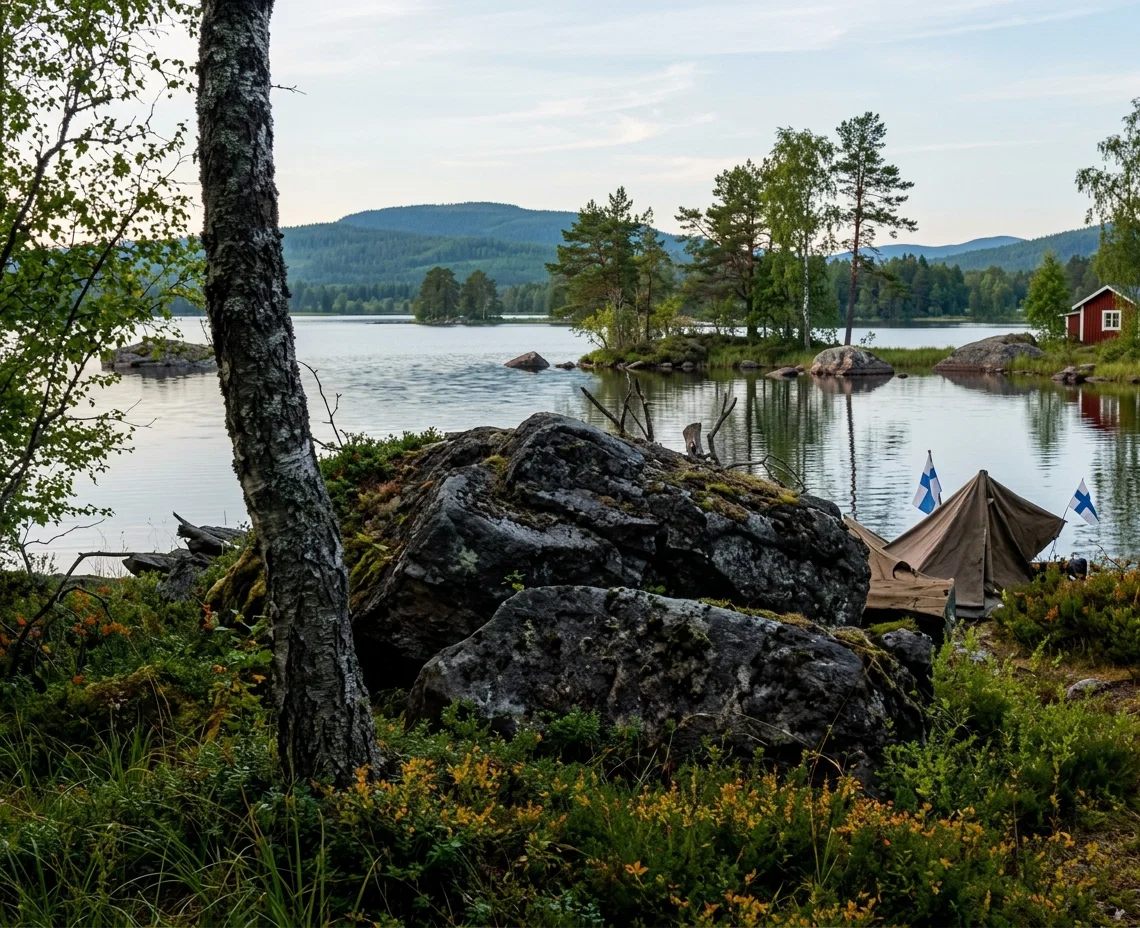
A SCENE IN FINLAND
A SCENE IN FINLAND

Finland

OTTO LUNDELL

Coming in contact with the people of Finland, it is evident that they are better educated than one would at first believe. I do not know that I ever found a place where the people could not read and write, if they were not too old and feeble to do so. Those who can, give their children a higher education, sending them to the university after they have gone through the preparatory schools, and are proud to have their children, whom they have worked so hard to support, bear the title of pastor, professor, etc.
Finland is a country where education is rapidly advancing. In the year 1890 the total population was 2,380,000, and it is no fewer than 540,412 attended school. Of the entire population, about twenty-three out of every one hundred are actually at school. There are 2,608 university students, including women. At the lycée there are 4,723. The primary schools have an enrollment of 419,867. With such a foundation, one is no longer surprised to read the long list of learned societies which flourish here—philological, juridical, medical, scientific, and literary. One of these, the Society of Finnish Literature, is laying the world under obligations by the wealth of folk songs it has discovered and preserved.
The university of the country is to be found in Helsingfors, which is the capital of Finland. The university building is named after Alexander I, whose bust occupies the place of honor in the vestibule.
The most interesting buildings in Helsingfors, or “Helsinki,” as it is called in the Finnish language, are the Senate House, with a magnificent place of assembly, where the emperor, when present, opens the Diet; and Standerhuset, the Estates House, with its three halls where the representatives of the clergy, the bourgeoisie, and peasants sit during the rare meetings of the Diet. In the architecture of these buildings there is nothing remarkable. They are dignified, simple, and modern.
Forty years ago there were only about twenty thousand inhabitants in Helsingfors, but to-day there are more than four times as many. There is no capital city in the world that surpasses it in cleanliness, convenience, and all the externals of modern civilization. Small electric cars, models of their kind, run through the streets, and furnish rapid and comfortable transport to all parts. And from the capital a person can now get telephone connections with almost any part of the country. All these things are preparing the way for the last message.