The German Union Conference

3%

Seventh-day Adventist Publishing Association · Battle Creek, Mich. · Jun 24, 1902

FromReview and Herald, Vol. 79, No. 25.

Read the full edition

The German Union Conference

ANOTHER quarter is now in the past,—the third since the organization of the German Union Conference,—and it has proved the most prosperous quarter the field has ever had. In our last report, we mentioned the annual meetings of the various conferences and missions in this union, with the exception of the Austro-Hungarian and Balkan States Mission, whose annual meetings had not been held.
On the fifth of March the writer left Hamburg, to visit the Austro-Hungarian and Balkan States Mission, which has a population of sixty million; but as the territory of this field was so large, it has been thought best to take Austria (that part of the field in which I called first) under the immediate supervision of the German Union Conference, and set it apart as an unorganized mission field.

Austria

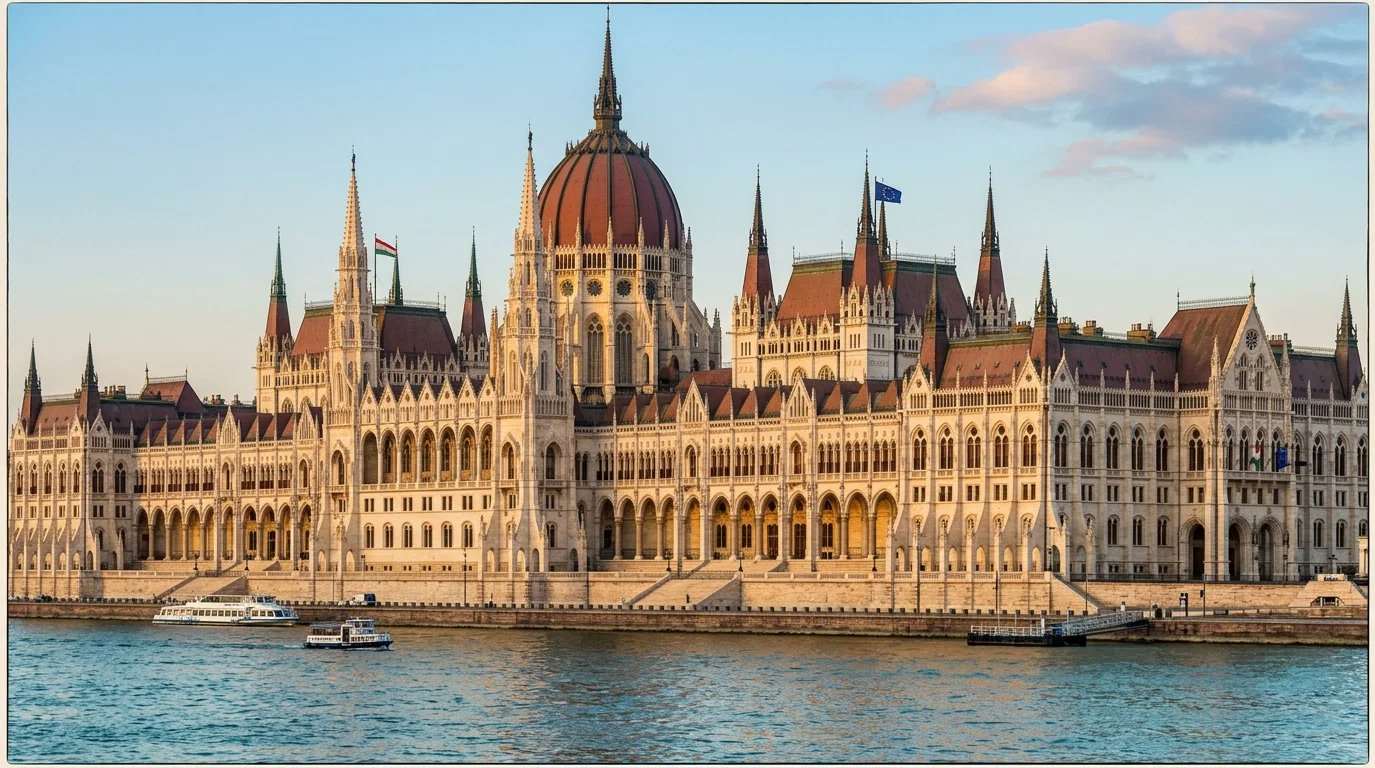
HOUSE OF PARLIAMENT, BUDAPEST
Austria proper has twenty-six million inhabitants, and up to October last, when Elder Lorenz began laboring there, we did not have a single laborer in the whole country. The work was begun in the city of Prague, noted because of the part Huss and Jerome took in paving the way for the great Reformation. Brother Lorenz found here a company of four Sabbath keepers. As the most of his hearers were Bohemians, our Brother Simon has been acting as interpreter; and when I visited the city, I found a room filled with interested listeners. Elder Lorenz expected to have baptism during the month of May, if nothing prevented. The prospect for the future of the work here is bright. Brother Simon has been granted missionary license by the German Union Conference; but what are two laborers among twenty-six million? Surely much more ought to be done for this country. Over twenty thousand have recently left the Catholic Church in the “Separation from Rome” movement. We should by all means enter Vienna soon, which, including the suburbs, contains two million souls.
Three days by rail took me from Vienna to Constantza, Rumania, on the Black Sea, where the general meeting for the Balkan States (Rumania, Servia, Bulgaria, and Montenegro) had been appointed for March 13–17. These states contain twelve millions of people. At Constantza we have a German-Russian church, and there is another about thirty-five miles farther south, the membership of the two being about seventy. We secured a house in Constantza, and nearly all the brethren and sisters in the district were in attendance at the meetings. This is the first general meeting we ever held in this part of the field. Elder Huenergardt, who had been visiting several places in Bulgaria for three weeks, was with us. Our people were much strengthened by this gathering. They took a great interest in our Friedensau school, as well as in our publishing work. Several copies of “Christ’s Object Lessons” were sold, and the brethren donated as liberally as they could toward the cost of the material used in the manufacture of the book. The Sabbath school was conducted in three different languages—German, Russian, and Turkish. Our brethren in Bulgaria could not be present with us, as the government would not issue them the necessary passports. We have one canvasser and Bible worker in Bulgaria, and a preacher in Rumania, and another German Bible worker has lately entered Bucharest, the capital of Rumania. This city contains four hundred thousand people. We have recently published “His Glorious Appearing,” in Rumanian, and a book containing about thirty Bible readings, in Bulgarian.
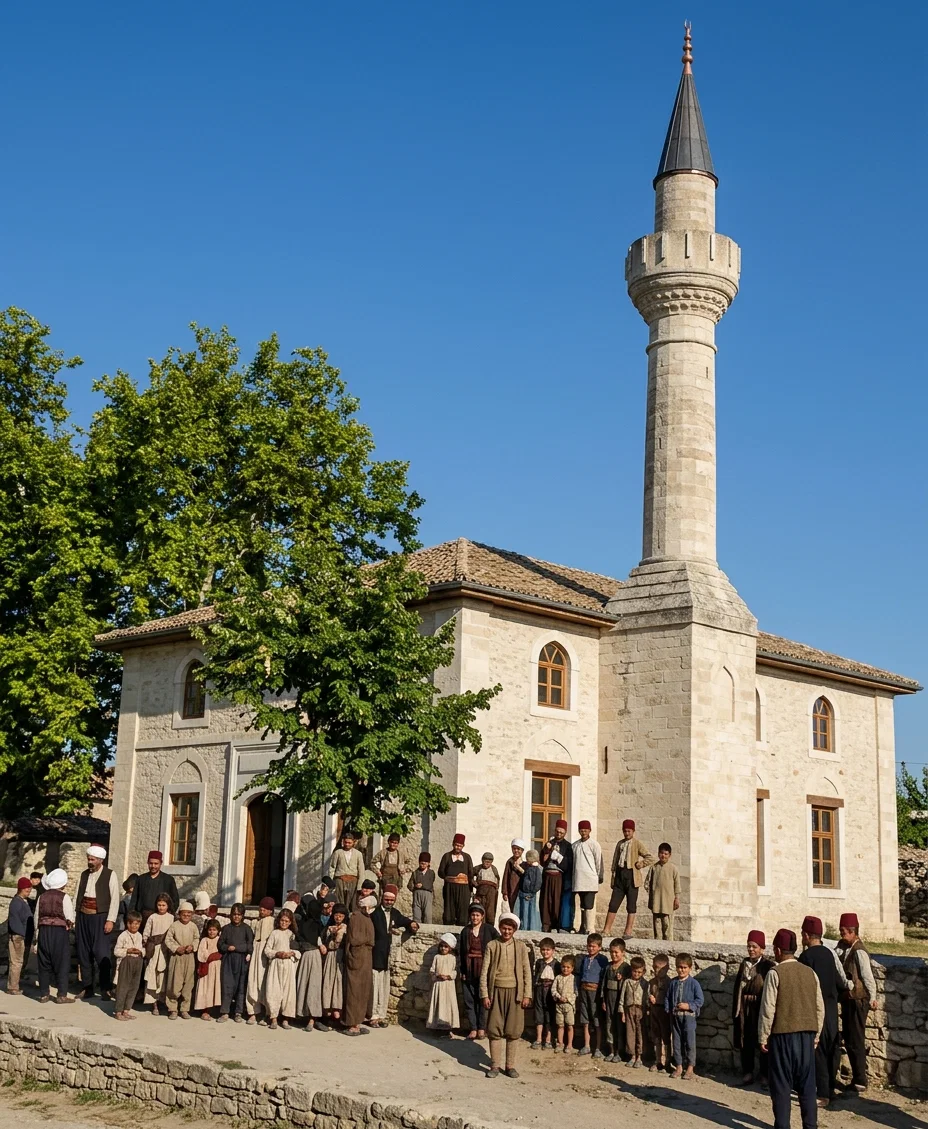
TURKISH MOSQUE IN THE RUMANIAN DOBRUDSHA
From Constantza, Elder Huenergardt and I went to Kolozsvár, Hungaria, where we had a general meeting for the Hungarian field, March 18–24. This city has forty thousand inhabitants, and contains a church of forty members. Our meetings here were very good. On Sunday, five persons were baptized. Among them was a man ninety years of age, who had been desiring baptism for ten years; but as he was engaged in the sale of liquor, we could not feel free to administer to him this sacred rite so long as he continued in that business. For a long time he had been praying that the Lord would free him, and when his business was so arranged that he could finally sell out, his joy knew no bounds, and with tears in his eyes, he gathered his relatives together, and told them what a happy day it was for him when he could take this step. He felt grateful that the Lord had spared his life to such an advanced age. From the first, he had been paying his tithe, and supporting the work, thus proving the genuineness of his interest.
We rented a hall here in Kolozsvár, and secured an attendance of one hundred and fifty—the largest ever obtained in Hungaria. The Sabbath school was conducted in German, Hungarian, and Rumanian, and there was also a Slavonian brother present. He, with twelve others, accepted the Sabbath several years ago, but could not fully unite with us. Before this meeting closed, he gave several excellent testimonies, in which he stated that it was his intention not only fully to identify himself with us, but also to encourage the others to do likewise.
Brother Huenergardt was again chosen director of the field. Here we have, for the thirty millions of people, only one ordained minister, one licentiate, and a few Bible workers and canvassers. There are now two hundred and three Sabbath keepers in the Hungarian and Balkan States Mission. The tithe for the last nine months has been $510; their other offerings, $95; and they have sold about $500 worth of books. We ought surely to have another strong man to take charge of the Balkan States portion of this mission, as Brother Huenergardt’s hands are more than full with the twenty million Hungarians. “His Glorious Appearing” is now being translated into the Hungarian language. We have thus far been able to secure but three government permits to carry forward the canvassing work, and one of these has been canceled because somebody complained that our literature is sectarian.

East German Conference

On my return I stopped in Dresden, the beautiful capital of Saxony, to baptize five souls (at night). Saxony is almost wholly Protestant, but the court and one hundred thousand inhabitants are Romanists. Centuries ago the ruling house became Catholic, that the kingdom of Poland might be theirs. Saxony is one of the most difficult fields with which we have to deal, as far as liberty to carry on our labors is concerned. Every meeting we hold is attended by detectives, who take notes of what is said. Several times Elder Perk has been called before the justices, and taken to task for things he has preached; and as he is a Russian citizen, they have threatened to send him out of the country. We are not permitted to take up collections or Sabbath-school donations, even in our own meetings. No one is allowed to unite with us, except he be of age, and has, by a long course of legal proceedings, left the state church; and yet the work is growing, and we already have three churches in the three largest cities of the country. Men may hinder, but God prospers. Elder Pieper, the conference president, also had quite an experience while attempting to baptize several sisters. The husband of one, being opposed to the celebration of the ordinance, complained to the mayor of the town, and a mob gathered, bursting open the doors where our brethren were assembled, beating our people, and knocking the minister on the head, so that the blood streamed down his face. The matter is now up for trial. Thus we see that the dragon’s wrath is being stirred up against those who are accepting the commandments of God and the faith of Jesus. The East German Conference had sixty-seven accessions during the past three months, making its present membership nine hundred and thirty-two.

Western Germany

This section of the German Union has also had quite a growth. Elder H. F. Schuberth has been working in Schleswig-Holstein, raising up a company there. Some were baptized at Hamburg. Brother G. Schubert has labored with some success at Hildesheim, and Brother Wolfgarten, at Kassel. On my return, we had a good general meeting at Elberfeld, Rhenish Prussia, March 27–30. About one hundred and fifty of our people were in attendance, and there was also some outside interest. Elder Stuckrath baptized four during the meeting. The collection for the mission field amounted to thirteen dollars, and the brethren also bought several copies of “Christ’s Object Lessons,” and contributed toward the fund for the payment of the material and manufacture of the book. During the last quarter, the West German Conference shows an increase of fifty-one members, the present membership being nine hundred and ninety-nine. Their canvassers are also on the increase, and two general agents are in the field.

Holland Conference

The last quarter was the best the Holland Conference has ever had, no less than forty-seven being received into church membership. The churches at Amsterdam and Rotterdam were strengthened, and a new company was raised up at Gröningen, in the eastern part of the country, where Elder Rijsdam is laboring. They have eleven canvassers in the field, and Brother Klingbeil reports that the outlook is favorable for the work there. They have recently sent a sister to Hamburg to be educated, that she may become the treasurer and secretary of Holland. As a denomination our people have received government recognition, so our children will not need to attend the schools on Sabbath, and this recognition will also help us in securing favors while in military service. The Dutch paper has a circulation of four thousand monthly, and many of these papers are now going to the Boer camps in various parts of the world.

German-Swiss Conference

This conference also has an encouraging report to offer. A number have been baptized at Basel. Brother Voth has been laboring at St. Gallen, in the eastern part of the country, where we once had a church. Brother Erzenberger has moved to Berne, the capital. The membership of this conference is two hundred and forty-five.

Northern Russia

Here the work is making steady progress. Brethren Gaede and Voss, who had their passports taken from them while laboring in Western Russia, have again received these documents, so indispensable in that empire, and the work is going forward. Sixteen united with this part of the field last quarter, and since then they have had a number of baptisms. The chief centers of growth are in the west, and our numbers are also increasing in St. Petersburg and among the Esthonians. One of our brethren was in jail several days because he sold publications without the permission which he had vainly tried to obtain.

South Russian Conference

This field suffers because of the illness of its president, Brother H. J. Loebsack, who has been unable to visit the churches; and we have no one to take his place. Elder H. K. Loebsack has moved to the Volga district, and is having success there. The work is also going well in Bessarabia and in the Crimea. Forty-nine were baptized during the quarter, bringing their membership up to seven hundred and seventy-eight. Russia suffers greatly from poor harvests, and in some sections of the country there seems to be serious disaffection, bordering almost on revolution. In consequence, many of the Germans are leaving the country.

Middle Russia

We are also glad to state that among the one hundred millions of Russians the truth is onward, far more than we can tell at present. The work has to be done in a careful manner, mostly in night meetings, and very often members have to suffer imprisonment for months, yet the Lord is adding to our membership. The report for the last quarter has not yet reached us.
The total summary for the whole German Union Conference shows two hundred and twelve baptized, and sixty-one received by vote, making two hundred and seventy-three accessions to our numbers during the last three months, thus bringing our membership up to 4,913, while our book sales were nearly $10,000; tithe, $6,630; and other gifts, $900.

The Publishing House

The standing of this branch of the work is the best it has ever been. Our German missionary paper, the Harold, has a semimonthly circulation of twenty-five thousand copies, and the list on our other papers is increasing. As many of my readers may have heard, an apostate Sabbath keeper reported us to the police, for Sunday labor. In consequence, the manager and the writer were each fined $2.50, and the trial dragged along for six months, during which we gladly worked on. We appealed the case. Our lawyer, after carefully looking into the present factory law, told us that neither the judges nor the Hamburg Senate could in any way give us liberty to do full Sunday work. And on the 20th of April, the time set for the trial, the judges called us aside, and told us that they would counsel us before we entered the trial, to withdraw our appeal, as our case was absolutely hopeless. They had imposed the lowest fine they could, and had granted us the privilege of working five hours on Sunday, in the future. The only way open to us would be to ask the German Parliament to make a special exception to the law in our case; but of this there would be little use as long as we are an unrecognized denomination. We have now so arranged it that, during the five working days, our employees spend eleven hours a day in the office, and work five hours on Sunday. We have a special missionary meeting for the office employees on that day, and from half-past one their time is free to spend in missionary work in the city.

Mission Boat

Our mission boat is doing a good work in the Hamburg harbor. Our pilot sold about thirty copies of “Christ’s Object Lessons” while the boat was in winter quarters. We are selling a good many other books, especially to the Dutch ships. We are sure that much more might be done among the emigrants who are leaving for America, if we only had the means and more help.

The Friedensau Institutions

Our nut-food factory in Friedensau is gaining in its sales, averaging about one thousand dollars a month. The sanitarium has ten or twelve patients. Two of our nurses have received state diplomas, having passed the state examinations, and several who have been in Berlin and Hamburg, have secured good places, giving treatments in the best families, even being received into two physicians’ homes. Our school buildingsare full, with forty students in attendance. We have several students from Russia, and the Russian language has now been adopted in the school curriculum. When I was in Friedensau a few days ago, I found our new school building in course of erection, the basement and first story nearing completion. Our new dwelling house is already fully occupied. We are pleased to learn that our German brethren in America have nearly sold their first edition of “Christ’s Object Lessons,” and we expect soon to receive help from that source. This will come in very good, as we have had to make the first payment on the new school building, which is to be under roof in July. The strict license laws governing canvassers and those who would sell even a few copies of the book very seriously hinder our German brethren in Europe when they attempt to circulate any number of “Christ’s Object Lessons,” and yet we have already sold our first thousand, and are now disposing of the second.
Throughout our field in general, there is a great financial stringency, and this is especially true in Germany; but we are thankful to God that thus far the work has not felt this very keenly. He has indeed granted us his rich blessing. What we long and pray for in this field is a greater force of workers, thoroughly tried and consecrated, to press the battle to the front, and to gain the victory, that the number of God’s people may be made up, and that glad day hastened when he shall appear.
L. R. CONRADI.