We are happy to report that our people are contributing so well for our little oil launch. We have received about six hundred dollars so far, and we hear of more to come. One blind brother in New Zealand sent us over ten dollars. Our native brethren have done well. Money is very hard for them to obtain, yet our Fijian company raised over one hundred dollars toward the launch. When I told our boat builder that they had given over twenty pounds, he was much surprised, and told me that if they had given only twenty shillings, he would have thought that they had done well.
We shall be glad when our launch is finished. We have a good supply of books to sell, but are crippled without a boat. We have a large number of tracts and papers also. Those who live in countries where there are roads hardly realize how we are situated here. There are eighty inhabited islands, and the settlements are usually near the coasts, and in many cases there is only the roughest kind of a trail from town to town. A short time ago Brother Currow and I walked along the coast on one of these roads. We were compelled to swim rivers where sharks are abundant; in fact, one of the rivers we crossed is called the Hole of Sharks. Most of the natives travel in boats or canoes. Good roads are rare, and are built only by the government.
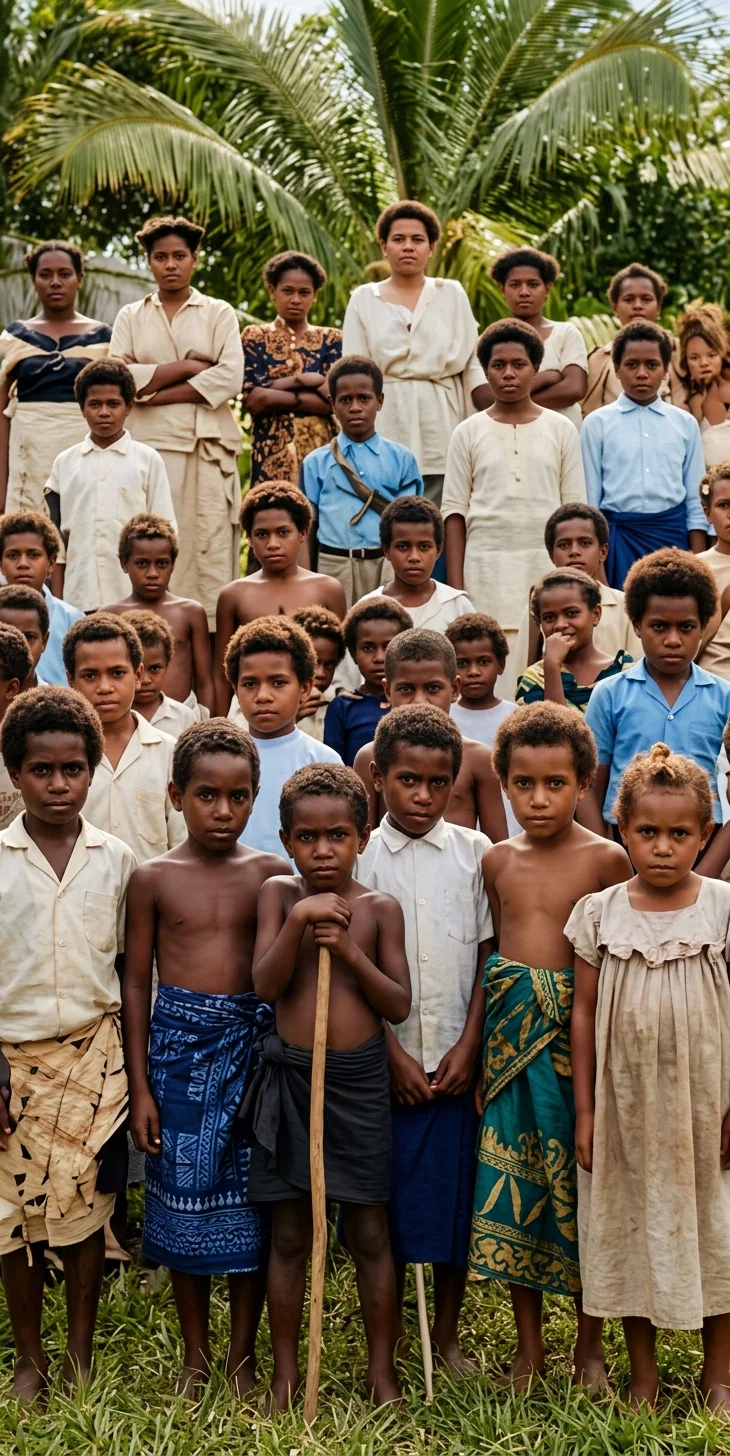
We have had a number of applications recently from half-castes and natives, asking us to take their children into our school. We have received some, and we must take others. The last one to come is the eighteen-year-old son of a native preacher. This is quite a step for the father to take. He has been interested in our work, and has been a subscriber to our little native paper, for over a year. He also bought a book from us, and asks for tracts on different points of faith. The half-castes, as they are called here—the children of white fathers who have native wives—are in great need of help. There are many of these who desire education. We have one half-caste boy with us now—a very good boy. A girl from the same family wishes to come. We are taking these children, and caring for them just as we do for our own children. We realize that it is a great work properly to teach these young people who cast themselves upon our care. Some of the parents are able to help support their children, but we can hardly expect to get full remuneration in many cases.
With the work of preaching and going from place to place with our literature, we find ourselves unable to do the work of teaching as it should be done. We are now asking our Polynesian committee to send us a teacher. If this is done, our work can be carried on more successfully. The public schools of Fiji are raising the tuition of natives and half-castes to such a high rate that it practically debars them. An effort to help these poor young people should be made now.
A GROUP OF FIJIAN CHILDREN
A Call for Help
Our Fijian brethren here in Suva Vou wish to erect a church building. They are willing to sacrifice, as has been proved by the fact that they have given over one hundred dollars to buy a new boat. But they will need help in building a church, and we invite any one who believes this to be a worthy cause to contribute toward such a fund. All donations should be sent to the Mission Board or to the nearest tract society. The building now used for a church is needed for other purposes, and as the number of our students increases, a church building is greatly needed. We trust that we may have the help of some of our brethren who have means.
We believe that the Lord is opening the way before us here. We ask for the prayers of God's people that we may have grace and wisdom. Pray that our physical strength may be sustained. In giving to our mission work, you will become foreign missionaries, and will some day rejoice in seeing some of these poor people in the kingdom of God.