Reminiscences of the Days of Our Imprisonment

7%

Review and Herald Publishing Association · Takoma Park Station, Washington, D. C. · Dec 12, 1907

FromReview and Herald, Vol. 84, No. 50.

Read the full edition

Reminiscences of the Days of Our Imprisonment

How the Truth Made Its Way in Russia
H. J. LOEBSACK
“But call to remembrance the former days, in which, after ye were enlightened, ye endured a great conflict of sufferings; partly, being made a gazing-stock both by reproaches and afflictions; and partly, becoming partakers with them that were so used.” Heb. 10:32, 33, R. V.
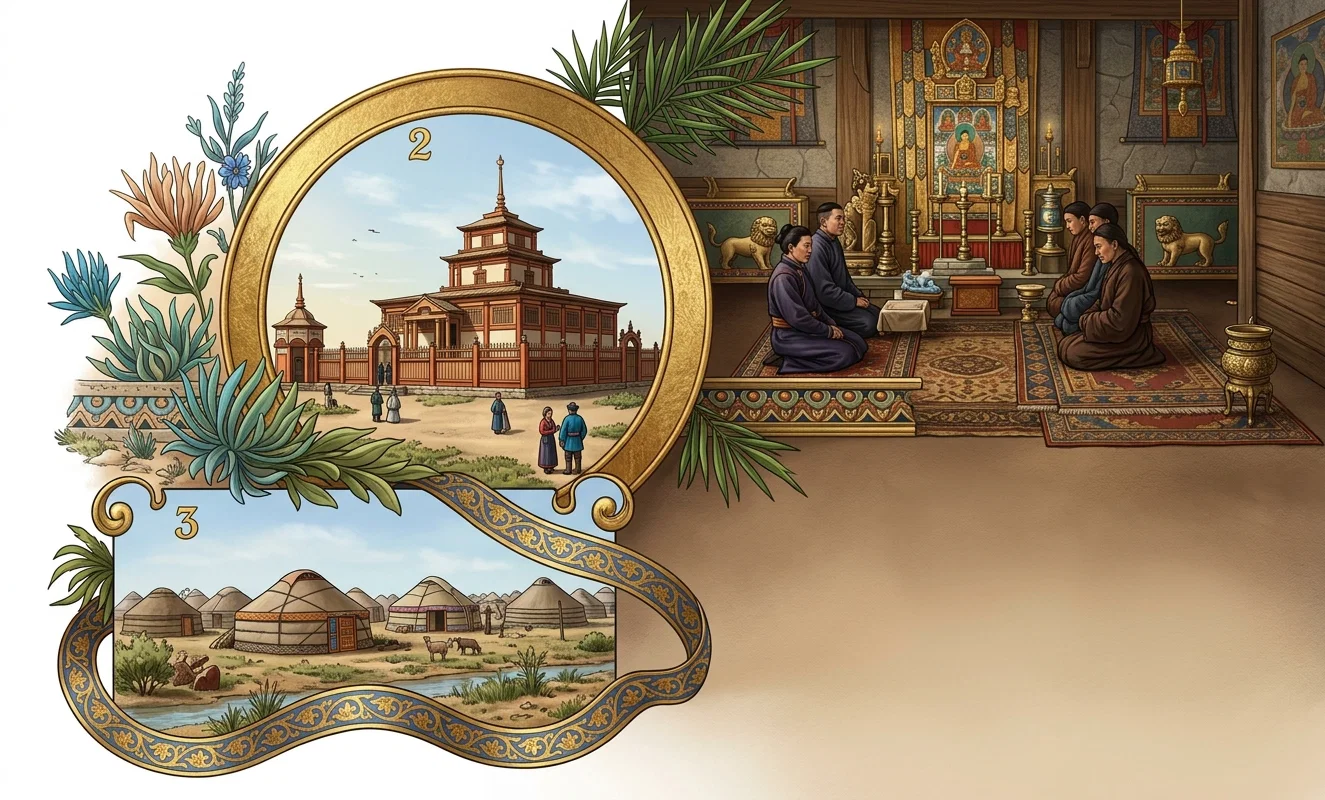
KALMUCKS AT WORSHIP
KALMUCKS AT WORSHIP
In the seventies of the last century, when the Separatists in southern Russia and the Baptists in eastern Russia began to spread out, the adherents of these teachings were most cruelly persecuted; they were thrown into jail and severely whipped with rods, and many of them emigrated, as did the Pilgrim Fathers, to the United States of America, “the land of freedom.” They pitched their tents in the Dakotas, Kansas, and Nebraska, built sod houses, and took up land.
But soon, through Brother Conradi (1881) and others, they heard this precious truth, and many accepted it. Printed matter was now sent by those who first accepted the truth to those of former like faith on the Volga in Russia, the Caucasus, and to southern Russia, and soon (1883) old Brother Reiswig went back to the Crimea, and distributed what he could of these publications.
Brother G. Perk accepted the truth in the Molotschna, and in July, 1886, Brother Conradi came to the Crimea from Switzerland, and began to hold lectures in Tapanschy. He was soon able to raise up a company; and just as they were celebrating the ordinances of humility and communion, both Brother Conradi and Brother Perk were arrested in Buerdebulat, and imprisoned in the district capital, Perckop, where they were obliged to spend forty days. This was the beginning of the work in the Crimea. The real beginning of the message on the Volgas can be said to date from that time.
In the same year (1886), Brother Conradi Laubhan, of Kansas, came to the Volga, and three years later Brother Jacob Klein also came. The fire which had been kindled by the publications still burned, and was greatly increased through the labors of these two men. In May, 1890, Brother Klein was falsely accused in a Russian village in the province of Astrakhan, and was brought to Nicolajewka, opposite Konnyschen, where he endured for seventeen days the horrors of a little dark jail, with a daily ration of dry fish, a cup of Kwas (a sour drink), and black sour rye bread. The
At this time I was staying in a school at Hamburg, and was hastily sent by Brother Conradi to the Volga in order to secure the release of Brother Klein; but as he had secured his liberty before I reached there, I remained and labored with him in the colony for one year.
In 1891 and 1892 Brother H. K. Loebsack and I canvassed in southern Russia and in the colony Marienpoler, of the Mari-enpoler district. One evening we were arrested, but the next morning we were released. We wrote to the governor of Katherinoslaw, for permission to canvass, but receiving none, we went to the Crimea. Here we were accused by the Catholics in Buerdebulat, and were imprisoned in Tschihiz, on Christmas, 1892. The policeman had not sufficient confidence in our brethren to leave us unguarded, but ordered from the nearest Tartar-aul two Tartars, who guarded us in Brother J. Scheuer’s house one night.
The next day our aged Brother H. Teske took us in his covered wagon a two-days’ journey in a snow-storm to Taganasch, to the Pristave (chief of police). At our request, the policeman who had arrested us, and who already felt disturbed over it, permitted us to heat the tea-urn on the way so we could warm ourselves some. Our books stood in a corner of the room in a sealed sack during the time we sat at tea as prisoners. All at once the children of the policeman fainted, and the physician later decided that it was due to the vapor from burning coals in the tea-urn. The policeman would have released us, but he feared the accusers.
We gathered courage from these incidents, for we saw that the Lord was with us, and that he troubled our enemies as he troubled the Philistines when the ark of the covenant was in their possession.
Caucasus.
(To be concluded)