An Experience in China

8%

Review and Herald Publishing Association · Takoma Park Station, Washington, D. C. · Feb 21, 1907

FromReview and Herald, Vol. 84, No. 8.

Read the full edition

An Experience in China

EVA ALLUM
Only a short time has passed since our arrival in Shang-tsai Hsien, and during this time we have had many new experiences. We have felt the rich blessings of God with us, and have realized that the prayers of our friends have followed us. We can do but little direct work for the people as yet, as we must spend most of our time on the language before we can do anything. Although we have been here but a short time, the fact is very apparent to us that numbers of young people should be here studying this language preparatory to doing actual work for the people. The missionaries here on the field tell us that it takes at least two years' hard study to get the language so as to be able to use it to advantage. This seems so long to us when we see the conditions that exist here.
Recently Dr. Miller left us to attend a council meeting at Lo Shan, and on account of the heavy rains, we do not expect him back for another week. My husband and I are the only two here now who understand English, and as our vocabulary in Chinese is very limited, we have to use the few words we know in a variety of ways, and accompany them with signs to make ourselves understood.
On Sabbath our Bible woman's little son died. For several days before his death we knew he could not live long, but we did all we could for him. On Sabbath afternoon he fell asleep, and I attended to laying him out while my husband made arrangements about the coffin.
Mrs. Chen was worn out with watching the child, and she was almost heartbroken. She had buried four children before, and now to lose her only son seemed almost too much for her, as the heart of every Chinese mother yearns for a son, and she truly loved her child. The trial is still harder to bear as her husband is away with Dr. Miller, and although they are only four days' journey away from us, it was impossible for us to get a message to him and have him return in less than eight days, and so we had to bury the little one before his return.
When my husband went to make arrangements about the coffin, he found that one could not be procured, and so carpenters were hired to come here and make one. The evangelist told us that the Chinese here do not bury their children, but throw them over the city wall. There the dogs and birds eat them. When a Chinese woman wishes to ask another how many children have died in her family, she asks her how many children she has “thrown out.” Such is the disregard of the Chinese for their infants.
The carpenters finished the coffin about midnight, and our evangelist called us to put the child into its narrow bed. Our hearts were full as we performed the sad duty, and sadder still was the thought of the many little ones in this heathen land who are daily “thrown out.” After death children are sometimes crushed and mutilated dreadfully that the evil spirit will not again visit the family.
We had to have the burial at night because of the crowds who would have gathered around us in the daytime, and so at nine o'clock we took the little coffin outside the city wall to a grave in the same enclosure where Sister Miller is sleeping. There as we knelt in prayer, we realized more than ever before how bright is our hope, and how dense is the darkness around us. We were able to point this mother to a glorious resurrection. But there are thousands and millions around us who know nothing of the glorious hope of the Christian.
Mr. and Mrs. Chen are earnest, humble Christians, and their home is a constant object-lesson to their neighbors. The contrast between it and the surrounding homes is most striking. Our hearts rejoice every time we look at this dear brother and sister, and realize what the gospel can do for the Chinese.
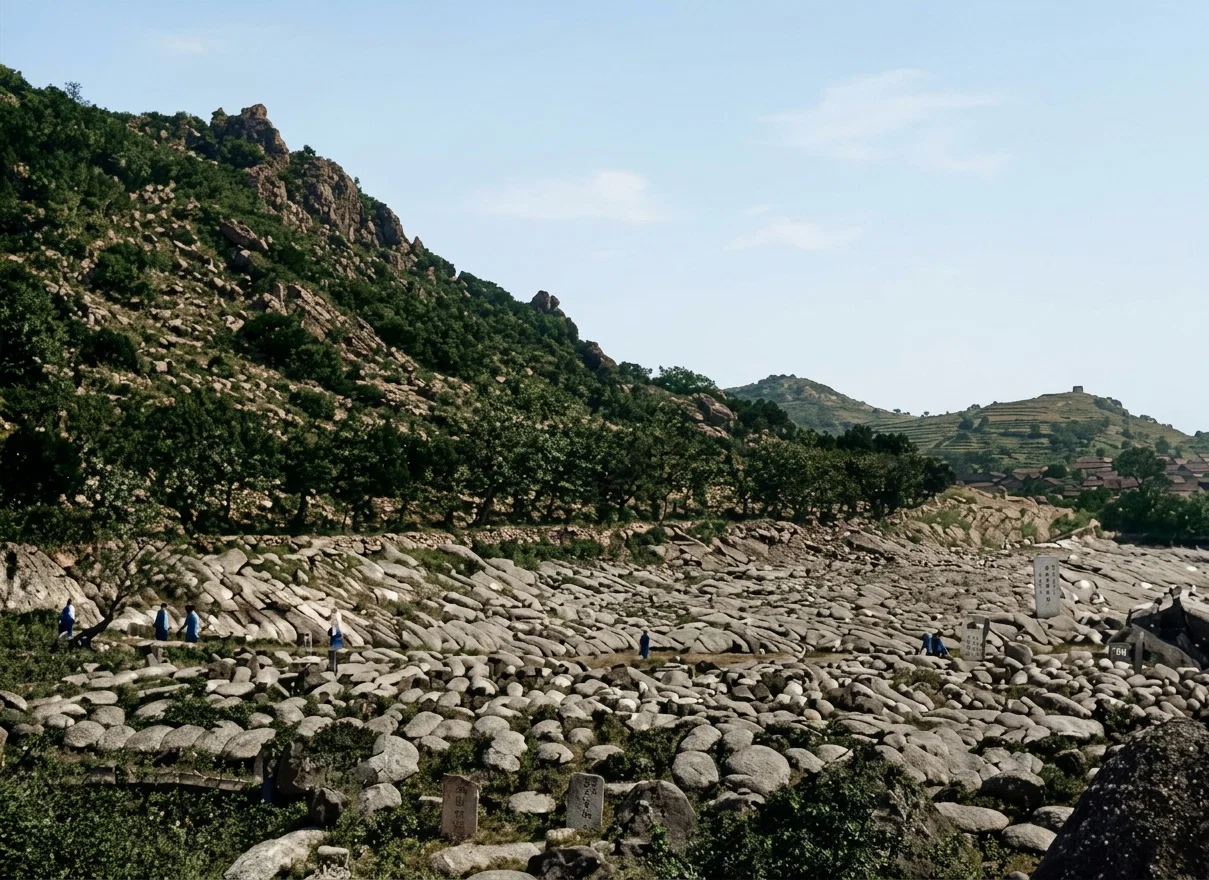
A GRAVEYARD IN CHINA
On the other hand, our hearts are constantly made sad by sights of misery and degradation. Among the women we see the greatest misery. They are of no account in China, except as slaves, and the bondage is often a long and bitter one. If she ventures on the street, no matter how respectable she may be, she is made the object of ridicule, descending sometimes even to obscenity. She has to run the gauntlet of jeers from a crowd of rough men, and as her small bandaged feet handicap her pace, her rude reception is slow torture.
Our hearts burn within us when we think of how little those in the home lands realize the vast need of these millions of precious souls. In the final reckoning we shall each be responsible for what we might have done with our entrusted talents. Our daily prayer is that the Lord will arouse men and women to action who should be in the foreign lands, and fire them with a zeal and devotion that will lead them to consecrate their lives as never before to the uplifting of their fellow beings. Let us follow the example of the One who said, “For their sakes I sanctify myself, that they also might be sanctified through the truth.”