A Union Conference Session Amid Earthquake
8%

Review and Herald Publishing Association · Tacoma Park Station, Washington, D. C. · Feb 7, 1907

FromReview and Herald, Vol. 84, No. 6.

Read the full edition

A Union Conference Session Amid Earthquake

The Lord blessed in all the preliminary preparations for the first session of the West Indian Union Conference. The Jamaica Conference was the strongest conference within the West Indies, and the city of Kingston the second city in size. Most of the local brethren laboring in the ministry in the different fields had never had the privilege of attending any of our training-schools, and it was decided to hold a ministerial institute in connection with the union session.
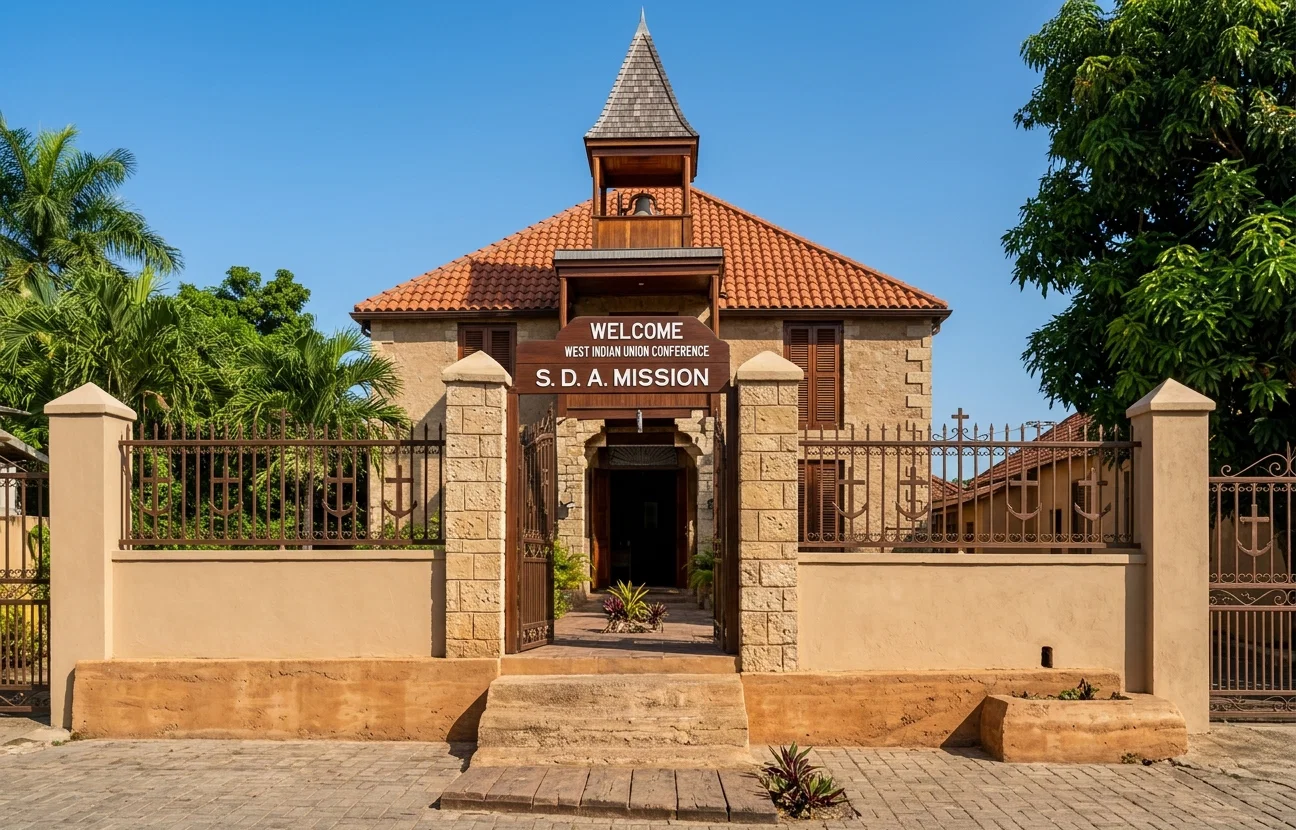
S. D. A. CHURCH, KINGSTON, AFTER THE EARTHQUAKE
Those of us who had labored for years in the pioneer work in the West Indies felt grateful to God at the auspicious opening of our conference. As all know, however, early in the sessions came the earthquake shock, utterly demolishing the city of Kingston, doubtless killing more than a thousand persons, and leaving the rest homeless. The disaster was so appalling that those in the midst of it could scarcely grasp its meaning.
With more than four hundred Seventh-day Adventists in the city at the time of the disaster, and not more than two per cent of the buildings left standing in habitable condition, it was with anxious hearts that we counted our numbers in the shadow of the calamity. Only one was missing, Brother Norman Johnston, but he was one of the brightest and most capable of our young workers in the West Indies. We sorrowed as we realized that the strong, energetic presence of this faithful laborer would no longer be felt in our West Indian field, but we believe he was ready to die.
There were several features in connection with the disaster in the experience of our own people which led us to feel that the days of special providences are not past. The earthquake came Monday afternoon. The Sunday evening before, it had been decided that quite a large delegation should visit the school site in the country on Monday, and therefore it was planned to have light work in the conference meetings in the city on that day. Some had proposed to adjourn all meetings in the afternoon, allowing the people to transact any necessary business in the city. Many who were in attendance had planned to go down into the business portion had there been no meeting. However, it was decided to call the meeting, and thus quite a good many were kept from being in the quarter where the ruin was greatest.
Our meeting room in the Kingston church was in the second story. Elder J. A. Strickland was in charge of the service at the time of the earthquake. As the building began to rock and sway, the first thought was to rush from it. But a hymn was started, and Elder Strickland stepped between the people and the door. A spirit of great calmness settled down upon the congregation, and with the exception of one or two who had reached the door before the singing began, no one tried to escape from the building. They continued singing until the shock was past, and then it was found that the arched stairway leading down from the meeting hall had partially collapsed. Had the people rushed in panic from the hall, they must have fallen to the ground in heaps. Surely it was a distinct providence that the walls of our church and the floor were left standing, when we consider that not a single brick church in the city was left upright. Very likely ours was the only church in which there were people at the time, and by the mercy of the Lord the building stood, although really totally wrecked.
The editor of the Daily Telegraph, one of the leading newspapers of Kingston, stated in the first issue after the earthquake, that with no exceptions, so far as he could discover, those who were in the business portion of the city, and who escaped alive, thought at the time of the earthquake that the end of the world had come. Men may scoff at the preaching of the coming of the Lord, but when the earth shakes terribly, their minds recognize the fact that there will be an end to the world some day.
We were thankful to God that our people were able to calmly consider all phases of our work, although all about us were terror-stricken people, crying out in terror and lifting their voices in prayer and cries whenever the later shocks would come, as in the days immediately following. Our business being transacted, it seemed best for the delegates to return to their fields. We regretted that the workers had not the benefit of the ministerial institute, but with the object-lesson given us of the awful scenes to come in the closing of the world's history, it was felt that all could search the prophetic Word more earnestly and prayerfully than ever before, and carry the message to the people to whom they go in the different parts of our great territory. Perhaps in this respect the workers received more than could have been possible in a three weeks' institute, as had been planned.
The school enterprise, placed in chargeof Prof. C. B. Hughes, lies very near to the hearts of our West Indian believers. These brethren and sisters, and those in Jamaica in particular, need the sympathy and financial help of our brethren in other lands. Perhaps no school has ever been started by our people under exactly the same conditions as this West Indian School. With students, very few of whom can give a cash equivalent for their education, with no membership in the West Indies of any financial standing, the situation was one that demanded great faith. But with a wrecked city, and a partially ruined island, the seriousness of the situation is intensified. May the Lord lay the burden to help upon some heart. There are hundreds of bright young men and women in the West Indies who are hungering for an education, and who, properly trained, will be valuable workers in this cause. The West Indian field needs them. Tropical Africa needs them. Our prayer is that their coming may not be long delayed.
It is with feelings of sadness and regret that the writer severs his almost nine years' connection with our work in the West Indies. But the Mission Board has called us to go on to India, and as our ambition is to work in the hard and needy pioneer fields, and we have seen the West Indian field develop from that condition into a well-organized union conference, we now gladly pass on. We feel certain that the blessing of God, which has attended the labors of the brethren thus far in the gathering out of more than three thousand baptized believers, will continue to be with them, and that a great work will be accomplished in that field. The work and workers in the West Indies will always have our prayers and sympathy, and we expect to see an abundant harvest of souls in the kingdom from the lands washed by the beautiful blue waters of the Caribbean Sea.
GEORGE F. ENOCH.