The Bombay Mission

6%

Review and Herald Publishing Association · Takoma Park Station, Washington, D. C. · Apr 29, 1915

FromReview and Herald, Vol. 92, No. 21.

Read the full edition

The Bombay Mission

The week spent in the South India Mission, visiting our workers and believers, and studying the conditions and needs of the field, was most enjoyable and instructive. A longer time would have been of greater profit, but our time was limited, and Professor Salisbury felt it necessary to hurry across the country to Bombay, a thousand miles from Trichinopoli. We spent one day in the old important city of Madras on our way. This is a great educational center, and we should not delay to begin work in this city.
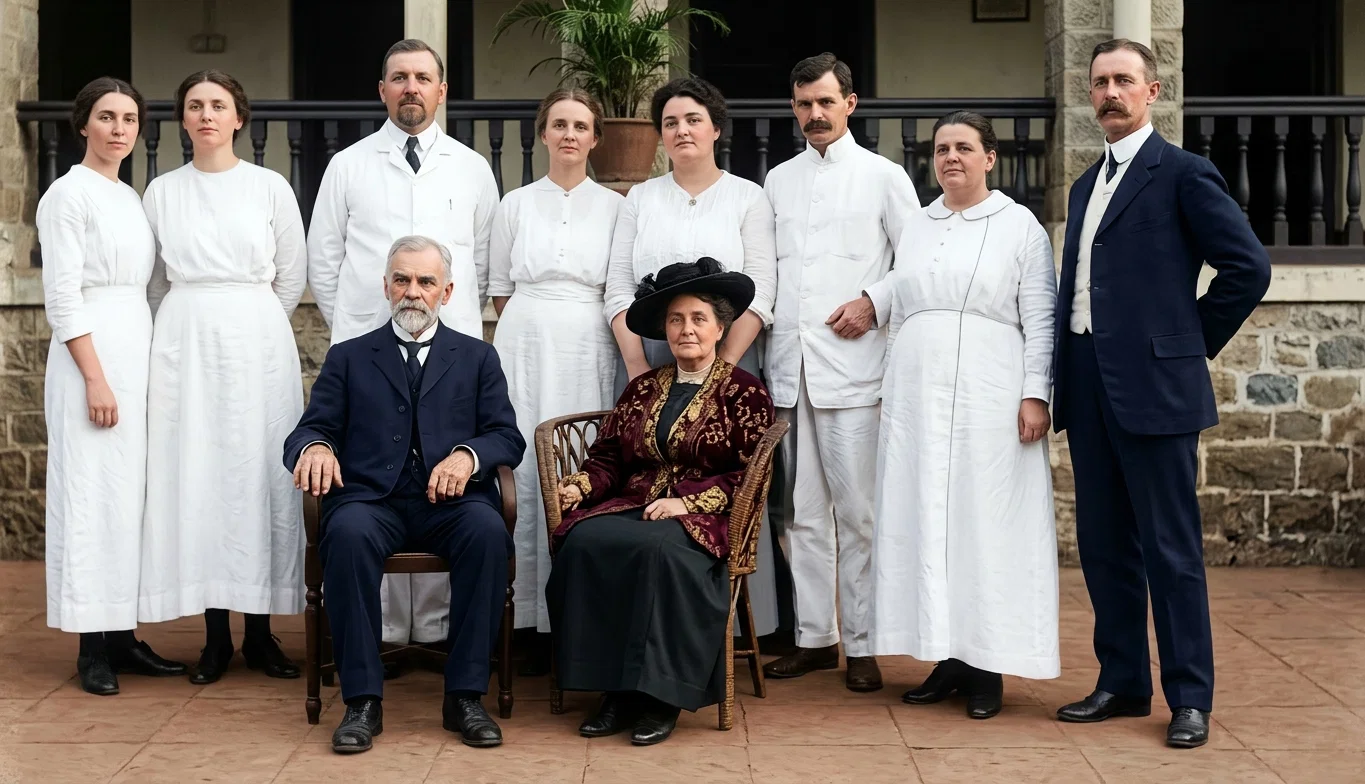
GROUP OF WORKERS AND VISITORS AT KALYAN MISSION BUNGALOW
On our arrival at Bombay we were met by Brother and Sister George W. Pettit, from Oregon; Brother W. R. French, from Texas; and Sister R. E. Boose, from Iowa. We had known these dear fellow workers in the homeland, and were happy to find them looking well, and thoroughly interested in their work.
Brother Pettit is the superintendent of the Bombay mission. The territory of this mission lies along the eastern shore of the Arabian Sea. It is one thousand miles long, with an average width of about one hundred miles. The population of this district is 27,000,000. Two principal languages are spoken by the people: the Marathi by 18,000,000, and the Gujarati by 9,000,000. It seems appalling to a visitor from a land of general education that less than two million of this great mass of humanity can read and write. It is hard to imagine what must be the life of twenty-five million people in this age of enlightenment, who cannot read a line in their own tongue. It is unnecessary to say that this state of illiteracy greatly adds to the already difficult task of Protestant missionaries.
Of the people in the Bombay mission, 21,000,000 are Hindus, 5,000,000 are Mohammedans, 500,000 are Jains, 80,000 are Zoroastrians, 150,000 are Roman Catholics, and 50,000 are Protestants.
Bombay is the principal city in this mission, having a population of one million. As regards population, institutions of learning, beautiful residences, large, up-to-date public buildings and business blocks, wide, clean streets, sanitation, etc., it ranks among the best cities of India. We were glad to find an aggressive evangelistic work being carried on in this important center. Our workers have secured the exclusive use of an excellent hall in a good location. We had the privilege of meeting with our brethren and sisters on the Sabbath, and of speaking to a full house of interested persons Sunday night. Although
this effort in Bombay has been in progress only a little more than a year, fifteen new believers have been baptized, and a church of twenty-five members has been organized. The interest is growing, and the workers have the fullest confidence that God will give them a good, strong, useful church in that city. I see great wisdom in such an effort. The same kind of work should be in progress in every large city in India. It must be done to reach souls, and to give strength and help to our whole movement throughout India.
We spent a day at Panvel, where Brother and Sister A. G. Kelsey, from Michigan, are in charge of a station. This is a large village thirty-five miles from Bombay, but only sixteen from the railway. My heart was touched by the devotion, self-sacrifice, and courage of these dear workers. They are working in the midst of as dense, dark heathenism as exists anywhere in India. After looking around the village, I asked the brethren if there is anywhere in India a lower stratum of human existence, and was relieved by their assurance that there is not. Here we are working at the very bottom of heathen superstition and degradation as it exists in India. Although British influence has been established in Bombay since 1661, and missionaries have been working in the city for nearly a century, yet no missionary effort hasever been made in the region of Panvel. Our workers at the Kalyan mission, twenty miles away, are the nearest European neighbors Brother and Sister Kelsey have. They are conducting a day school for the children of the village. The attendance averages fifty, about an equal number of boys and girls. Of course they are all heathen, but the teachers are constantly endeavoring to give them the light of the gospel. Two Christian native teachers are employed to assist in this work. Recently two converts were baptized at this mission.
Sister Kelsey had just opened a neat little dispensary. This was greatly needed, and they hope that their ministry of love to the suffering will draw them to God's message of salvation. May the good hand of our God be with these dear workers in their difficult field.
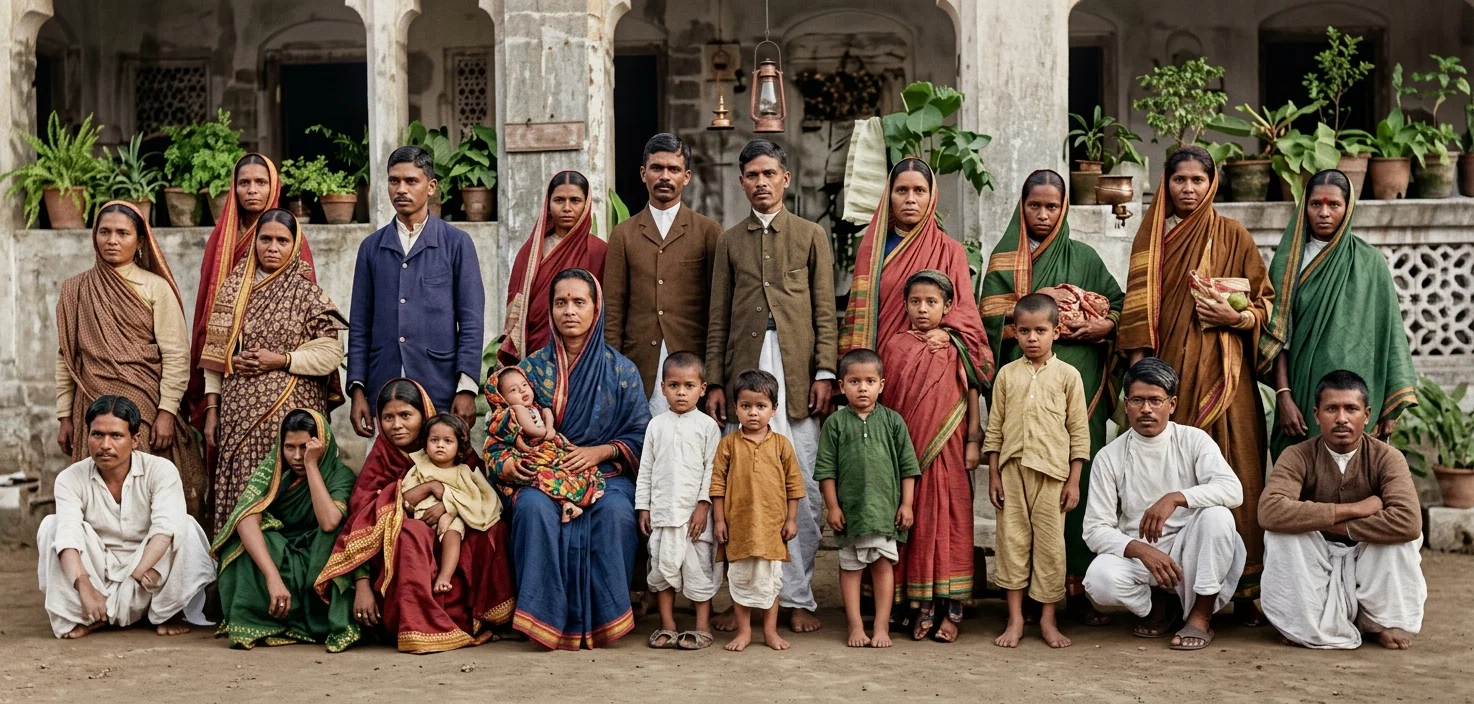
GROUP OF CONVERTS IN KALYAN
Another day was spent at the Kalyan mission, with Brother and Sister M. D. Wood and their helpers. This place is on the railway line, forty miles from Bombay. The people here are like those of Panvel—enshrouded in the darkest heathenism. Ours is the first Christian mission ever established in Kalyan.
It was a great pleasure to again meet Brother and Sister Wood and Sister Reid, and to make the acquaintance of Sisters Moss and Ulrick. The two latter came to India as missionaries for another society, but have connected with our mission during the last year or two. These workers are all in excellent health. They have a large work on their hands, which taxes their strength to the utmost. Here we have one of the largest and best-organized medical dispensaries in all our mission fields. It was opened in February, 1913.
We reached Kalyan early enough in the morning to see the work of the day start. There was a great crowd waiting for the doors to open. The first task was to seat as many as possible in the large waiting room. A native brother connected with the mission then read a Scripture lesson, gave them a twenty minutes' talk about the gospel, and offered an earnest prayer for them. The most of them paid the closest attention to all that was said. Then the dispensary work began. Between fifty and seventy-five persons received attention that day. Some were disposed of in a few minutes, while others were in a serious condition, needing the most thorough, skillful treatment. In a register specially printed for our dispensaries in India a record is kept, showing the name, age, sex, religion, disease, etc., of every person who passes through the dispensary. In glancing over the register, I gleaned the following: Number of patients treated during the year just ended, 16,421; visits to homes, 978; villages represented, 85; minor surgical cases, 312; different diseases, from sore throat to leprosy, 26; gospel talks, 312; pages of literature distributed, 11,820; expenditures, $375; receipts, $482. Every detail of the work is so well arranged, and all the assistants know the part they have to do so well, that a large number can be treated every day, week after week.
Besides the work at the main dispensary, they itinerate in the villages near by, and one day in the week they do dispensary work in a large town about sixty miles away. Sister Wood is granted a free pass for a first-class compartment over the railway line to do this work.
Brother Wood has two schools in operation, with an attendance of forty. As he speaks the Marathi, he is able to preach to the people in the surrounding villages. He took me to a hill just out of Kalyan, from which we could see villages in all directions. In these are living thousands of persons in the superstition and darkness of heathenism. No missionary efforts have ever yet been made for these lost souls. They have no schools, no doctors, no civilization. To me, the situation seemed terrible. But we have now made a beginning, and our workers are hoping and praying that their ministry will lead many of these suffering, sorrowing people to Him who died for them. Our church at Kalyan now numbers fifteen, and the hearts of the workers are set on building up a large, strong center. The two churches in this mission field have a membership of forty. In addition to the tithe paid by the missionaries, these churches pay an annual tithe of $2,000.
I was sorry not to have the privilege of meeting Brother and Sister Enoch, who have spent several years in this part of India. Their fellow workers here are hoping that their furlough in America will be a blessing to them in every way, and that they will soon return to this great, needy field. A. G. DANIELLS.