On the Panama Canal Strip

7%

Review and Herald Publishing Association · Takoma Park Station, Washington, D. C. · Jul 5, 1906

FromReview and Herald, Vol. 83, No. 27.

Read the full edition

On the Panama Canal Strip

GEO. F. ENOCH
A FEW words concerning the Panama Canal Strip, toward which the eyes of the world, especially Americans, are now turned, will doubtless be of interest to REVIEW readers. The writer, during his recent trip, was agreeably surprised with some features found on the Strip. The Colon of to-day is quite different from the Colon of a year ago. Heroic work has been done in sanitary lines, and the houses, like Jonah's gourd, are going up in a night.
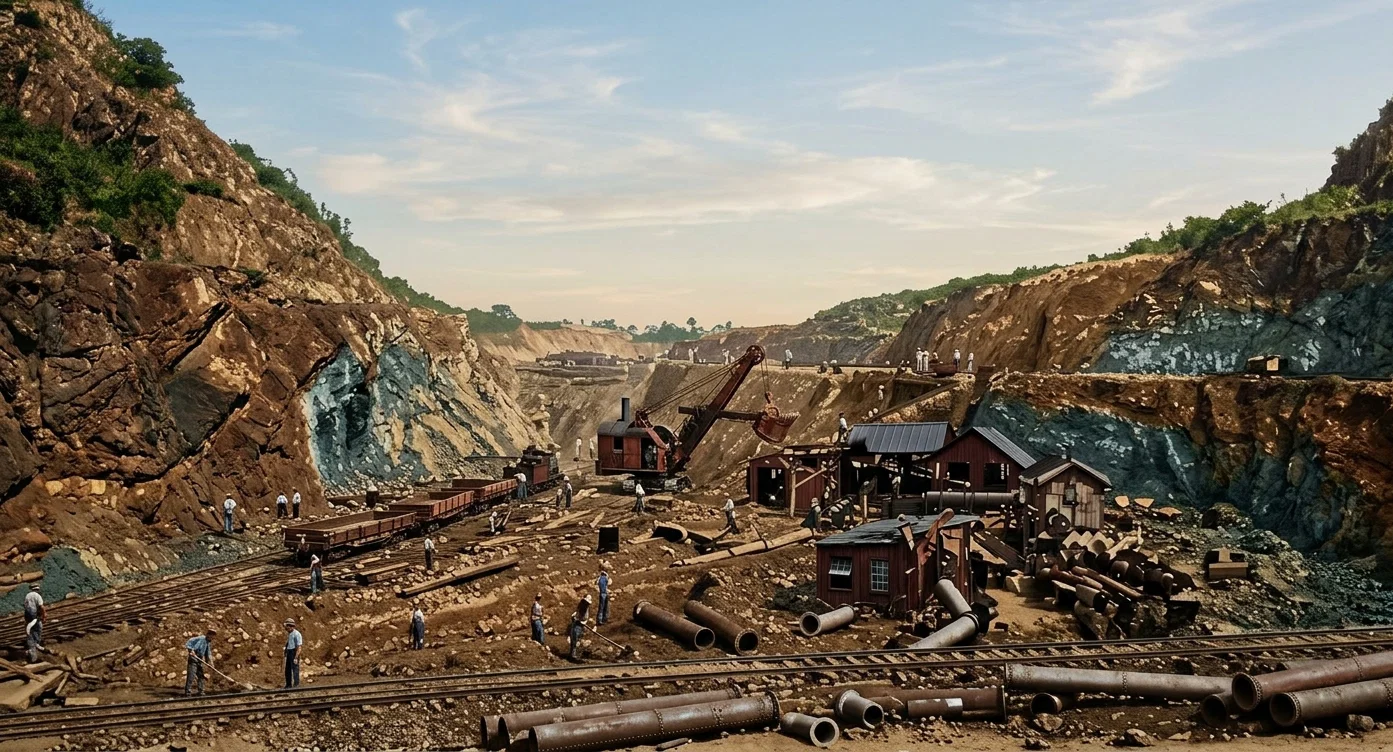
A GLIMPSE OF WORK ON THE CANAL STRIP
The place has a decidedly tropical climate, and a man can not do there what he can do in a cold country. But after eight years' residence at different places in the tropics, I can see no reason why one can not live in the Canal Zone. There is undoubtedly plenty of malaria along the marshes. But malaria is found in all tropical countries, and shall we desert the millions of souls living in that region of the world just because we find malaria there? God forbid that the young men and women of this denomination should be so cowardly as that. The writer is speaking from experience. He has stood by the bedside of faithful laborers, brought down to the very gates of death by tropical diseases, and in his own family he has for long, long months fought the chills and burning fever, and yet he sees no reason why these fields should be deserted or left unentered.
The Moravians in the Guianas have left us a noble example. When they first entered this field, years ago, they lost missionaries almost every year; for a time, I have heard it said, their missionary graves were almost as numer- ous as their converts. But as soon as one soldier fell at his post, another from the home land filled the vacancy, and a great and noble work was done.
Suppose missionary graves do mark our advance into other lands? Who ever heard of a war's being fought without the sacrifice of lives? Who but the traitor and the coward will desert his place on the battle-field, because comrades are falling around him, or because he fears death? Let the young men and women who offer themselves for foreign service in this great world-wide campaign weigh these things well.
We do not say that there is no poetry in these bright, sunshiny countries, with their azure skies, deep-blue seas, and warm-hearted peoples; but there is plenty of prose as well. And as soon as one gets in the midst of new surroundings, among strange people with strange customs, and the first attack of nostalgia comes on, the poetry all disappears; and another mission station will be deserted, unless the missionary makes up his mind to be a missionary in deed as well as in name, choosing the mission- ary's lot as his lot, in sickness or health, for better or worse, as long as the Lord shall give him life. Let us, then, be faithful at our post of duty; and if comrades fall, fill the gaps with new recruits, and press the battle to the very gates. The conflict will soon be over, the battle will be fought, and the victory won.
It hardly seems wise for the worker who comes to the Canal Zone to locate on the coast near the marshes. Funds should be provided to build a house in the highest place along the Strip, say at Empire or Culebra. As the railway gives free passes to missionaries, the entire Strip could be worked from there. In Colon there is enough money in hand at the present time to put up a church building, with a membership of about forty, and more coming in all the time from other islands. Then there is a company up the line at Bohio, and another small company of believers at Panama, on the Pacific. While in Colon, the writer had the privilege of holding open-air meetings with very large congregations that gave the closest atten- tion. The little Bilhorn organ belonging to the church set up on the corner, the preacher standing on a pile of lumber, in the lee of a partly finished building in the full blaze of the electric light, saloons in full swing on the opposite corners, a large crowd, Americans, Englishmen, Chinamen, Spaniards, and West Indians, listening with rapt attention to the Bible explanation of the signs of the times,—all this makes an indelible impression on the mind, and causes one to turn to other duties with regret that such a needy field is left neglected. May God forgive those who are willing to stay at home, in the midst of its peace and plenty, when they might be out in some needy, unwarned portion of the world gathering an abundant harvest of souls.
In regard to the digging of the “big ditch,” the American government is doing a great work. The building of this canal is a tremendous task. It is easy to criticize the man who is undertaking such a task. Usually the critic would not be able to do one half as well. The Americans have many lessons to learn. It will take nearly twice as long to do the same task in the tropics as in the north. There has also been trouble with the labor question, which will continue until the American and the West Indian understand each other. A man can not work in a hot country as in a cold. Even the American will find it necessary to adopt a tropical gait.
We have many faithful believers coming to labor on the Strip from all parts of the West Indies. They are subject to severe trials and tests of faith, and they should have some one to look after their spiritual welfare. Colon is no place to leave any one alone. It is a place of work, wickedness, and whisky. It reminds one of Kipling's Mandalay,—
“Take me somewhere east of Suez, where the best is as the worst, Where there ain't no ten commandments, and a man can raise a thirst.”
People as a rule recognize no ten commandments there. The most of them have left their church behind them. Still many of our people are standing firm and true in the midst of the surrounding wickedness, and the banner on which is inscribed the “Commandments of God and the Faith of Jesus” is being uplifted all along the line. For this we are truly thankful.
Barbados.