A Little About Peru

8%

Review and Herald Publishing Association · Washington, D.C. · Mar 29, 1906

FromReview and Herald, Vol. 83, No. 13.

Read the full edition

A Little About Peru

E. W. THOMANN
THERE are in Peru two completely different regions. The land between the Andes Mountains and the ocean, with the exception of a few plains and valleys, is a dry desert. That portion behind, or east, of the mountains, which constitutes the greatest part of Peru, is very fertile and productive. It is favored by frequent rains and a tropical sun, and vegetation grows so fast that many kinds of seeds produce twice a year; and some one has told me that it is possible to get three harvests of some kinds of grain from the same land in a single year.
The first-mentioned region is inhabited by a larger per cent of civilized people than any other region. Yet only in some parts can there be obtained enough water to irrigate the ground and make it productive. The light morning showers called camanchaca are not sufficient for irrigation, because the sun is so hot that in a little while the camanchaca is evaporated, and rises to form light clouds.
But behind the mountains the rains are heavy and frequent. And as this region is many thousand feet above sea-level, the sun's heat is not insufferable. There are immense forests, testifying to the good quality of the soil.
Any one who is willing to live among the Indians, far away from the corruptions and vices of the so-called civilized world, will find there a good field of labor, especially if he knows how to cultivate the ground or to prepare such things as are not easily carried from the coast to distances reached only by long trips on muleback.
Those who would come to Peru as self-supporting missionaries among the Indians should be persons who have an all-round education, who know how to do everything that needs to be done. Such people would be a great blessing to the Indians, and would be the means of raising many to a brighter plane in spiritual and physical life.
Others, who are not acquainted with agricultural work, but who have some trade, would do best to go to the cities, towns, or mines to find a field of labor in the Lord's vineyard while securing their daily bread.
Those who have no aptitude for languages should not come, because it is difficult to do much good if one is not able to learn the language sufficiently to talk with the people.
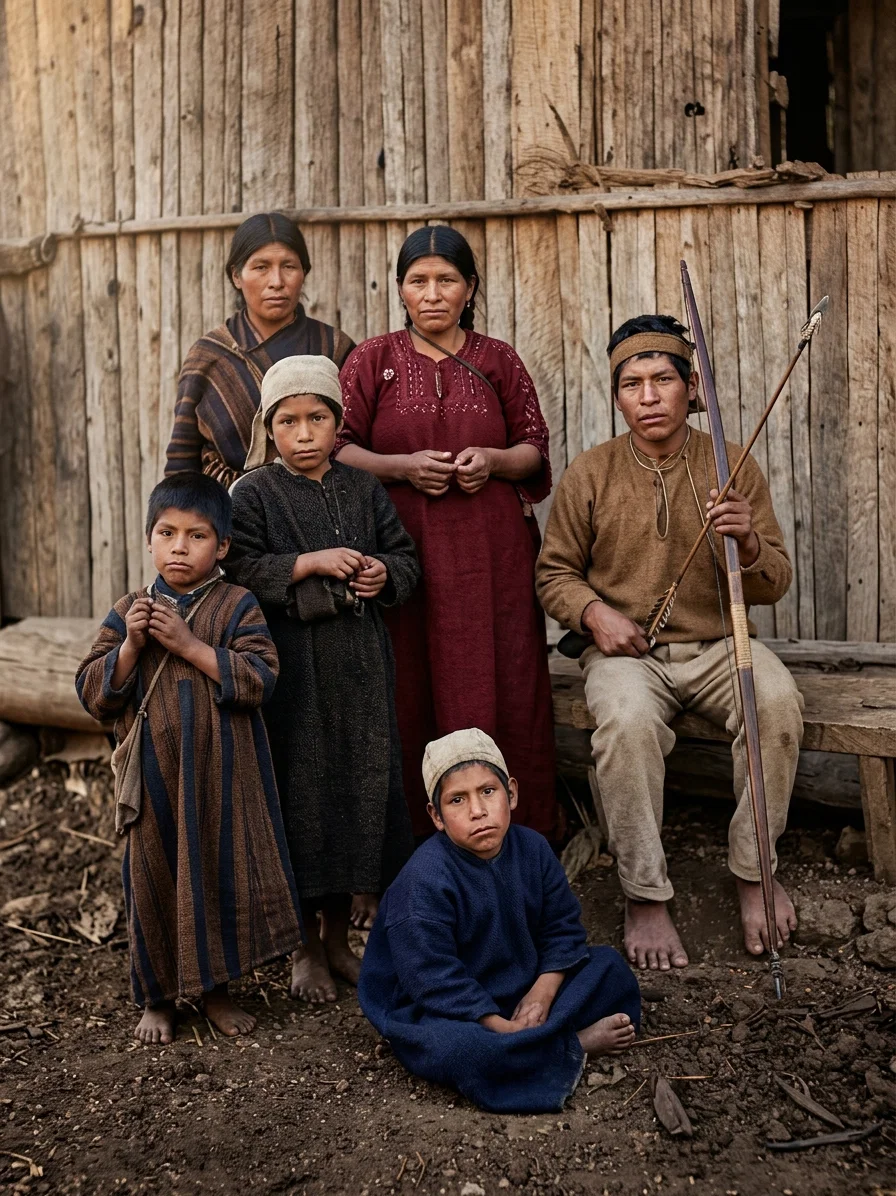
INDIANS OF PERU
INDIANS OF PERU
The Spanish is easy to acquire. The Quechua, or Indian tongue, is not much more difficult than the German. And as there are already parts of the Bible and grammars in the Quechua, it is not so very difficult to acquire it.
Young, earnest, consecrated Christians, who are not bound by family relations, would do better to work among the Indians than older persons who would with difficulty learn to use the language. He who comes should bid his relatives farewell, expecting not to meet them again until the gathering of the elect of the Lord in his great day.
Are there young, faithful brethren, who, impelled by the Spirit of the Lord, will venture to consecrate their lives entirely to him for the salvation of poor, desolate, uninstructed Indians? If there are such, let them come in the name of the Lord, and stand in the battle until they fall in physical death, or until the Lord comes to take them to his kingdom of glory, with all their fruits of labor.