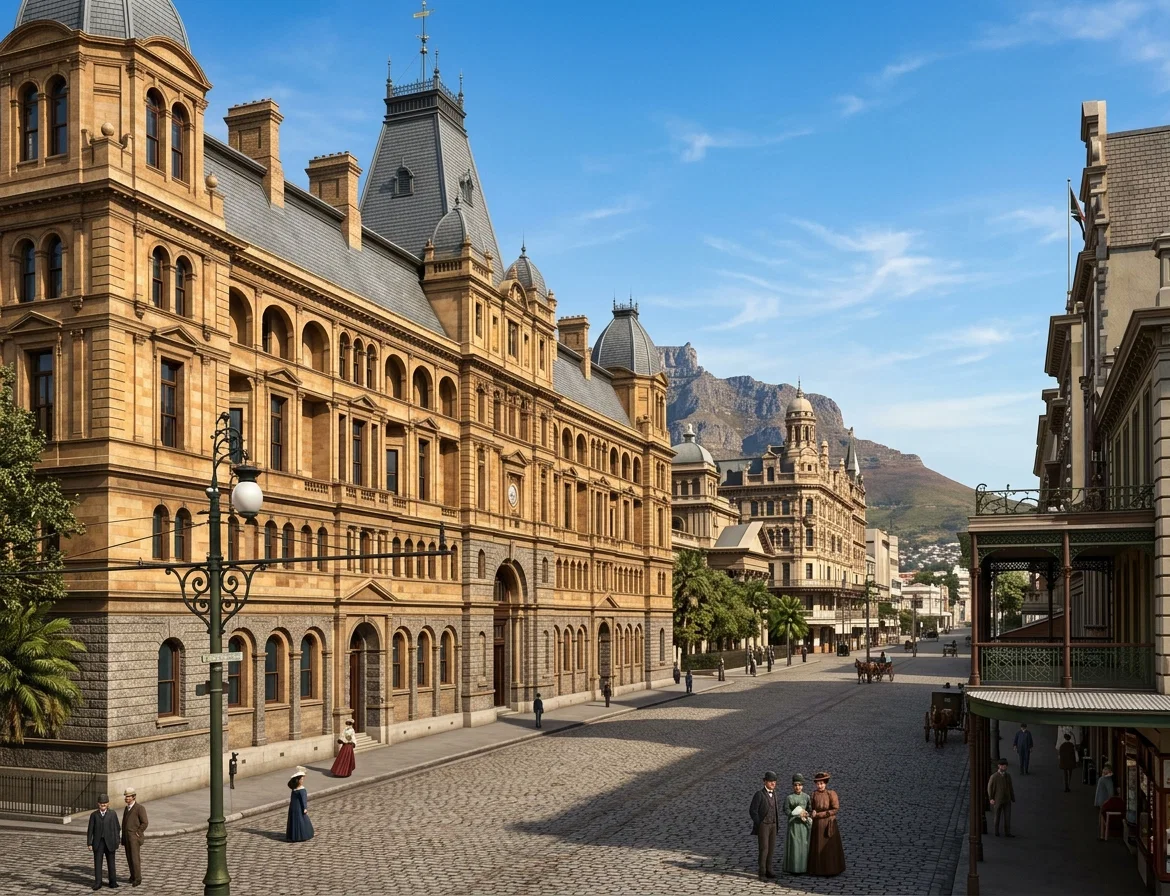
DURING the nearly ten years which I spent in South Africa, over eight of them were devoted to ship missionary work. Cape Town is one of the large seaports; in fact, it is called the gateway of South Africa. Many ships of all kinds are constantly coming and going. During the eight years I visited thousands of them—steamships, mail-boats, sailing vessels, and warships. On them I have sold books, tracts, and the health works, given away papers by the thousand, no one ever refusing literature. Many expressed their thankfulness, and seemed to appreciate the kindly interest shown them. I attempted to number the vessels supplied, but found the same difficulty as Joseph of old when he attempted to keep account of the corn of Egypt—figures failed him. They ran very high, and he stopped. I followed his example, and stopped numbering.
During the war the militia received our literature in parcels by sea or land, free of charge, for distribution in any place where their troops were stationed. I often went aboard boats which had been in Cape Town before, many times several years in the past, whose officers recognized me at once as having been on their ships and they would ask if I remembered them. Then an interesting conversation took place in regard to the truth, and many would quote very freely from the writings of some of our best-known authors, ending by saying that that was the kind of reading which they enjoyed.
Once I went on a boat which had come direct from Pitcairn Island, and the captain said to me, “Every last person on that island keeps the Sabbath.” On another ship I met an officer, who accepted my invitation to attend our church in the city. He came a few times, was baptized, and went on his way rejoicing in the truth. These are a few of the many incidents in the ship work, which show that the truth is going by sea as well as by land.
During the last three years of my work I visited the troop ships as they landed with their hundreds of thousands of soldiers, and gave them our papers by the thousands, doing the same as they came down from the front and embarked for home again. I also visited the camps and the seven hospitals which were stationed about Cape Town. I aimed to go the rounds of them every two weeks. As I looked upon those sick, wounded, and dying men as they lay in their beds by the hundreds, not a murmuring word of complaint did I ever hear from one of them.
POST-OFFICE, CAPE TOWN
The officers, doctors, and nurses would often express themselves as thankful for the good reading I was distributing; and as the men would reach out their thin, feeble hands for the papers, some would say, “I have seen these same kind of papers up at the front,” and then add, “This is the kind of reading I like. There is something one can take hold of in it.” Once I asked one of the colonels when the time would come when there would be war no more. He thought a moment, and said, “When there are no more nations to make war with.” Truly, he answered right.
During the time martial law was in force, I was given passes, which allowed me to go to any place on business or to give out literature. I always met the same kind and courteous treatment. There were two large camps for Boer prisoners where they were stationed until they were transported elsewhere; and the greatest number of those who were captured passed through this place. I put a quantity of Dutch reading-matter into these camps. Then there were the block houses all along the lines of the railway, with their hundreds of soldiers on guard, a few in each. As our people had occasion to travel, which many did, we put up large packages of small parcels of literature. These they would throw out of the car windows as they passed the block houses, and the guard, always with bows of thanks, would pick them up.
We also sent a large number of papers to the front, for distribution among the soldiers, not forgetting the concentration camps, with their thousands of Dutch women and children, and the men who were not in the field fighting. Papers were sent to many of the Boers, who were imprisoned. In some cases we received letters of thanks in return. Among these letters was one from General Cronje, of St. Helena camp, expressing his warmest gratitude and appreciation of the papers and the interest in him and his men. As many of these prisoners passed through Cape Town on their return home, another opportunity was afforded to give them further reading-matter.
During the year 1902 our people in South Africa donated about seven hundred and fifty dollars for this literature alone. Besides this, periodicals were sent from our offices in Australia, Hamburg, and London.
I am thankful for the privilege I enjoyed in connection with the work in South Africa.