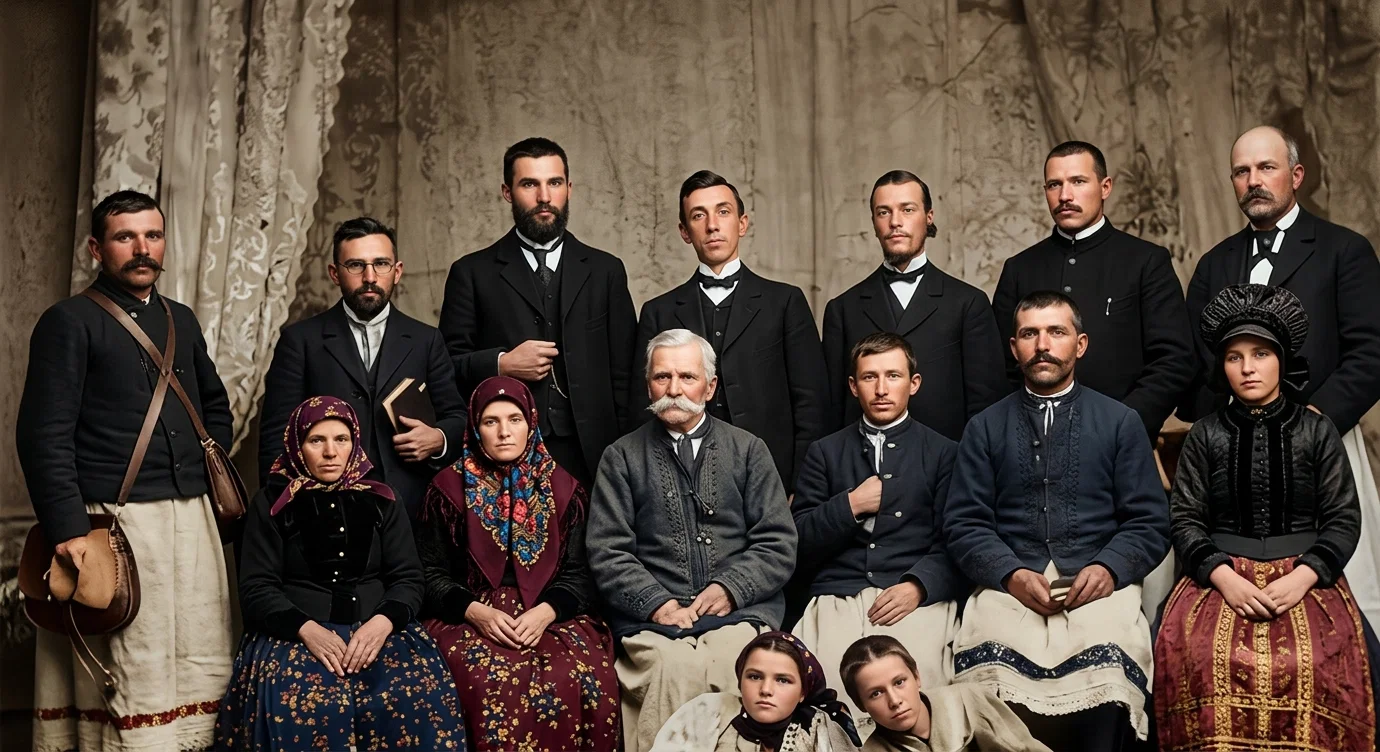
In June it was my privilege to visit the brethren composing our various churches and companies in Hungaria. As I had just arrived from Austria, where religious intolerance is as bad as it is in Russia, Hungaria reminded me much of the United States, because of the religious freedom we enjoyed in our gatherings in this great country.
HUNGARIAN SEVENTH-DAY ADVENTISTS
In Hungaria there are over nineteen million people. These are divided among many nationalities, chief of which are: Hungarians, 9 million; Rumanians, 2,800,000; Germans, 2,100,000; Croatians, 1,600,000; Servians, 1,000,000; Slavonians, 2,000,000; besides Ruthenians, Poles, Jews, and Gipsies in great numbers.
When Elder J. F. Huenergardt went to work in Hungaria in 1898, he found, in all, twelve believers to welcome him. At first the work moved very hard, but after he had mastered the Hungarian language, it advanced more rapidly, and he had full liberty to proclaim the message. The Lord has blessed in the efforts put forth, and now we have two German, four Hungarian, and two Rumanian workers in this field. Last quarter we baptized fifteen and received thirteen by vote. We organized our first church among the Slavonians.
Our brethren first became acquainted with the ways of the people while laboring in the smaller places, and it was not until February of this year that Elder Huenergardt was able to begin work in the capital, in Budapest, where the Lord has led us in a wonderful manner, so that our present membership there has reached twenty-five.
At present there are 222 believers in Hungaria; 145 are Hungarians, 30 Germans, 30 Rumanians, and 17 Slavonians, in nine churches and companies.
In the Hungarian language we have such publications as “Steps to Christ,” “Bible Readings” (small edition,) “Glorious Appearing,” “Christ or the Roman Church,” “Is the End Near?” “Sabbath in the New Testament,” “Children of the Light,” “Blessed Hope,” “Tobacco in the Light of Science,” “Perfect Faith,” “Why not Found out Before?” “How Readest Thou?” and there is soon to appear the first issue of our Hungarian paper, a church quarterly, containing the Sabbath-school lessons and much valuable matter for our brethren who read the Hungarian. It will also be of interest to Hungarians in America, who gladly read anything in their native tongue. It will contain thirty-two pages, and could be ordered of the International Tract Society, Grindelberg 15a, Hamburg. Those of our readers who are interested in spreading the message among all nationalities, would do well to correspond with the Hamburg office with reference to securing clubs of this valuable little sheet for distribution among Hungarians in the States.
I enjoyed my trip in Hungaria very much. The Lord is going before us. One might inquire as to how the truth reached the Slavonians. What did we do that they might receive the truth?—We did nothing. The Lord used an apostate brother, who warned this people against us, to stir up their interest in the message. When they were warned, they would ask, “What do these people teach?” Then came the light on the Sabbath, the tithe, etc., and as they searched the Scriptures, they began to keep the Sabbath, standing alone for three years, studying yet more about the tithing system, about baptism, abstaining from the use of pork, etc., meanwhile observing us very closely. They have requested us to come and baptize them and organize them into a church. In this small company there are also13brethren who have acquaintances on the Servian border, where already about twelve have begun the observance of the Bible Sabbath. One can see that these people are hungry for the truth when he learns that some of them came as far as thirty miles on foot to attend the meeting.
Thus goes the message. We have reason for encouragement only, and can say with Nehemiah, “So built we the wall; and all the wall was joined unto the half thereof: for the people had a mind to work.”