A Visit to Nyassaland

6%

Review and Herald Publishing Association · Washington, D. C. · Oct 20, 1904

FromReview and Herald, Vol. 81, No. 42.

Read the full edition

A Visit to Nyassaland

W. S. HYATT
JUNE 26 I left the mission farm, near Buluwayo, and started for Nyassaland. On the way I stopped at Gwelo, and visited the Somabula Mission. I found Brother Armitage and family quite well, but they had been having a hard time with the fever. The work at the mission seems to be prospering, and they are of good courage.
The following Monday afternoon Brother Armitage took his donkey team and started for Gwelo, where I expected to get a train on Thursday morning. Arriving in town, we learned that the trains had changed their time, and I could not get one till the evening after the Sabbath. As the rates at the hotels are very high, Brother Armitage decided that he would leave his wagon in town, and I could camp in it, and he would walk home. So we drove out a few miles with him, and then returned. I was very thankful to have the wagon, as there I could be comfortable and save considerable expense.
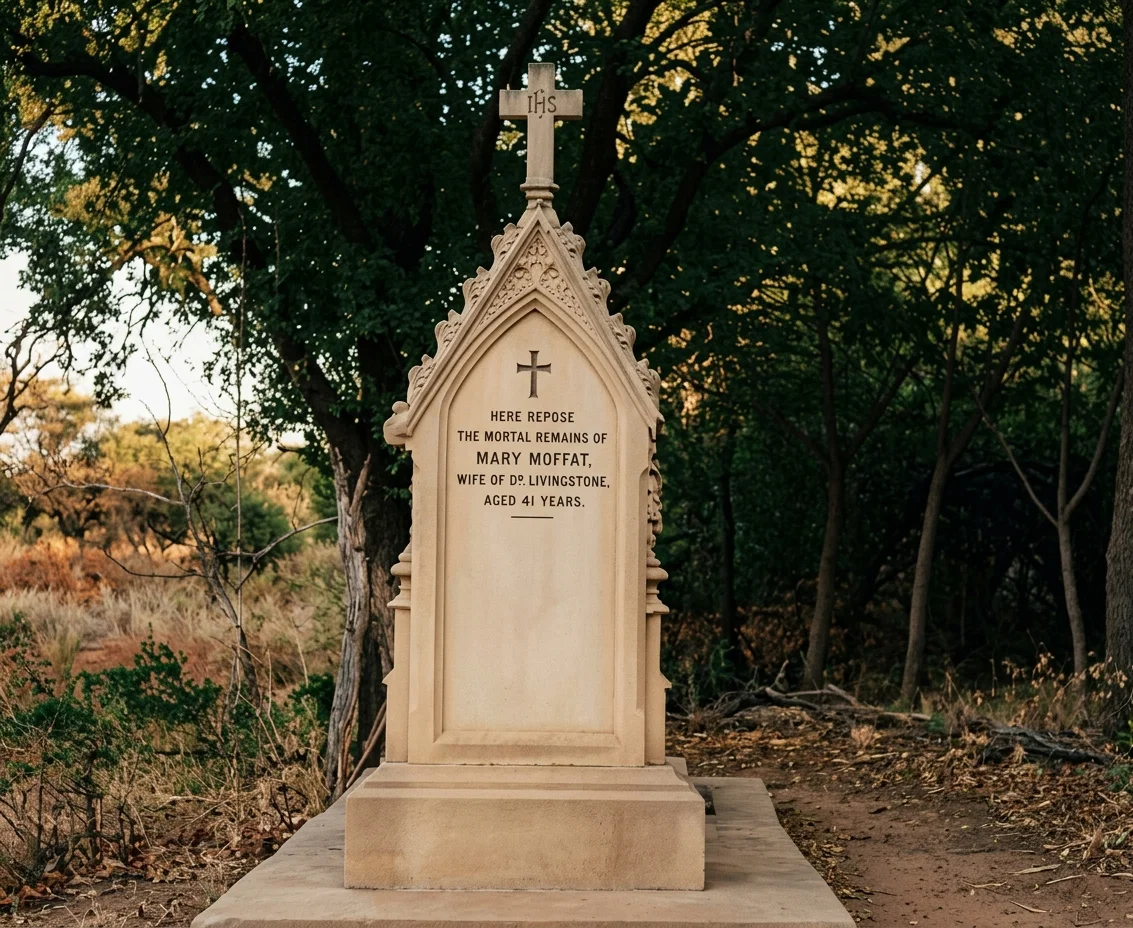
GRAVE OF ‘MARY MOFFAT, WIFE OF DR. LIVINGSTONE
Saturday evening I took the train and arrived in Beira the eleventh of July. I went aboard the steamboat that afternoon, but we did not start for Chinde till the next day. We anchored off the Chinde bar in the morning, but the tug did not come out to us until about dark. We then went aboard and the tug pulled out from the ship a short distance, and there cast anchor. It being dark and the bar very rough, the captain would not attempt to cross till daylight. Well, we had a terrible night of it. The tug tossed and rolled like a cork all night. Like Paul, we “wished for day.” It came, and soon we were safe in the harbor at Chinde. My heart went up to the Lord in thankfulness that he had brought us safely through that experience.
We were soon aboard the river steamer, and that evening started for Chiromo, a distance of two hundred miles. On the way we spent one night at the Shupanga Mission, and there visited the grave of Mrs. Dr. Livingstone, on the bank of the Shire River. She died April 27, 1862, at the age of forty-one years.
She was on her way to join her husband in the great work. My heart was inspired with new courage as I stood by the grave of this noble woman, who, with her husband, did so much for the cause of Christ in South Africa. The words on her tombstone are so expressive that I will quote them: “Here repose the mortal remains of Mary Moffat, the beloved wife of Dr. Livingstone, in a humble hope of a joyful resurrection through our Saviour Jesus Christ.”
When there is plenty of water, the trip is made in four or five days, but we were nine days reaching Chiromo. The next morning I was furnished with a machila team consisting of sixteen boys, and we started on our journey to the Plainfield Mission, a distance of fifty miles. The machila is a canvas hammock fastened to the cross-bars of two long poles. Four men carry at a time, and they go on a slow trot, making about five miles an hour. The journey was made nicely with the exception of the climbing of a mountain to get up to Cholo. I succeeded with the help of the boys, but it was a hard climb of about two and one-half hours. The boys, not understanding just where I was to go, took me to the Nyassa Industrial Mission, which is about six miles from Plainfield. As it was then seven o’clock, and the boys were very tired, we stopped at the mission for the night, where we were kindly entertained.
At daybreak the next morning we were off again, and arrived at the mission in time for breakfast. I was glad to get there, as it had been three weeks since I left the Somabula Mission. I received a hearty welcome from Brother and Sister Branch and family, and everything was done that could be to make my visit pleasant and profitable. I found them well, although they have light attacks of the fever from time to time.
I have now been here three weeks, and have had time to look quite carefully into the work, and I can say that the Lord is truly blessing the labors of this family. The school work is prospering under the management of Sister Mabel Branch, and the native teacher, Edward. He is a great help to them in their work. There are between fifty and sixty in the school, and some of these boys are getting a good start in their studies. There are between fifteen and twenty in the home, and the remainder come to the school from the villages on the estate. On the Sabbath the young men go to the villages near by, and hold services. Last Sabbath they spoke to one hundred and sixty-four adult natives. Thus it is that the natives about us are learning something of Bible truth, and the boys are gaining an experience in working for the people.
The mission farm of two thousand acres is hilly, and there is considerable timber on the land. The soil is good, and the grass grows to the height of eight or ten feet. They have an abundance of rain in this section. Last year the rainfall amounted to over seventy inches. Brother Branch had over ninety acres under cultivation last year. This is a large amount of ground when we consider that all the work has to be done by the natives. There are very few teams and plows in this country.
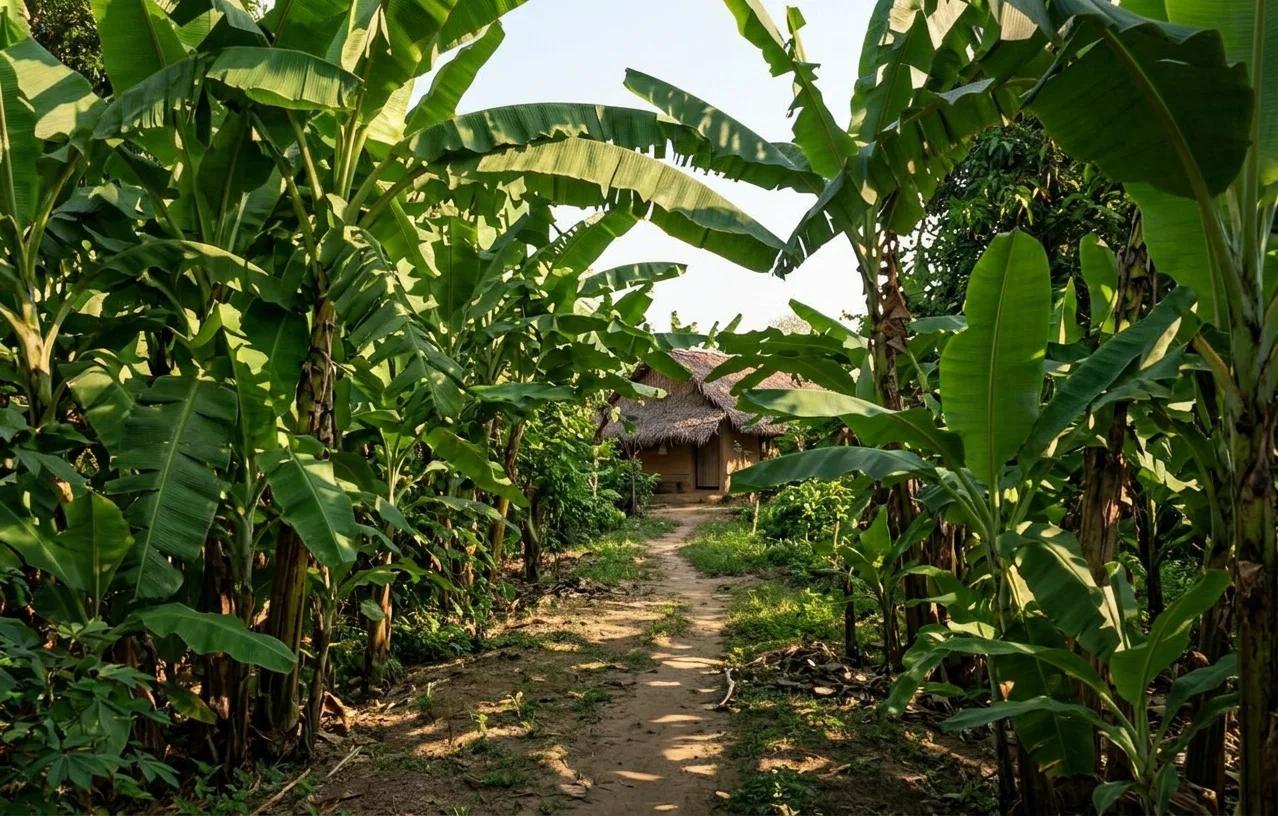
MISSION ROAD AND HOUSE
The natives do all this kind of work, even to the grading on the railroad which they are now building.
Wild beasts and reptiles abound in this country. Cattle and goats have to be kept in enclosed buildings at night. Lions are all about. One was heard roaring not far away a few mornings ago. Some boys had a team of oxen onthe road, and something broke down. While they were fixing it, the oxen were feeding close by, and a lion came and took one of them. About one week ago a lion entered a native village, but a short distance from Blantyre, and carried off a pig. I have seen the skins of three boa-constrictors that were killed near here. These were from twelve to sixteen feet long. The largest one was killed on the estate by a native. The natives do not usually kill them, but this one swallowed a goat belonging to the native, and when it became dormant, about three days later, the native killed it, and sold the meat of both the goat and boa-constrictor.
The Lord is certainly blessing the work of our few missionaries in this country, and we are encouraged to continue the work. My soul is often sad as I think of the little that we are doing in view of the greatness of the work there is to be done, and the short time in which we have to do it. “This generation” is almost passed, and we have made only a beginning in this work. We long to see more done, and are crying to the Lord to open the way for more missions to be started, and for godly men to enter the work. Brethren, remember the work in darkest Africa in your prayers, that God may open the way for the message to go with power in this country.
Plainfield Mission, Cholo, British Central Africa.