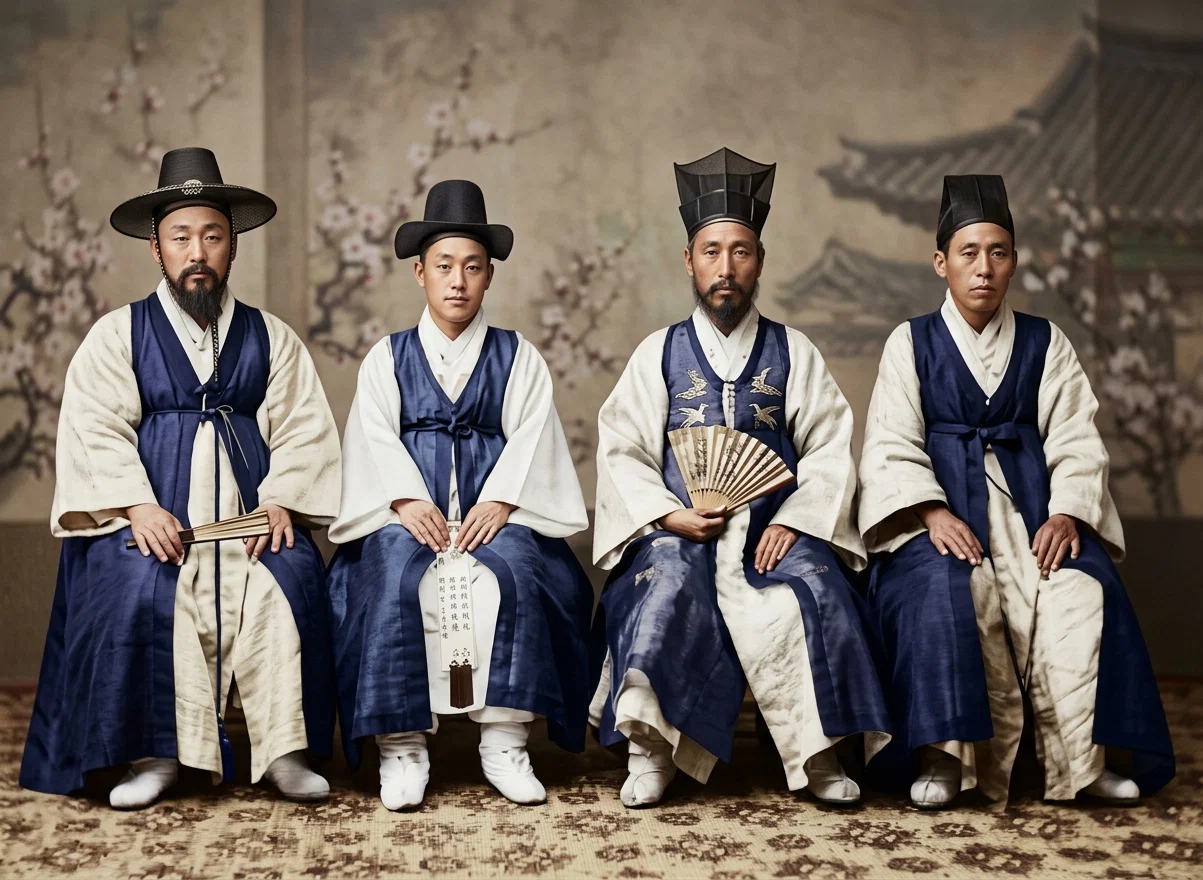
KOREA is Japan’s nearest neighbor; so we who have brought the closing message to the “flowery kingdom” are brought close to the needs of the “hermit nation.” For centuries Korea was shut away from the rest of the world, like a hermit in his hut. But this exclusiveness has vanished; there is a friendly feeling toward foreigners, and the laws are liberal.
Korea is situated directly west of the main island of Japan. It has an area of eighty-five thousand square miles, rather less than Great Britain, and a population estimated at between six and ten millions.
The government is weak, but under the influence of Japan various enterprises and reforms have been introduced.
Many curious and interesting customs prevail among the people. Travelers paint fantastic pen pictures of cities built of low mud houses, along narrow streets trod by people in long white garments and towering hats. But these odd externals soon lose their novelty; of deeper interest are the spiritual conditions and needs of the people. Buddhism and other forms of heathenism prevail. Yet the door of Korea is wide open to the entrance of the gospel, and already several denominations of Christians have well-established missions. The Bible is printed in the native language, and other Christian literature is being brought out. In Chemulpho, the port of Seoul the capital, the Methodists have a congregation of about three hundred believers. The Korean Christians are often spoken of for their devotion, and their liberality in supporting gospel work.
The women of Korea are compelled by custom to live in seclusion, much as do the women of India. So there is need of women missionaries, as well as men. A Korean church building has one side of the room partitioned off for the women, with just a narrow aperture about a foot wide in front, through which to see and hear the minister.
The language resembles the Japanese in grammatical structure, but in vocabulary the two bear little resemblance. The Koreans, like the Japanese, use the Chinese characters in their books; but they, too, have evolved something very like an alphabet, consisting of simple characters, each with a fixed phonetic value.
Some of their books are printed wholly in these native characters, while others contain Chinese ideographs. Europeans require two or three years of study before they can begin to use the language in giving religious instruction.
Of late we have felt much interested in this needy field, and are praying that God will lay the burden upon some hearts to bring the closing gospel message to this people. We shall be more than willing to furnish further information to any whose hearts may be so impressed. Strong, energetic, consecrated young people are required for such a field. These Oriental countries may not offer all the comforts and luxuries to be found in our American homes; but they do offer glorious opportunities for winning souls for the Master. The Lord calls for volunteers. Who will go? and who will send them?