Cuba’s Need

4%

Review and Herald Publishing Assn. · Washington, D.C. · Dec 31, 1903

FromReview and Herald, Vol. 80, No. 52.

Read the full edition

Cuba’s Need

MRS. IDA M. FISHER
Lying one hundred miles south of Key West, between the Caribbean Sea and the Gulf of Mexico, the largest and most westerly island of the West India Group is found.
Cuba, with her coast line of nearly 2,200 English miles, her 47,278 square miles, including her dependencies, her population of nearly two million souls, who know nothing of the third angel’s message, presents a most interesting field for the consecrated worker.
With her two hundred or more ports, including Havana, which has one of the best harbors in the West Indies, there are twenty-three principal ones.
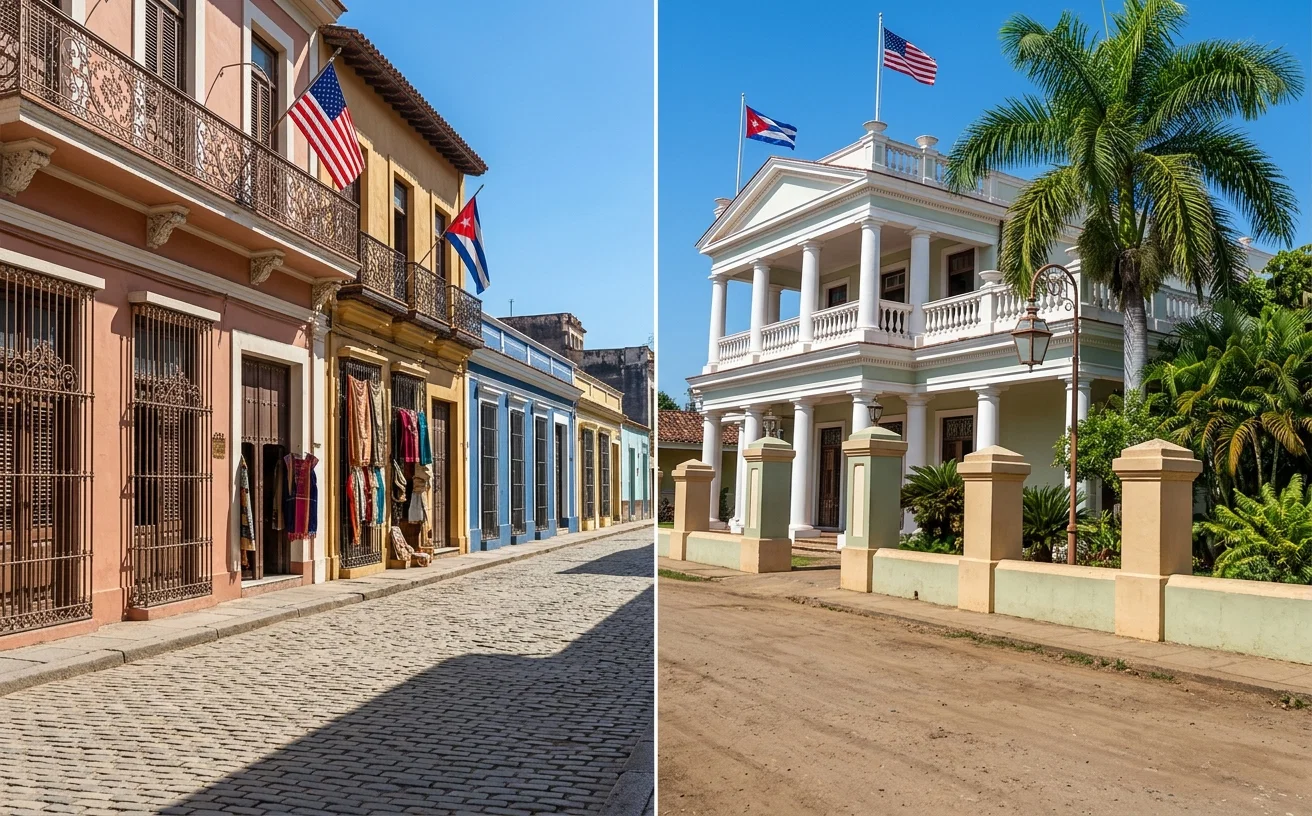
SCENES IN CUBA
SCENES IN CUBA
Intersected by a broken mountain range, which extends through the island from east to west, some of the mountains rising to a height of eight thousand feet, with two hundred and sixty rivers, independent of streams, the falls which are found in the Ayor Negro River, which are nearly two hundred feet high, and the natural bridge which spans this river, many mineral springs, the luxuriant palms and tropical fruits and flowers,—all these make it a paradise to the tourist.
No wonder a Spanish writer in speaking of this beautiful spot at the time of its discovery by Columbus in October, 1492, gives the following statements: “At the sight of that coast so clean, without shoals or reefs, in which its gentle waters flow tranquilly, at seeing those mountains covered with verdure, that sky so blue, Columbus exclaimed, full of enthusiasm, ‘This is the most beautiful land that eyes have seen.’”
When the island was first discovered, it was inhabited by Indians of the same tribe that inhabited all the islands of the Caribbean Sea. These Indians lived in tribes under chiefs, who were called caciques. These looked upon the Spaniards with confidence, and at first regarded them as gods.
After discovering the island of Pines, Columbus returned to Cuba in July, 1494. He landed on the shore of the River Jatibonico (Ha-te-bo-ne-co), where he celebrated the first services held on the island. The Indians regarded with respect these wonderful ceremonies of the Catholic Spaniards. At last one of their old men drew near tremblingly, and said, “It seems to me that you are doing a good work, because you are worshiping your Divinity. Although it is said you have come from strange lands with great arms to conquer many peoples and countries, nevertheless you are not vain. Know thou there is in the other life two places where the souls will go,—the one full of joy and luck, is destined for the good; the other, fear and horror, where groan the evil. If you are mortal, and fear the eternal punishment, you will not do evil to those who do you no evil; and according to what you do, you will be recompensed.” Thus the savage recognized the infallibility of a Supreme Being.
Most of these savages have gone the same way as those of the other islands which were under Spanish rule. It is claimed that a few families are still in existence near Santiago.
Most of the inhabitants of this island are Spaniards and Africans. After the year 1511, colonists came from all provinces, even the Canary Islands, and settled in this island. Until 1511 only the Castilians were permitted to live there, but now the Biscayans, Catalans, Asturians, Castilians, Andalusians, and negroes share its wealth.
In 1886 slavery was abolished. Until 1898 the island was under Spanish rule. Havana, the capital, has over four hundred thousand inhabitants. Santiago, in the southeastern part, which was the original capital, has a population of over three hundred thousand. Spaniards have told me that this city is far more healthful than Havana.
The chief industry is sugar and tobacco raising. Its tobacco is recognized as the best in the world, if such a thing can be said of the weed. This fact has caused some feeling with the Porto Ricans, as they think that their country produces a good plant.
All of the tropical fruits are raised on the island; and it is claimed that when the island was discovered, six varieties of sweet potatoes were cultivated.
Like all Spanish countries Catholicism is the principal religion. The people, bound down by superstition, trust to their saints and penances to gain them an entrance to the kingdom of heaven.
Alberto Jose Diaz, a former officer among the Cuban revolutionists, was the first man to carry Protestantism into this Catholic land. One day during the last rebellion, he, with a companion, was sent ahead to select a camping-ground. Spanish sentinels saw them and followed them; night drew on, and they hid in a thicket, lashing their horses, to make the Spanish soldiers think they had escaped; but not being able to deceive them, they were forced to take a log and drift out to sea, expecting to land some place else on the shore. Sunrise found them far from land. For days they drifted without food or water, and finally Diaz’s companion lost consciousness, fell off, and was drowned. At last Diaz was picked up, unconscious, by a passing vessel bound for New York, and was put ashore penniless.
He spent his time reading newspapers to the men in a cigar factory. After a time he was taken sick with pneumonia, and was confined to his boarding house. Miss Alice Tucker, a home missionary, became interested in him, and living in the same house, went to his bedside and prayed with him and left him a New Testament. Diaz studied it, and was led to give his heart to God. His heart yearned for his people; and the rebellion being over, he was sent as a colporteur by the Gethsemane Baptist church of Brooklyn. He was the one who led the company of over twenty Baptist missionaries in their work.
After he returned to Cuba, he was closely watched by the police, as he had been a rebel. One day he left Havana on the railroad with two boxes of Bibles. He was arrested, as they thought the boxes contained dynamite. His Bibles were taken from him, and placed in another cell. He applied to the United States consul, as he was a naturalized citizen. On Sunday morning he asked permission to preach to the prisoners, but was refused. Nevertheless he prayed, sang, selected his text, and preached so that all could hear him. In a short time he was released. There was a great demand for his Bibles, and he sold them all. Afterward the mayor who caused his arrest was converted with seventy others in the same town.
With two other missionaries, he was arrested in the town where he was born, in 1890, where they went to hold meetings, the charge being that they broke the law by not notifying the Spanish authorities of the meeting.
Soon he organized a church, and baptized three hundred persons. One of the first persons to enter his church was his mother, who had been a pious Catholic. Diaz had the pleasure of baptizing her, and it so affected him that all he could say was, “Lord Jesus, this is my mother.” At the end of two years’ work eight thousand persons had offered themselves for baptism, and he had received eleven hundred.
Later reports of his work testified of “twenty-five ministers, thirty churches and stations, day schools in which seven hundred pupils were being instructed, twenty-five thousand Sunday-school pupils, and industrial schools.”
So it is that the blessed gospel of peace has begun its work in this darkened part of the globe, but when “this gospel of the kingdom shall be preached to all the world as a witness unto all nations; . . . then shall the end come.”
In the entrance of Protestantism, Cuba holds open to us her door, and invites, yea, pleads, that this last message of the soon coming of our Lord be preached to her millions. Can we close our eyes to her needs any longer?