“Next to Immanuel’s story is heard the tale of Rum”
Flowers That Bloomed to Die
By MARY ALICE HARE LOPER
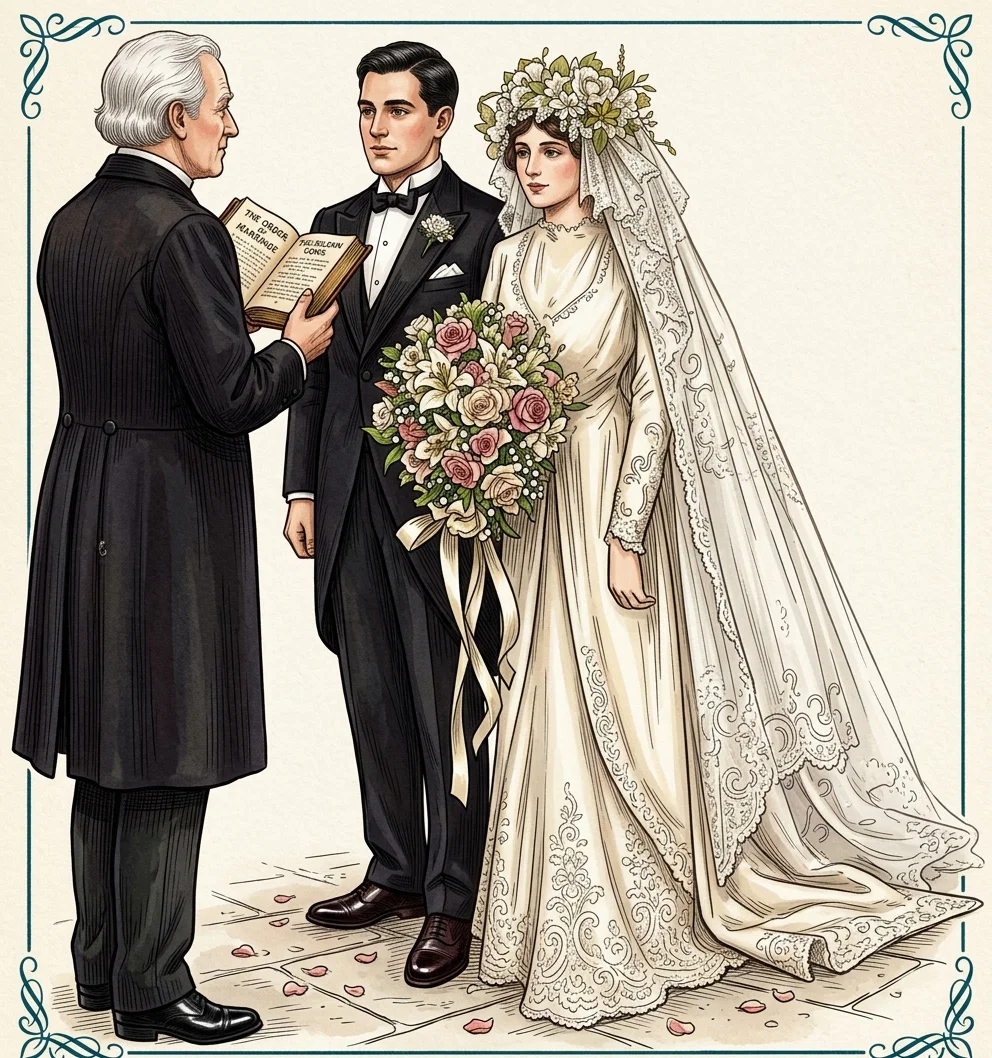
Took the solemn vows which united their lives into one.
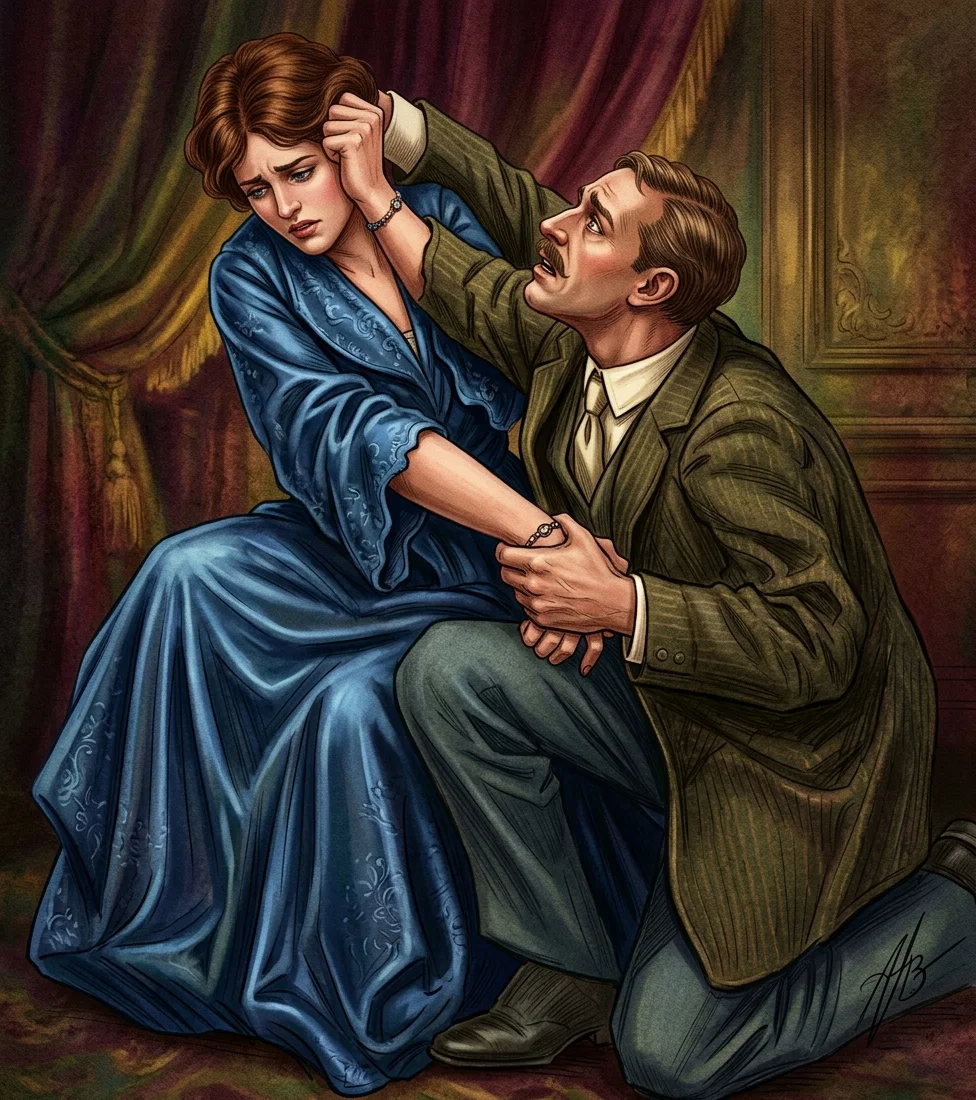
The demon rum entered the sacred inner circle.
“HUSTLE him off! Hustle him off! We’ve no time for woman’s pleadings or children’s tears. Hustle him off, I say, to jail! That’s where he belongs.”
A thin, emaciated woman, with two small children clinging to her skirts, turned away amid sobs and tears, as the police patrol disappeared with the husband and father of this poverty-stricken family, who lived in a forbidding-looking tenement in the poorest quarter of a great city.
ONE beautiful evening in the month of June, a bridal party was seen entering a pretentious church in a popular residence district of a flourishing city. Amid the delicate perfume of roses and the beauty of artistically arranged greenery, a promising young business man and his sweet bride knelt at the sacred altar, and with happy hearts took the solemn vows which united their lives into one. A beautiful home awaited their occupancy in a distant city; and after a honeymoon of several weeks, it was there they settled, hoping to see their fondest dreams of life come true.
Mr. McCune himself, like his accomplished wife, won many friends through his large-heartedness and personal congeniality. He had a wide circle of acquaintances, among whom he was very popular. Some of these, however, we are sorry to say, were accustomed to imbibe liquor occasionally, when society seemed to demand it. As time passed, Mr. McCune was persuaded to join exclusive clubs, where, on banquet occasions, wine and champagne flowed freely, and he was finally led to indulge like the rest.
Never before in all his life had he tasted intoxicating liquor; for he had been reared in a temperance home, and always had declined it. But the lesson, “Touch not, taste not, handle not,” had not been thoroughly learned. Not until too late was its full meaning realized.
The Tread of the Approaching Thief
MR. MCCUNE, at the time of his marriage, held a responsible position with a prosperous lumber company. The most joyful moment of the day, however, was when he could drop his business cares, and return to the sweet companionship of her who was to him the dearest person in all the world. And no time was to her quite so happy as when his cherished footstep was heard at the door.
By and by a sweet baby girl came to share their comforts, paying her board in smiles and little acts of cheer. Their happiness knew no bounds. Mr. McCune could not reach home soon enough after his day’s work was done; for the wee bit of human clay, beautifully robed and in its own little bed, caused life to take on a new aspect of joy. When occasionally he attended club meetings, it was under protest rather than because he enjoyed them. Beware of the little foxes that spoil the precious vine of domestic happiness.
As time swiftly passed, a change came, almost imperceptibly at first, like the stealthy tread of an approaching thief. Little by little, Mrs. McCune realized that something was wrong; that the affections of her husband were waning. For the first time in his life, he was becoming unkind and discourteous in manner, and was not so thoughtful as formerly in regard to the comfort of his family. On many home-comings, with sinking heart she had discerned the taint of alcohol upon his breath. She had kindly remonstrated with him, but he had given her no heed. His greetings were becoming less and less affectionate, until at times he almost resented the clinging of childish arms about his neck, and no more did his back serve as a saddle for many a jolly ride.
Another baby came to grace the tottering home; and as years went by, a third joined the unhappy family circle. Mrs. McCune had now learned to dread her husband’s homecoming; for usually he was in an ugly mood from drink, and at times became boisterous and even dangerous. She had pleaded with him through all the years to reform, and quit the saloon and the clubs; but to no avail.
The Work of a Demon
ONE evening at the dinner table, after criticizing the work of the cook and the waiter, he threw a dish at the latter as he was leaving the room, then rose, upsetting his chair roughly, and unceremoniously left the house, slamming the door behind him.
After a night of revelry, he returned, and announced to his terror-stricken wife that they would be compelled to move, as their home had passed into other hands. He did not tell her what she discerned, that this public demonstration of financial failure had come through a partnership with the graft demon alcohol.
With heavy heart and many pleadings for her husband’s reformation, Mrs. McCune saw her beautiful furniture placed in a van. With dire forebodings, she found herself and her three children in a rented house on the outskirts of the city. Her husband absented himself more and more from his family, until the children, who retired early and rose late, scarcely saw him from one week’s end to another. And instead of sitting by the crib, as he once did, and singing little love songs while his baby slept, Mr. McCune scarcely ever looked upon the crib, or the tiny heads peeping from the snow-white coverlet of the little bed beside it.
Slowly but surely, through drink, he was being transformed into a demon—he who had once been most considerate of his wife’s happiness and comfort, and a most loving and compassionate father.
One winter night, Mr. McCune came home in an especially ugly mood. He seized the baby, and thrust it outdoors into a snowdrift. His wife fled from his presence, rescued her baby, and fearing what might be the result should she return, ventured to a neighbor’s house and pleaded for help. Mrs. Harvey returned with her, and remained through the night, while the children slept, and a stupor caused their father to do likewise.
Poor Mrs. McCune! How bright life had appeared to her before the rum fiend had gained possession of her husband! But how thickly the clouds had now settled down over her pathway, while she seemed powerless to dissipate them!
Down, Down, Down
ONE bleak day in December, her husband made to her the gruff announcement that he had sold their best furniture, including her cherished piano, to raise money, as he put it, “to get along on.” The fact was, he was in debt at the various clubs to which he belonged; and should he not keep up his usual habit of treating at saloons and elsewhere, he would soon be held in disfavor.
It is a terrible thing when a loving husband, an affectionate father, becomes so benumbed to all sense of obligation to his family as to permit the demon rum to enter the sacred inner circle of domestic bliss, and rob it of every comfort and convenience, of every token of companionship, of everything that goes to make life happy, leaving only disgrace, sickness, starvation.
Broken-hearted Mrs. McCune burst into a flood of tears, and once more pleaded with her husband to quit his evil associations, cease from drink, and lead a sober life. She drew from him that which she had not known before,—that through drink, he had lost his position with the lumber company, and thus their only source of support had been cut off, while winter had begun in earnest, and winter clothing was sadly needed. She threw herself upon the bed so soon to be taken from her, and wept as only a woman can weep who can intelligently answer, “Who hath woe? who hath sorrow? who hath contentions? . . . who hath wounds without cause?”
“What are you so babyish about?” came the rough voice of her husband.
“O Henry, how can you spend your money for drink, and idle away your time in saloons and luxuriously furnished clubrooms, and thus rob your family of the necessities of life?”
“Well, if this doesn’t suit your fancy, how would you like to move to a tenement on South Clark Street? That’s where we are to go next Monday?”
“O Henry, do not talk so! Were it not for these poor children, I could die of grief.”
A Drink-Crazed Murderer
THE next week, however, found the family in a tumble-down tenement in one of the worst districts of the city, where demons in human form stalked forth in search of prey. After a night of debauchery, Mr. McCune came home one morning, still crazed with drink, and was in a surly mood. The breakfast menu, prepared by his wife’s own hands—for they had no servants now—did not appeal to his fancy, although it included all there was in the house to eat. The baby, hungry for milk, was crying in its crib. In a rage, Mr. McCune hurled at the crib a heavy chair, which hit the baby, killing it instantly. He then drew his fist to hit his wife, when a policeman, hearing a woman scream, entered the hovel, and placed the drink-crazed man under arrest.430
“Hustle him off! Hustle him off!” was the gruff command to the driver of the patrol wagon. “We’ve no time for woman’s pleadings or children’s tears. Hustle him off, I say, to jail! That’s where he belongs.” And he was gone, while the grief-stricken mother clasped her dead baby in her arms!
Oh, gruesome sight! No language can overdraw the awful spectacle of sorrow, sin, crime, and degradation that are the direct result of strong drink. But the world has become so accustomed to tragedy, so accustomed to the curse of drink, that well may humanity exclaim in one voice:
“Alas for the rarity
Of Christian charity
Under the sun!”
The little white form was placed in a rude box by the hand of public benevolence; and while wintry winds howled in the forsaken streets, it was taken from the family hovel, and laid to rest in the potter’s field.
But One of the Struggling Mass
WITH husband behind prison bars, her rent coming due, and two little mouths to feed, Mrs. McCune saw nothing before her but to spend her little remaining strength over the washtub, not knowing what might become of her children if that little strength should become spent.
Had her husband died an honorable death, had her penury been the result of continued illness in the family, she could have faced the world in her direful need. But her present disgrace and heart-breaking sorrow were beyond her revealing. She chose rather to suffer until, released by death, she too might find rest, as had her loved babe, in the potter’s field. She hoped, however, that she might be spared until some way was provided whereby her children would be rightly reared.
Poor Mrs. McCune was but one in the struggling mass of women and children who suffer the agonies of remorse and the deprivations of hunger because thousands and multiplied thousands of husbands and fathers rob their families—take the bread from their mouths and the shoes from their feet—to satisfy a fiendish thirst for drink. To follow the career of one in this vast throng, would be like seeking to follow the movements of a single pebble washed back and forth by the restless tide upon the seashore, where myriads of other pebbles have a similar experience.
Look upon the struggling women and starving children in this land of plenty, and answer the call of duty to help release these poor slaves from the demoniacal bondage of the liquor traffic. How?—By voting the white ballot.