An African Missionary Garden

7%

Review and Herald Publishing Association · Takoma Park Station, Washington, D. C. · Nov 25, 1915

FromReview and Herald, Vol. 92, No. 58.

Read the full edition

An African Missionary Garden

Going down on the boat from England, I met a lady from Kimberley. Speaking of our work, I mentioned the fact that our Brother and Sister J. V. Willson were operating treatment rooms in that city of the diamond fields.
“O, yes,” said the lady; “there is where we go to get flowers. I have often bought flowers there.”
We had heard by reports of the missionary garden Brother and Sister Willson have been operating; but we thus found on the boat that by some in Kimberley the flower side of the enterprise was better known than the treatment rooms.
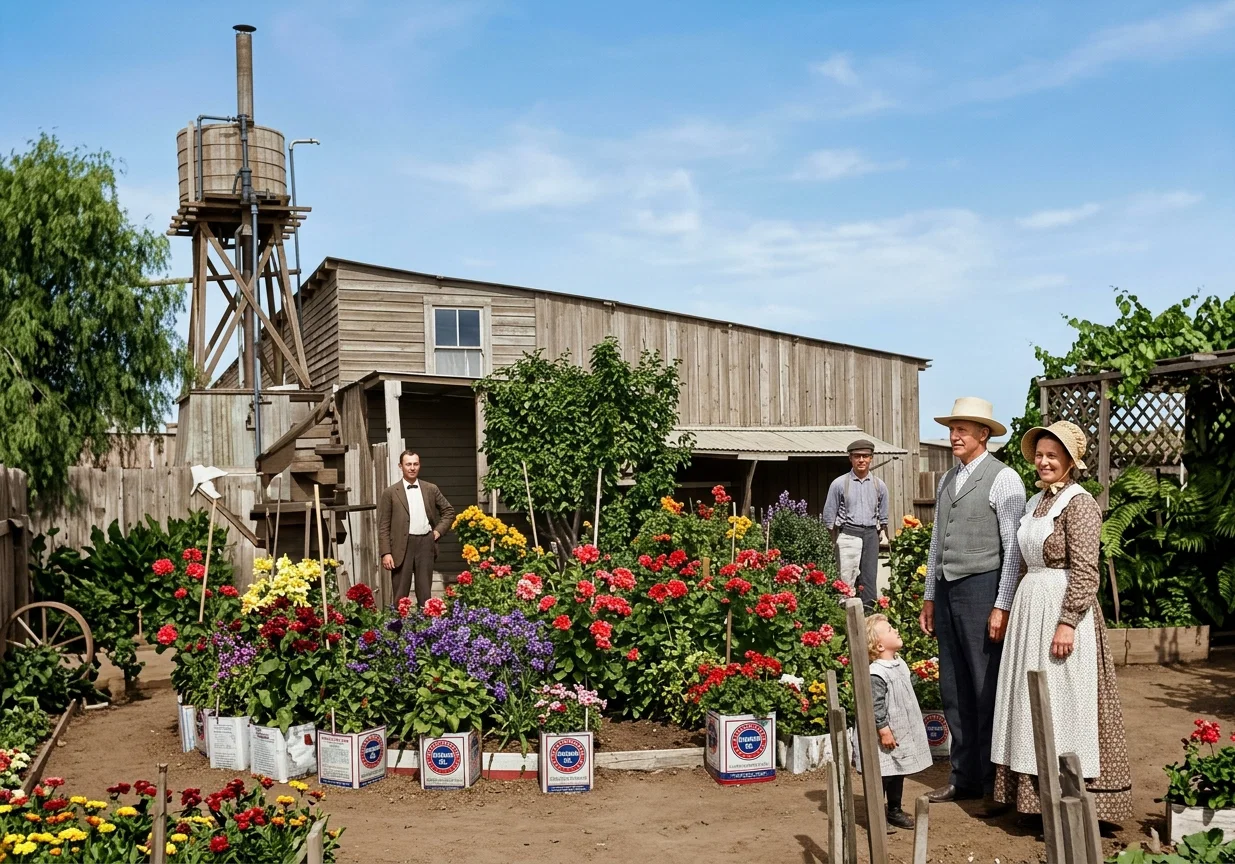
IN THE FLOWER GARDEN (BROTHER AND SISTER J. V. WILLSON AT THE RIGHT)
On my visit to Kimberley and to Beaconsfield, where our first South African church building was erected, I found Brother and Sister Willson busy with both sides of the enterprise.
“How did you come to start the flower business?” I asked.
“Well,” they said, “really the suggestion came through reading what the spirit of prophecy has said about the possibility of developing small plots of ground to bring good returns.”
I found in Kimberley that the treatment rooms face Main Street, while the living house, with rooms for transients above, is in the rear, facing the next street. In between are practically three small garden plots, each one just about such a little garden as may be found in the rear of most suburban homes. It is really a tiny piece of ground, but it is full of well-fertilized beds, and of Standard oil tins filled with earth. The waste water from the treatment rooms is run into a cistern, and from there by force pumps sent into a tank on the roof, from which it is piped out over the garden. Everywhere flowers are blooming, or springing up to yield blooms for coming months. Against the wall in one corner is a fernery, kept shaded by trellis work, with creeping vines, which are worked into bouquets and flower baskets. The moss for the foundations of wreaths and baskets is imported from down in the Cape Province. Brother Willson manages the garden end, while I found Sister Willson out early in the morning or late at night making up baskets or bouquets to meet orders.
“Without the flower garden we should not have been able to keep on financially with the treatment rooms,” Brother Willson told me.
“How much have you taken in for flowers out of this little garden plot?” I asked, as I saw bouquets and baskets made up to meet calls, at prices all the way from a shilling to a pound.
“Well, I will see. I will figure it out and tell you.”
So Brother Willson sat down, and from his books gave me the record for the ten years since 1905, though that first year was evidently but the beginning of the enterprise and had returns of only $500. The highest amount for one year was about $2,000, in 1911. The total, from 1905 to 1914, was $13,981.
That is a good record, is it not, for a missionary garden? It has meant hard toil for Brother and Sister Willson, but it has been a joy to them, not only because they love the flowers and know how to work among them, but because the income was for the mission cause.
W. A. S.