Funeral Sermon by Elder S. N. Haskell
3%

Review and Herald Publishing Association · Washington, D. C. · Aug 5, 1915

FromReview and Herald, Vol. 92, No. 38.

Read the full edition

Funeral Sermon by Elder S. N. Haskell

In the one hundred and sixteenth psalm and the fifteenth verse we have this most remarkable statement concerning death: “Precious in the sight of the Lord is the death of his saints.”
It would seem singular when we look at it from one standpoint that God would consider the death of his people precious. He has always dealt with death as an enemy. It is an enemy to the race, yet he declares that the death of his people is very precious in his sight. And while it causes mourning upon the earth by the friends of those who are deceased, yet the Lord himself regards them still. The hope that is set before them is a bright light shining in a dark place; and although the enemy of the race will do his best to destroy God’s people, yet there is light ahead, and that light is in the resurrection of the dead. They will come forth. And so God regards them still, even while they are dead. Their lives here upon the earth, and the fruit of their lives, will still be blessed of God as long as time shall last.
I wish to read by the side of this another verse found in the fourteenth chapter of Revelation, that seems to make the blessing more special, if possible, for those that sleep in Jesus: “And I heard a voice from heaven saying unto me, Write, Blessed are the dead which die in the Lord from henceforth: Yea, saith the Spirit, that they may rest from their labors; and their works do follow them.”
These are most wonderful words, and what makes them wonderful to us is the connection. I will read the connection, because it was the truth brought out in this connection to which Sister White devoted her life:— “The third angel followed them, saying with a loud voice, If any man worship the beast and his image, and receive his mark in his forehead, or in his hand, the same shall drink of the wine of the wrath of God, which is poured out without mixture into the cup of his indignation; and he shall be tormented with fire and brimstone in the presence of the holy angels, and in the presence of the Lamb: and the smoke of their torment ascendeth up forever and ever: and they have no rest day nor night, who worship the beast and his image, and whosoever receiveth the mark of his name. Here is the patience of the saints: here are they that keep the commandments of God, and the faith of Jesus.”
The apostle declares: “And I heard a voice from heaven saying unto me, Write.” It would seem that while John had a view of the closing work of the gospel, and while some engaged in that work would pass away, there came a voice to him from heaven, right from God’s throne, saying, “Write”—write something. What was he to write? Here it is: “Blessed are the dead which die in the Lord from henceforth.” Although they may have expected to live until truth triumphs finally, to live to see Christ come in the clouds of heaven, yet if they die, no terrible misfortune befalls them; for “blessed are the dead that die in the Lord from henceforth:
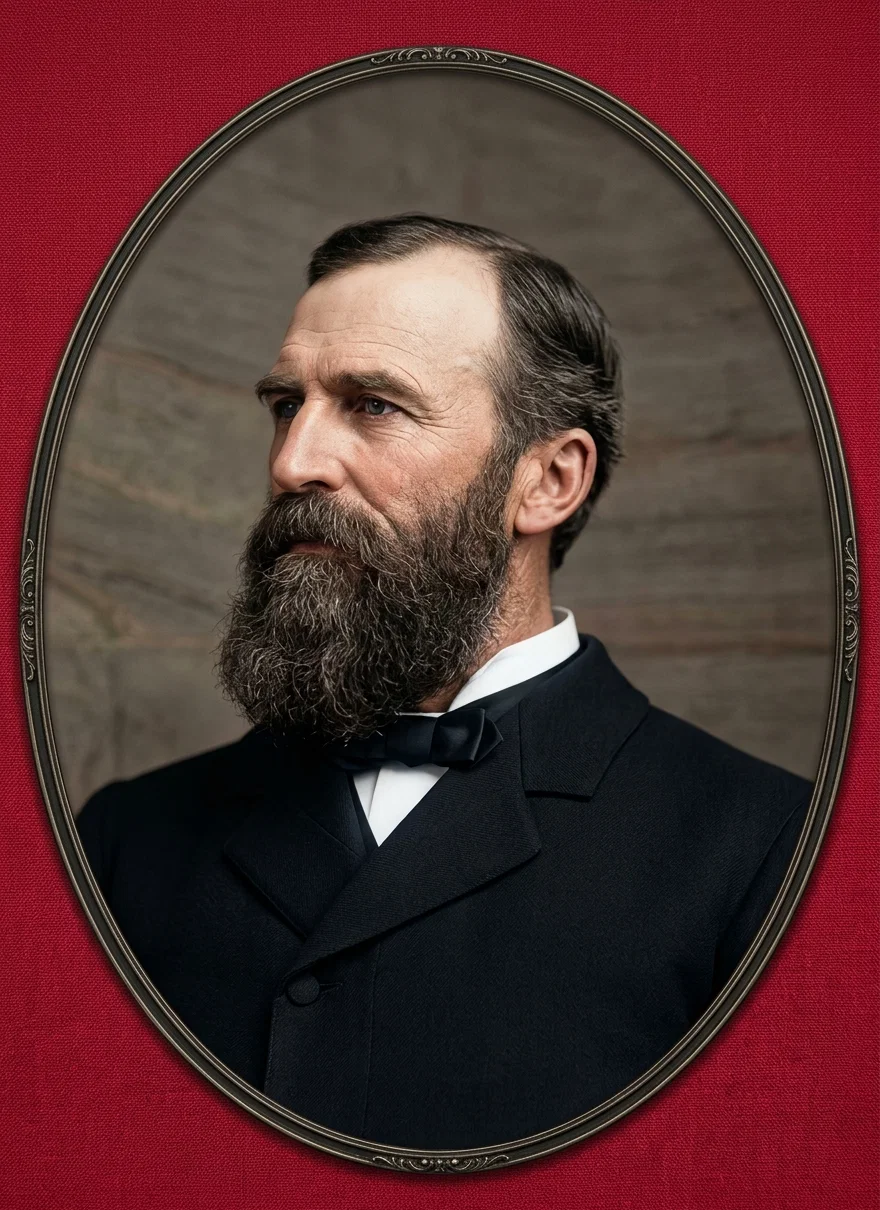
ELDER J. N. ANDREWS, WHO DIED AT BASEL, SWITZERLAND, OCT. 21, 1883
Yea, saith the Spirit; that they may rest from their labors; and their works do follow them.” I do not know what words could be framed that would seem to arouse greater interest in those that believe in the truth brought to view here than these words concerning those that may die in the message. We have no question in reference to the faithfulness of our dear sister. She has been faithful and true as far as lay in her power to accomplish the work that God gave her to do; yet she is dead; but “blessed are the dead which die in the Lord from henceforth.” She rests from her labors; she has ceased to live; she has met the foe, Death; she has surrendered; but her works live. Being dead, she speaks and will speak as long as souls can be saved in this world. What we need is confidence in God and in his Word to carry out the same work that she did as far as we shall be able and time shall last.
But I wish to read one or two expressions concerning the resurrection of the dead, for to me there is something very precious in the thought of the resurrection. The hope of the resurrection has brought comfort to the hearts of the believers in every age of the church. It was this hope that the apostle Paul set before the early disciples, in the first epistle to the Thessalonians. He said: “I would not have you to be ignorant, brethren, concerning them which are asleep, that ye sorrow not, even as others which have no hope. For if we believe that Jesus died and rose again, even so them also which sleep in Jesus will God bring with him.”
As Christ was brought from the grave, so will he bring those that sleep in Jesus. “For this we say unto you by the word of the Lord, that we which are alive and remain unto the coming of the Lord shall not prevent [or go before] them which are asleep. For the Lord himself shall descend from heaven with a shout, with the voice of the Archangel, and with the trump of God: and the dead in Christ shall rise first: then we which are alive and remain shall be caught up together with them in the clouds, to meet the Lord in the air: and so shall we ever be with the Lord. Wherefore comfort one another with these words.” I Thess. 4:13-18. There is one expression that I wish to notice for a moment, and that is in the fourteenth verse: “If we believe that Jesus died and rose again, even so,”—even as Christ was raised from the dead,—“even so them also which sleep in Jesus will God bring with him.” Christ possessed individuality when he rose. It is
no doubt familiar to you all that Mary was the first one to go to the sepulcher in the morning of the resurrection, and she ran and told Peter and John that the tomb was empty. And so Peter and John came to see. “And he [John] stooping down, and looking in, saw the linen clothes lying; yet went he not in. Then cometh Simon Peter following him, and went into the sepulcher, and seeth the linen clothes lie, and the napkin, that was about his head, not lying with the linen clothes, but wrapped together in a place by itself.” Now it may seem to us strange that John should write this particular, but there is something more to it that is more marvelous still. “Then went in also that other disciple, which came first to the sepulcher, and he saw, and believed. For as yet they knew not the scripture, that he must rise again from the dead.” Why did John believe? He saw Christ’s very habits manifested right there in the tomb. John saw the napkin laid by itself, and he saw the linen clothes laid by themselves; and yet he did not knowthe scripture that Christ must rise from the dead; but when he saw this, and saw the body gone from the tomb, he said, That is Jesus. He is risen from the dead. The scripture he did not know, but he knew Christ was raised, by the orderly way in which that napkin and the linen clothes were left.
But there is something that is still more striking in this chapter. I shall have to read several verses to get the connection: “But Mary stood without at the sepulcher weeping: and as she wept, she stooped down, and looked into the sepulcher, and seeth two angels in white sitting, the one at the head, and the other at the feet, where the body of Jesus had lain. And they say unto her, Woman, why weepest thou? She saith unto them, Because they have taken away my Lord, and I know not where they have laid him. And when she had thus said, she turned herself back, and saw Jesus standing, and knew not that it was Jesus. Jesus saith unto her, Woman, why weepest thou? whom seekest thou? She, supposing him to be the gardener, saith unto him, Sir, if thou have borne him hence, tell me where thou hast laid him, and I will take him away. Jesus saith unto her, Mary.” That is all—“Mary.” She had heard that voice many a time before. “She turned herself, and saith unto him, Rabboni; which is to say, Master.” How did she recognize him? It was the same voice that she had heard call her name time and again before he died. Then she must have recognized him by his voice when he said “Mary,” and she looked up and there he, Jesus, stood, right by her side. “Jesus saith unto her, Touch me not; for I am not yet ascended to my Father: but go to my brethren, and say unto them, I ascend unto my Father, and your Father; and to my God, and your God.”
Mary’s love for the Saviour was so strong that she could not rest at all until she saw him, until she knew where he was. And when he stood by her side and said “Mary,” in that same tone that she had heard so many times before, she was about to fall at his feet and grasp him and worship him, when he said, “Touch me not.” It was her love for the Saviour, because of what he had done for her in forgiving her sins and connecting her soul with heaven. Her love knew no bounds. Her love kept the Saviour on the earth for a short time at least, until he made himself known to her. Then she, the first of the disciples to see Jesus, reports concerning him, and preaches the risen Saviour. There is something very touching in this narrative. It is this, that the Saviour so appreciates the love of his people, and his people so appreciate what he has done for them, and their hearts are so drawn out and so connected with heaven, that in the resurrection they will know the Son of God.
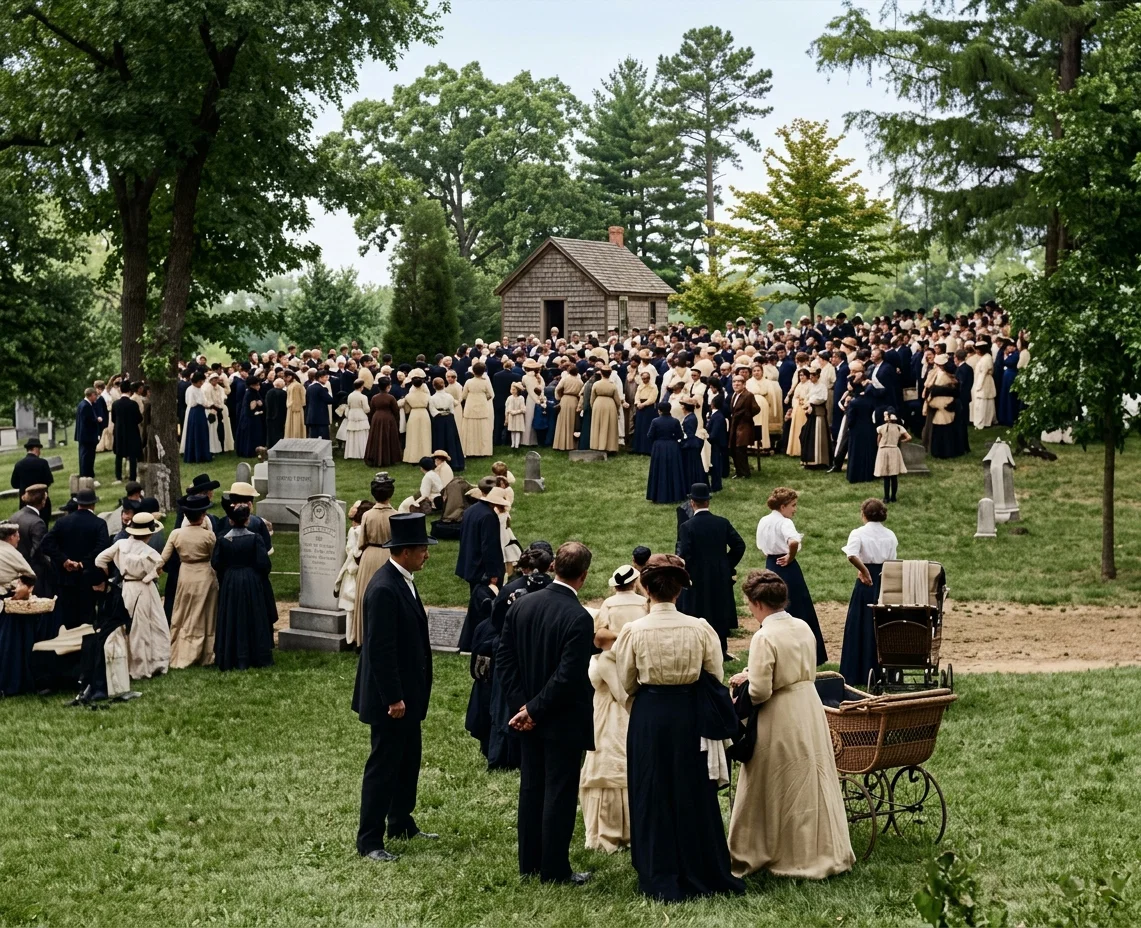
A VIEW FROM THE REAR OF THE LARGE COMPANY GATHERED AROUND THE GRAVE OF MRS. ELLEN G. WHITE
They will know him by his voice; they will know him by his habits; they will know his features. Thomas said: “Except I shall see in his hands the print of the nails, and put my finger into the print of the nails, and thrust my hand into his side. I will not believe.” But when the Saviour appeared to him he said, “Thomas, reach hither thy finger, and behold my hands; and reach hither thy hand, and thrust it into my side; and be not faithless, but believing.” The very sight of his Saviour quickened his recognition. He didn’t have to put his hands in his side or his finger into the prints of the nails; but he saw him, the same Son of God that was crucified and buried in Joseph’s new tomb. So it will be with our friends finally. They will come forth like our Saviour; we shall behold them, we shall see them; and while we cannot hear the voice of our sister any more in this world, yet her influence lives, and in the resurrection, if we are so faithful as to have a part with the people of God, then we shall recognize her. We shall see her and know her. It will be so with all God’s people.
My dear friends, there is a living connection between heaven and this earth, and the promises that the Lord has made to his people will be verified, every one of them. May the Lord help us to be among that number that will meet our Lord in peace. The greatest effort on our part should be to prepare to meet God. I have been personally acquainted with Sister White to a greater or less extent for fifty years. I have seen her under almost all circumstances in life. And I can say this truthfully, that I never saw a person more truly womanly, more Christlike in all her ways, in all she did, than she was; and many can testify to the same thing.
May the Lord grant us his blessing; and while we shall not see our sister any more in this world until the resurrection day, may God help us, dear friends, to be among that number that will then see her again in the kingdom of glory.
“We Shall Meet,” No. 1371, “Hymns and Tunes,” was sung at the conclusion of the service by the double quartet. Elder W. T. Knox offered the prayer of dismissal. Follow- ing this formal service, the body was removed to the vestibule of the church, where opportunity to view the face of Sister White was given those who had not previously had the privilege. The large congregation in single column slowly filed by the casket. Hundreds who had done this before the service, again availed themselves of the opportunity. Tenderly the remains were borne to the waiting carriage. I. H. Evans, W. T. Knox, G. B. Thompson, F. Griggs, G. E. Langdon, and F. M. Wilcox acted as pallbearers. The procession to the cemetery was a large one. More than one hundred vehicles of various kinds, automobiles and carriages, were in line. Nine street cars, chartered for the occasion and loaded to the fullest capacity, accommodated those not possessing carriage conveniences. The somber-hued, overcast sky harmonized with the solemn occasion. Rain at one time threatened, but was withheld till the return from the cemetery.The services at the grave were brief but impressive. The beautiful and comforting song “Resurrection,” No. 963, “Hymns and Tunes,” was rendered by the double quartet. Elder I. H. Evans read as a Scripture reading, John 5:24-29; 1 Cor. 15:51-58; 1 Thess. 4:13-18. Following this Elder G. B. Thompson offered prayer. The remains of our dear sister were tenderly and silently lowered into the grave to rest beside the body of her husband, Elder James White, who was buried in the same plot in 1881.
The hundreds gathered around the open grave stood with bowed heads and sorrow-filled hearts, recognizing the great loss to the church of God, and their own personal loss, in the death of this noble, devout woman. Silently they dispersed, some lingering a little season to visit the graves of others of God’s faithful fallen workers who are buried in the familiar burying ground. Elders Uriah Smith, M. E. Cornell, B. L. Whitney, E. B. Miller, G. W. Amadon, G. H. Bell, D. T. Bourdeau, T. M. Steward, and other earnest, devout workers who have fallen in the conflict and whose names we do not recall, are awaiting here the coming of the Life-giver. What thrilling scenes will this and other cemeteries present when the Life-giver comes. The graves will be opened, and those who sleep in Jesus will come forth shouting victory over death and the grave. Hasten, glad day of deliverance from death’s cruel power!
The three and one-half hours occupied by the complete funeral service afforded time for serious reflection to many present. To the writer it brought thronging memories of the past. He could hear once more the clear, ringing voice of our sister call- ing the members of the church to forsake the low plane of selfish living, and to occupy the high position to which God called them by his grace. He recalled the many warnings she had uttered against the deceptive wiles of the great adversary, and the dangers which threaten the church of God in these days of spiritual declension and worldliness. In memory he could hear her ringing appeals for broader liberality and greater sacrifice in behalf of the gospel of Christ in all the world. He recalled the great burden of heart she felt for the great city centers, for our institutions, for our young people.
Here, from the Tabernacle pulpit, she had borne again and again throughout the years the messages which God had committed to her. We wondered if these messages would have their full effect, if the death of the messenger, who died in the fullness of her labors for God, would have an influence to call the attention of this people seriously and earnestly to a further consideration of the word she had spoken. The principles of truth expressed are as appropriate today as when they were uttered. We hope that our church’s appreciation of the gift of the spirit of prophecy will not be voiced alone in words, but above all in following the instructions that have been given.
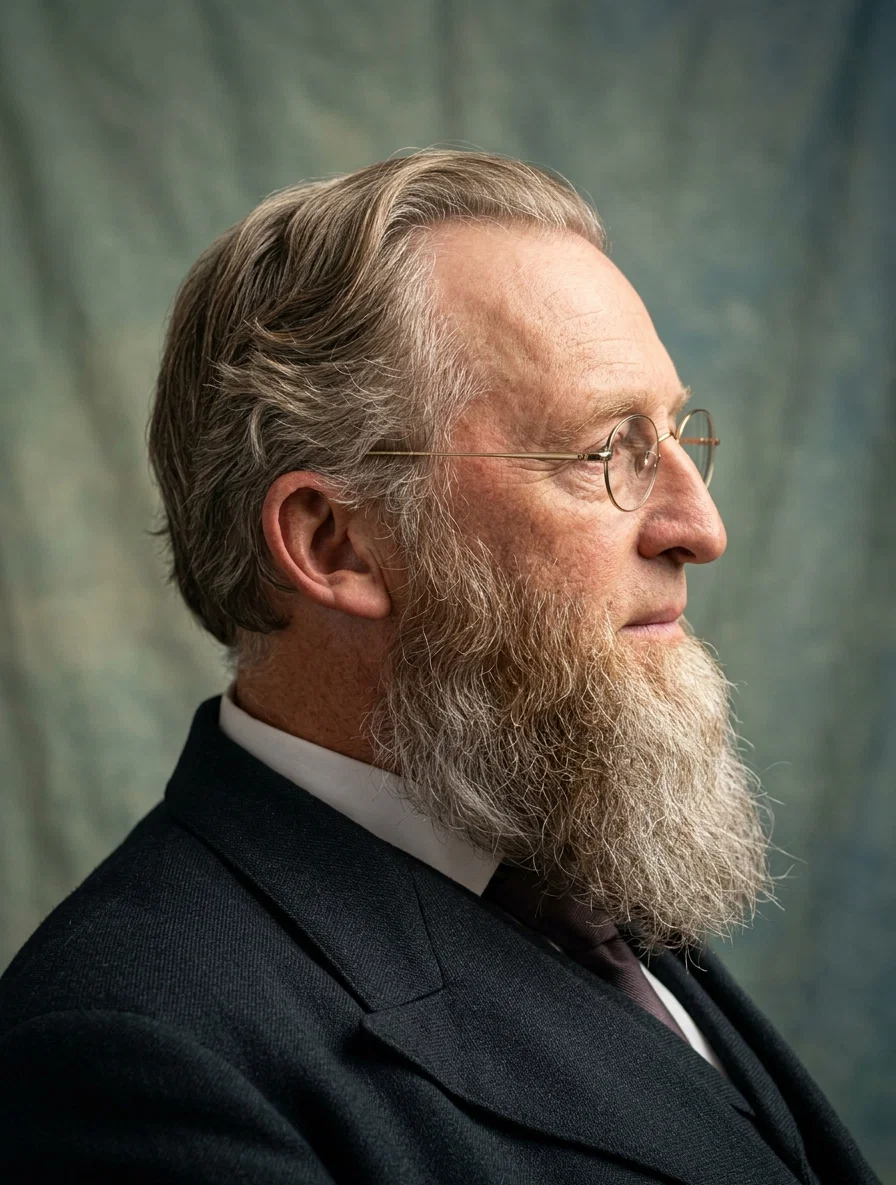
ELDER URIAH SMITH, WHO DIED AT BATTLE CREEK, MICH., MARCH 6, 1903
There came to mind a scene similar to this, which occurred thirty-four years ago, in 1881, when the funeral services of Elder James White were held in the Tabernacle. On that occasion, at a time when our dear Sister White was deprived of her chief earthly support, there was manifested her strength of Christian character, her confidence in God, and her reliance upon divine power in the work committed to her. At the close of the service she unexpectedly arose, and taking a position by the side of her husband’s casket, gave expression to the faith that sustained her. It seems appropriate that her words should find repetition in connection with this report of her own obsequies, for they express not alone the hope that sustained her in the sad hour of her bereavement, but the hope which must sustain every trusting child of God. They will be appreciated espe- cially by all who mourn:—

Words of Mrs. E. G. White on the Occasion of Her Husband’s Funeral
I want to say a few words to those present on this occasion. My dear Saviour has been my strength and support in this time of need. When taken from my sick bed to be with my husband in his dying moments, at first the suddenness of the stroke seemed too heavy to bear, and I cried to God to spare him to me,—not to take him away, and leave me to labor alone. Two weeks ago we stood side by side in this desk; but when I shall stand before you again, he will be missing.He will not be present to help me then. I shall be alone, and yet not alone, for my Saviour will be with me.
When my husband was breathing out his life so quietly, without a groan, without a struggle, I felt that it would be selfishness in me to wish to throw my arms of affection around him and detain him here. He was like a tired warrior lying down to rest. My heart can feel to its very depths, and yet I can tell you I have no tears to shed for the dead. My tears are for the living. And I lay away my beloved treasure to rest,—to rest until the morning of the resurrection, when the Life-giver shall call the captives from the prison house to a glorious immortality.
And now I take up my life work alone. I thank my Saviour I have two sons whom he has given me to stand by my side. Henceforth the mother must lean upon the children, for the strong, brave, noble-hearted husband is at rest. The turmoil with him is over. How long I shall fight the battles of life alone I cannot say; but there is one thing that I will say to you, and that is that when I saw my husband breathe his last, I felt that Jesus was more precious to me than he ever had been in any previous hour of my life. When I stood by my first-born, and closed his eyes in death, I could say, “The Lord gave, and the Lord hath taken away; blessed be the name of the Lord.” And I felt then that I had a comforter in Jesus Christ. And when my little one was torn from my arms, and I could no longer see its little head upon the pillow by my side, then I could say, “The Lord gave, and the Lord hath taken away; blessed be the name of the Lord.” And now he upon whose large affections I have leaned, with whom I have labored,—and we have been united in labor for thirty-six years,—is taken away; but I can lay my hands upon his eyes and say, I commit my treasure to Thee until the morning of the resurrection.
When I saw him passing away, and saw the many friends sympathizing with me, I thought, “What a contrast to the death of Jesus as he hung upon the cross!” What a contrast! In the hour of his agony, the revilers were mocking and deriding him. But he died, and he passed through the tomb to brighten it, and to lighten it, that we might have joy and hope even in the event of death; that we might say as we lay our friends away to rest in Jesus, We shall meet them again. And now I appreciate the Christian’s hope, and the Christian’s heaven, and the Christian’s Saviour, as I have never appreciated them before. And today I can say, “There is rest for the weary.” When we were looking, but a short time ago, to Colorado, and to the Atlantic coast, and to the Pacific, for rest, my husband said, “Let us not be overanxious. We know not what a day may bring forth. God may open up a way before us that now seems indistinct and cloudy. But,” said he, “I shall have rest, I shall have rest. All our ways are hid in Jesus Christ, and he will open up the way before us if we only trust him, from day to day. Let us now trust in him.” And there [turning toward the coffin] my husband has found rest; but I have yet to battle. I cannot yet lay off the armor of the Lord. When I fall, let me fall at my post of duty; let me be ready; let me be where I can say, as he said, “All is well. Jesus is precious.”
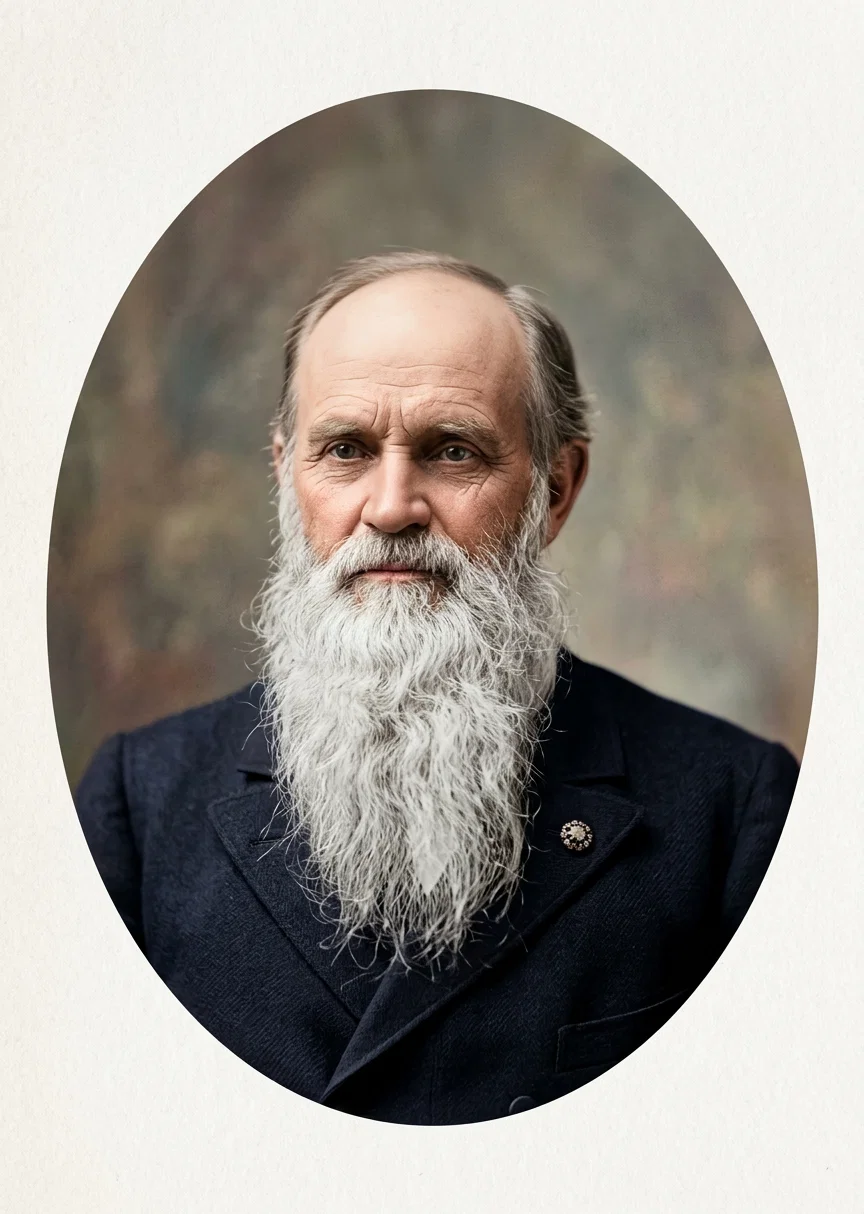
ELDER J. H. WAGGONER, WHO DIED AT BASEL, SWITZERLAND, APRIL 17, 1889
And, friends, we all want this hope. In Jesus Christ all our hopes of eternal life are centered; so then let us ever labor for him. He from henceforth is my Guide, and my Husband, and my Counselor, and my Friend. He will walk with me through the thorny paths of life, and at last we shall meet again, where there is no parting, where there is no separation, and where none shall any more say, “I am sick.” I yield my precious treasure; I bid him farewell; I do not go to his grave to weep. Nor can I shed any tears over my youngest nor my eldest son. The morning of the resurrection is too bright. And then I look to that morning when the broken family links shall be reunited, and we shall see the King in his beauty, and behold his matchless charms, and cast our glittering crowns at his feet, and touch the golden harp and fill all heaven with the strains of our music and songs to the Lamb. We shall sing together there. We shall triumph to- gether around the great white throne.
Sister White fell at her post of duty, faithful to the last. She was ready to go. She could say with the apostle: “I have fought a good fight, I have finished my course, I have kept the faith: henceforth there is laid up for me a crown of righteousness, which the Lord, the righteous Judge, shall give me at that day; and not to me only, but unto all them also that love his appearing.”
She rests from her labors, but the work which she has wrought under God still exists, and will continue to gather with Christ until the day of the final harvest. When the Life-giver comes, she, and all the sleeping saints from the days of righteous Abel to the last one that shall die, will come forth to receive their reward.
The church militant will soon become the church triumphant. It is for us to look beyond the darkness of the tomb to the glorious day of the resurrection, from the conflict to the triumph, from the labor to the resting.
It is proper that we grieve for our beloved dead, but we may leave them, one and all of every name, in the hands of him who judgeth righteously and who doeth all things well. They are at rest, but we are left to labor on. We are still confronted with living issues of the present. By the death of our tried laborers there is thrown upon us added responsibilities. We have the message of salvation to carry to lost mankind. Thousands of our fellows are going down every dayinto Christless graves. They, even more than the dead, need our tears. For their salvation we should live and labor.
ELDER J. G. MATTESON, WHO DIED AT SANTA MONICA, CAL., MARCH 30, 1896
Closing up our ranks, let us press forward, realizing that Christ still lives, and that the Captain of our salvation is still leading the way before us. He can never die. And our faith rests in his eternal power. His life of love and sacrifice for us calls us, even in the hour of grief, to renewed consecration to his work and service.
ELDER G. A. IRWIN, WHO DIED AT TAKOMA PARK, D. C., MAY 23, 1913
ELDER O. A. OLSEN, WHO DIED AT HINSDALE, ILL., JAN. 29, 1915