The Barbary States of North Africa

10%

Review and Herald Publishing Association · Tacoma Park Station, Washington, D.C. · Jun 18, 1914

FromReview and Herald, Vol. 91, No. 25.

Read the full edition
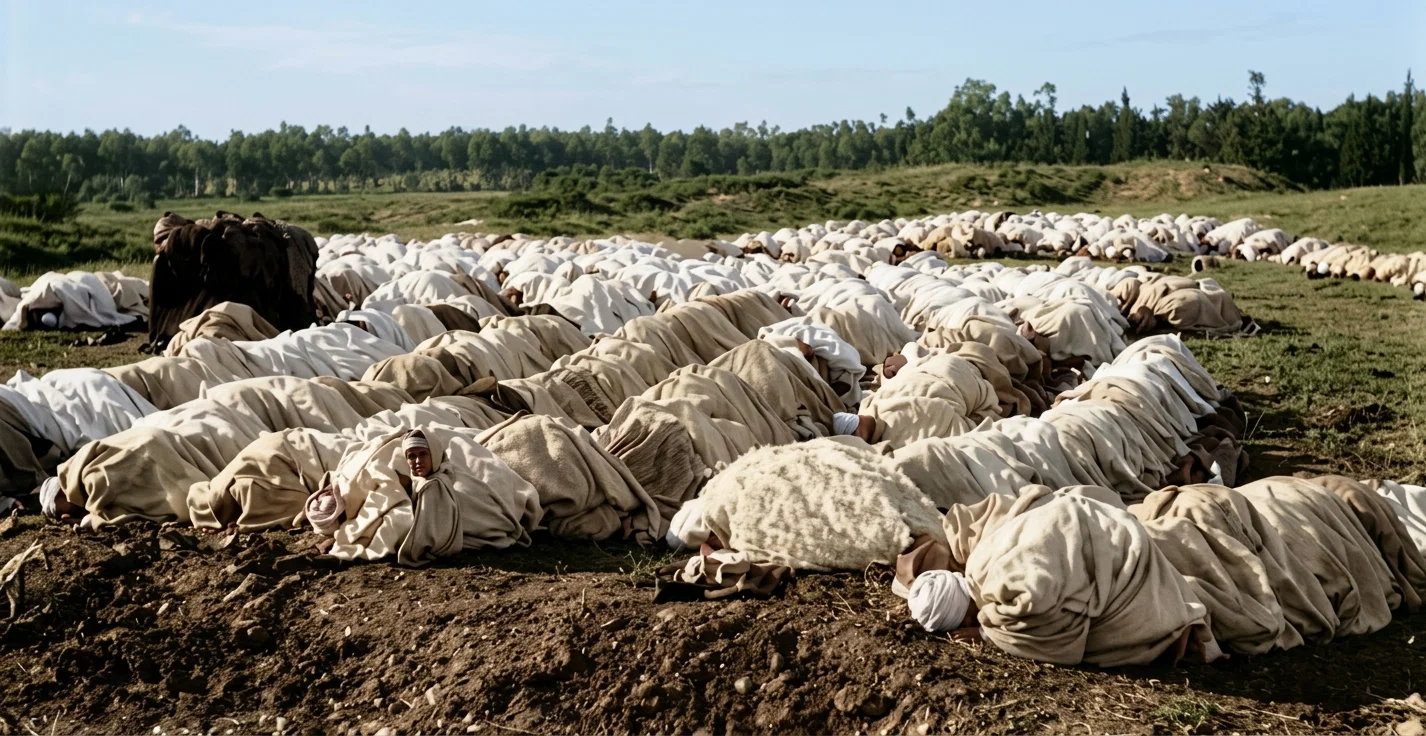
MOSLEMS WORSHIPPING THE FALSE PROPHET

The Barbary States of North Africa

W. E. HANCOCK
So little is known of the countries which are called in history the Barbary States that a little information regarding them will be both interesting and profitable in this our first report to the REVIEW since our arrival in North Africa last September.
We generally think of these countries as having derived their name, Barbary States, from the character of their inhabitants; for history shows that they well merit the term “barbarous” being applied to them. But the word is properly derived from the name of the original inhabitants of North Africa, the Berbers, or Barbars. The French still call them “les Berberes,” and they are represented today principally by the Kabyles, Chaouias, and the M’zabites. These tribes now speak different dialects, but it is recognized that they are derived from the same language,—a language entirely different from the Arabic, the prevailing tongue of the native population of the country.
The area comprised in this territory is nearly one fourth that of the United States (853,372 square miles), with a population one fifth as great. The number of inhabitants has not been ascertained with certainty in any of these countries, except in Algeria, which, according to the latest census, has a population of 5,069,522. A complete census, no doubt, would find between eighteen and twenty million inhabitants in the four countries. This population is entirely cosmopolitan, being divided among Berbers, Arabs, Negroes, Jews, Spaniards, Italians, Frenchmen, and a scattering representation of Germans, Englishmen, and other Europeans. Of course, the great bulk of the people are Arabs and Berbers. Arabic is the prevailing language of all these countries.
These facts and figures indicate to a large extent the religious needs of the people. The country is new and undeveloped from any point of view it may be considered, politically, economically, commercially, or religiously; that is, if considered from a European or Christian standpoint. Men of commerce recognize the opportunities that abound in North Africa, and are rushing in to develop the resources of these countries; but missionary societies are doing comparatively little to seize the opportunities which the conquest of this vast territory by European nations presents to them. Here we have the great northern gateway to the unknown millions of Moslems in Central Africa, the immense Sudan region. Yet up to the present time, only Algeria and Tunis have been entered by any organized society; and in these two countries missionary work among the Moslem people is barely begun. Surely missionaries should not be behind in pushing into this great Moslem field when the doors are thrown wide open.
Our own work was established here in 1905, and has touched five points in Algeria; namely, Algiers, Constantine, Relizane, Mostaganem, and Oran. The larger part of the work, however, has been done in Algiers, the capital of Algeria. Three years ago a French worker was placed in Oran, where we are now. The work has been done exclusively in French in Algiers, and also in Oran, except what we have done in Spanish during the last six months. In Mostaganem, and in Relizane, a town a short distance from Mostaganem, Brother Jose Abella has been working for more than a year, with the result that about a dozen faithful Spanish believers have been brought out. The believers in the message in all North Africa number about forty-five, and are French or Spanish.
What have we done for the 15,000,000 Mohammedans during these nine years? will perhaps be asked. We are sorry to be compelled to answer, Nothing. We certainly hope that will not be the report which we shall have to send from North Africa much longer. Now is the strategic time to enter these fields with means and workers enough to exert a perceptible influence. Men, for the sake of commerce, recognize the present opportunity. Why not we? Moslems, who have pointed with great pride to their conquering religion, see it being shorn of its glory as a victorious faith. Hundreds of Moslems are losing confidence in their old belief. Under French influence and French education, they have nothing to put in its place except atheism, freethinking, and infidelity—unless the missionary comes to them with a new message of hope and salvation through the gospel of Christ. Brethren, remember the Moslem problem in your prayers, in your plans, and in your offerings.
Rue Dumanoir, Maison Lauzin, Oran, Algeria.