The Rhenish Conference

8%

Review and Herald Publishing Association · Washington, D. C. · Mar 31, 1904

FromReview and Herald, Vol. 81, No. 13.

Read the full edition

The Rhenish Conference

GUY DAIL
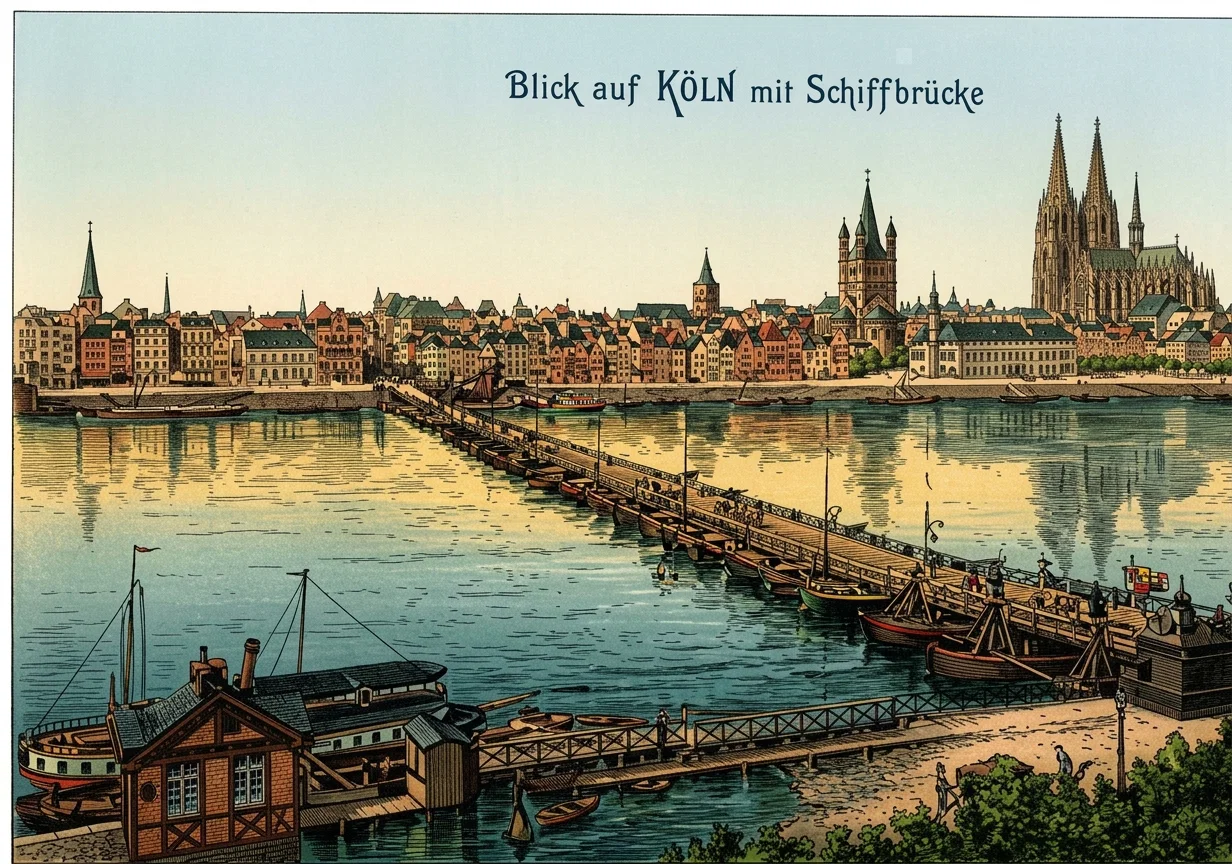
The second annual meeting of the Rhenish Conference convened December 30 to January 3. The meeting was held in the beautiful city of Cologne, often called the German Rome. The town has four hundred thousand inhabitants. It is compactly built and cleanly kept. It contains one of the finest Gothic structures in the world, the Dom, a cathedral of the whose twin towers reach five hundred feet into the heavens. The building was six hundred years in progress of erection. Cologne lies at the head of steam navigation on the Rhine.
GENERAL VIEW OF THE CITY OF COLOGNE
There were fifty-six members in the Cologne church at the close of the third quarter, 1903. There is still a good outside interest to hear the message. This interest has been quickened by the recent conference held there.
Rhenish Prussia comprises the territory of the Rhenish Conference. This is the greatest manufacturing province of Germany. Here are great coal fields, rich valleys, and well-cultivated hills. Cotton, woolen, and silk goods, and machinery are the chief manufactured products.
The hall where about one hundred and fifty of our Rhenish brethren came together was located on Grosse Budengasse, about a minute’s walk from Hohestrasse, the leading promenade of the city, where thousands upon thousands of people walk to and fro. Delegates were present from Barmen, Elberfeld, Essen, Gladbach, Meiderich, Mulheim on the Ruhr, and Vohwinkel, representing our churches in these respective cities. The new church in Dusseldorf was received into the conference.
The Rhenish Conference was organized a year ago. At that time it had two hundred and thirty members. During the year its net increase has raised its membership to three hundred and three. It pays two tithes to the German Union. The tithe was three thousand dollars for 1903. After auditing its accounts, there was a surplus of about twenty dollars in the treasury for the beginning of the new year. It employs one ordained minister (the president), two licentiates, and three Bible workers. The president, Elder G. Schubert, has had to work at the disadvantage of carrying on lectures in two different places, besides having on his shoulders the care of the conference. Although much of the aggressive effort is put forth among people whom we have formerly thought most unpromising, yet we find that God’s power is going out before his servants, and souls are being saved.
In Vohwinkel is the oldest church we have in the German empire. Here lived J. H. Lindermann, who began the observance of the Sabbath in 1867, from a study of the Bible alone. About forty brethren followed him. In 1875 Brethren J. N. Andrews and J. Erzenberger labored here, and the eighth of January, the following year, eight were baptized, and the church of Solingen was established. Sister White visited this field in the spring of 1887. Here we are erecting a chapel on a piece of ground that has been turned over to us by one of the oldest brethren in the German field. The German Union will own the lot and the chapel, which together will be worth about four thousand dollars. This is the second meeting-place we own in the German Union.
There was a pleasing spirit of union among the brethren at the conference, and the meeting closes with more harmony among the workers than has ever been before. There is courage and energy to press the battle to the front. United action will surely bring still greater results. It is the ambition of each worker in the Rhenish Conference to see as many souls brought to a saving knowledge of present truth as is possible. We hope that the coming year will see a still greater and better growth.
Elders Conradi, Erzenberger, and Schuberth, with Dr. Hoenes, rendered valuable assistance in counsel and thecorrect dividing of the Word. The health talks of the doctor were appreciated. After the regular conference closed, these brethren visited the neighboring churches on Monday and Tuesday; for, while there are six million people in the conference, it is so thickly inhabited that the various places are easy of access. Few fields present such an advantage in this respect.
The resolutions passed expressed ‘thanks to God for his care; a determination to be more true in the future’; the setting apart of the First-day offerings to German East Africa; to increase our efforts to dispose of “Christ’s Object Lessons,” and provide the necessary material fund; to send a tenth of the poor fund of the churches to the central poor fund, for the conference; to send all the Sabbath-school gifts to the union treasury for missionary purposes, as in other parts of the union, without deducting anything for local expenses; and thanking Brother A. Doerner for the assistance he has been in the past to the conference committee by his counsels, as he now desires to be relieved from this burden, on account of his health. The work for the coming year promises well.