SINCE the last report to the REVIEW from this intermediate school in Wisconsin, the good hand of God has been with us, giving us blessings which we are glad to report at this time. While the principal term has heretofore been the same as in our other schools, beginning in September and continuing until June, we have had a summer session for the students who wished to attend. The term of school conducted last summer was a pleasant and profitable one, with about thirty-seven students enrolled. Work in the garden made an agreeable change from the literary studies, as well as assisting students to meet their school expense. A large crop of strawberries, with a good supply of other fruits, was gathered and marketed. In this work the lady students took an active part. Work was outlined for the carpentry class in the erection of a needed building. This class not only did the woodwork, but gained a good experience in other respects, excavating for cellar and foundation, raising the former building on its foundation, quarrying the stone, and laying the foundation, building chimneys, etc. The good experiences gained by the students during the summer term are attested by letters we are receiving from parents, telling of the benefit which both parents and children are still deriving from the short stay at the school. We expect our summer term to become the very best of all the year.
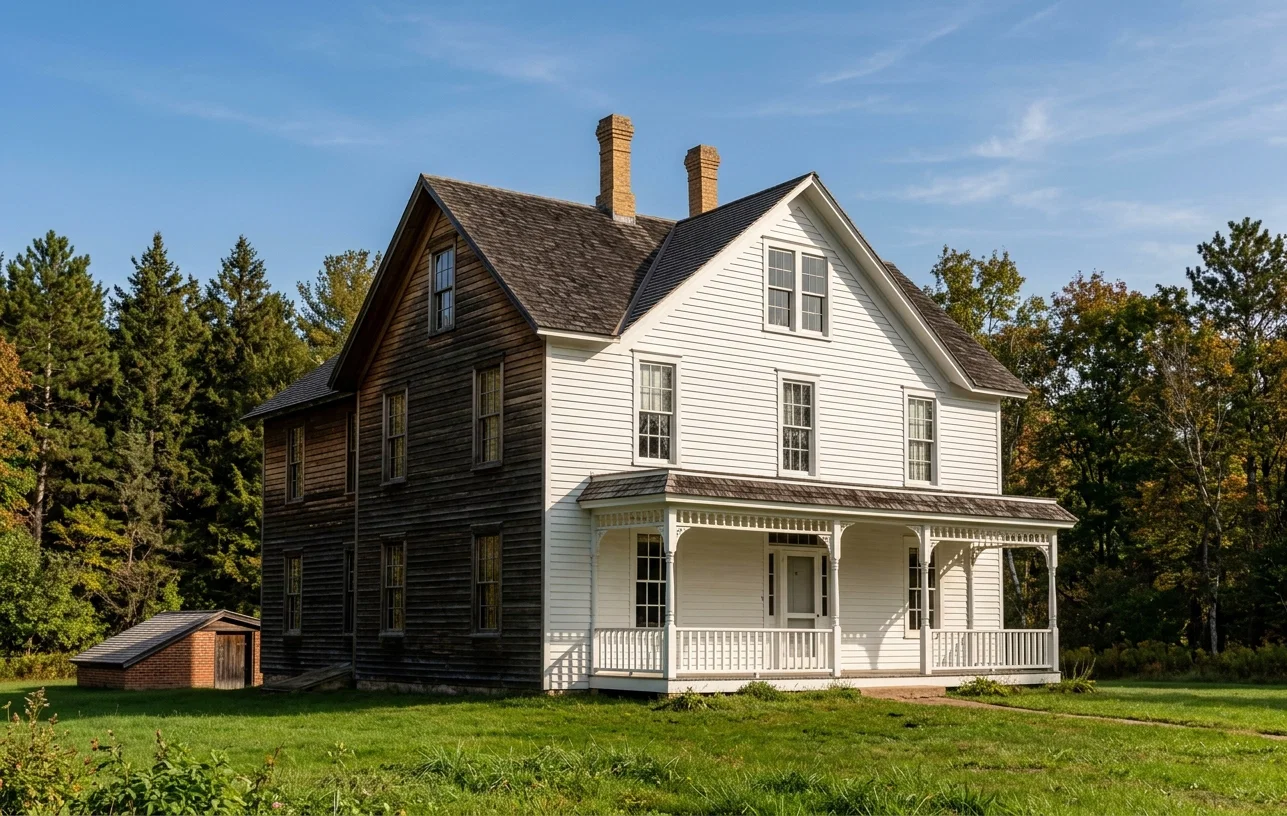
A COTTAGE BUILT BY THE STUDENTS
During the fall term, which began September 3, we have had a good attendance, one hundred and fifty-eight pupils being enrolled, and an excellent spirit has pervaded the school. No sickness other than from colds, etc., has been in the school, the daily labor of the pupils keeping them in good health. In our class work we have continued laying stress on a mastery of the common branches, a practical knowledge of the Bible, industrial class work, and have introduced more missionary study, endeavoring to familiarize the students with the needs of the wide field and the self-sacrificing efforts of the great pioneers of modern missionary effort. As the work of Livingstone, Judson, Moffat, Gardiner, Patteson, and others, has been brought before our students, it has appealed to them in a powerful way, and has been the most effective means we have found for directing their attention from self-serving to a living consecration. Emphasis was laid upon this matter during the week of prayer, and we attribute the conversion of a large number of pupils to the impressions made in this manner. On one occasion, where about sixty pupils were present, fifty signified their willingness and desire to go to any field in the world to which the Lord might call them. A daily class in mission study will hereafter have a place in our list of studies, with an initial enrolment of thirty pupils. We are confident that the Lord is placing a burden upon the hearts of many of these young people which will lead them into distant fields.
While the work of the school has been attended by a great measure of the Spirit of God, yet we feel that the work might have been better had we planned better. We think the intermediate school would accomplish a greater work by being smaller, and more upon the family plan than like an institution. With youth of such age, it is highly essential that all the teachers come into intimate relations with all the pupils in every phase of their experience, and this is difficult if these schools are not small, with the department idea excluded entirely. Again, the larger these schools, the greater the tendency of our people to centralize about them, greatly to the disadvantage of both school and patrons. It is certainly unfortunate that our people do not understand and feel the force of the instruction that “the greater the number of families that settle around the school buildings, the more difficulties there will be in the way of teachers and students;” and “it will be better for private families, however devoted they may be in the service of the Lord, to be located at some distance from the school buildings.” This tendency to colonize would not be so strong were we to carefully heed the testimony that intermediate schools should not be made so large as to prevent our establishing several such schools in our stronger conferences. There is prospect of having another intermediate school in Wisconsin, which will tend to check colonizing at Bethel and to prevent the further enlargement of this school.
The finances of our school have been greatly helped by the prosecution of our agricultural industries. The sales of our fruit and honey, together with money from tuition, have enabled us to meet running expenses, and make a large number of improvements. We still have some financial problems, however, but see light in the development of our resources in the soil. In fact, our location on a large tract of land, well away from any town, is a great blessing in many respects.
In the industrial feature of our work, we have combined practical labor with class-room instruction in various directions. Trades, as such, we do not undertake to teach, with the exception of carpentry. Our work comes under the general heads of agriculture and domestic art, such as sewing, dressmaking, cooking, nursing, general housekeeping, floriculture, fruit growing, bee keeping, etc. The twelve-room cottage shown in the illustration has been built during the past year by our students, the spot being cleared out of the woods. Members of this carpentry class are now able to build an ordinary house without further instruction. Our principal terms having heretofore come in the winter season, like the rest of our schools, and our agricultural season being limited from May to October, the principal work for most of our boys has been cutting wood and clearing land, and a much smaller number have had work in school during the season of growing crops. Inasmuch as we have been told through the spirit of prophecy that “instruction in agricultural lines should be the A, B, and C of the education given in our schools,” and that those managers who do not see this “will hold everything from advancing in right lines,” the approval of our board, and of the people of the conference, has been given to the plan of having our school year begin in the spring, making the strong terms coincide with the agricultural season.
Our next school year will begin March 30, and as many of our people are informed upon this matter, we expect quite a fair attendance. This change from customs of the past, calling for the attendance of the youth at school when their parents have been accustomed to their help at home, necessitates quite an educational campaign among our people, but the students themselves, seeing the necessity of following the Lord’s instruction, are our greatest helpers in securing the support of the people. In adopting this plan, we have before us more clearly the way to obey other instruction regarding making nature study next to the Bible in the education of the youth. The Lord evidently has been working with us and for us, preparing the way for a successful year at the very beginning of this new order. We look forward with pleasure to the blessings which will come as a result of our following the great Leader, just as blessings have already come to this school from forward movement.