Porto Rico

13%

Review and Herald Publishing Association · Washington, D. C. · Oct 29, 1903

FromReview and Herald, Vol. 80, No. 43.

Read the full edition

Porto Rico

B. E. CONNERLY
Porto Rico was discovered by Columbus in 1493, and the first settlement was made in San Juan in 1511, nearly four hundred years ago. The island is one third larger than the State of Delaware, but has a population more than five times as great, being one of the most densely populated countries of the world. The island is an agricultural country. Besides the spontaneous growth of fruit, it exports large quantities of tobacco, sugar, and coffee. Large numbers of a good grade of cattle are raised here, chiefly for export to neighboring islands; horses are small, and of an inferior quality. The horse is not so useful here as in other countries, as the farmer uses the hoe instead of the plow, and the machete (a sort of corn-knife) instead of the reaper. The service of the little pack-horse is only required to help market the surplus harvest. When modern methods of cultivation are adopted here, the fertile soil can be made to yield four times more than it does at present.
The Spanish word “Puerto Rico,” signifies rich port, but in the present run-down and uncertain condition of affairs it might far more properly be called “Puerto Pobre” (poor port). Of Porto Rico’s million inhabitants, less than one fourth can read and write; but her thousand teachers under the American system of education will soon make a change.
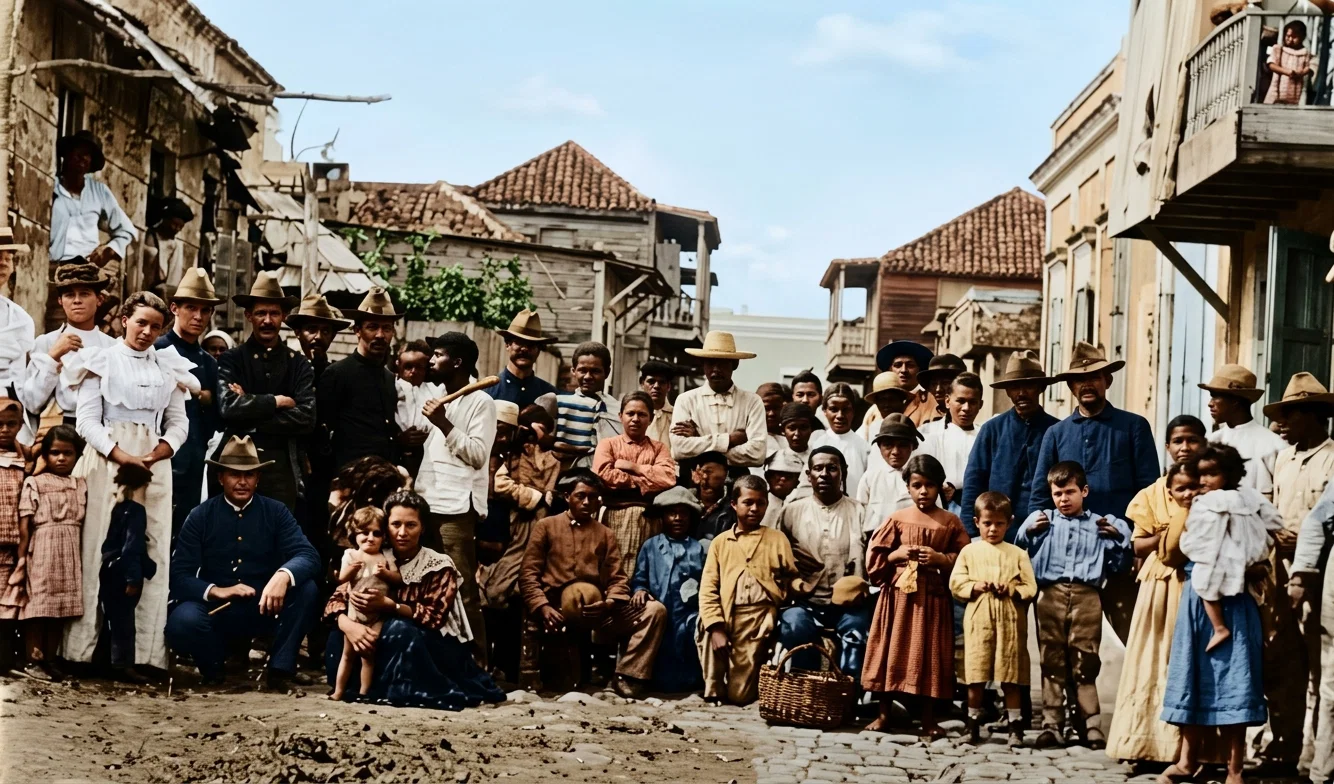
A GROUP OF PEOPLE, SAN JUAN, PORTO RICO
In matters of religion the people are in a very unsettled condition. Many are really tired of tradition and exacting forms and ceremonies, but being strangers to the gospel of peace, they do not know what to do. How we long to speak the whole gospel to the people in their own tongue! Many who are now turning to the Protestant faith seem to consider the move something like a venture, and if they discover that they have made a mistake, they hope for pardon from the priest, that they may not after all fail of obtaining an entrance by some means into heaven. Our hearts yearn for them as we see them in this unsettled condition, and we long to have the sweet assurances of the Word of God find a place in their hearts; but doubt and fear concerning the Scriptures make it hard for them to receive the blessings of faith. Other denominations are doing a good work in the island, and a religious sentiment is being built up.
It would seem that nature has done all that could be done for her people here. The climate is most delightful, and on fruitful hill and plain may be seen the most abundant evidences of an all-wise and beneficent Father; but Satan is making a desperate effort to keep the truth from entering the island. The first messenger was forced to leave on account of failing health, the second fell a victim to the snares of the enemy, and forsook the truth; the third was laid to rest while in the forefront of the battle, and his mantle has fallen upon us.
Since our last report, we have received many evidences that our paper is already accomplishing a good work, as the letters and inquiries concerning the coming of the Lord indicate that the public mind is being somewhat awakened on this subject. Sister Fischer spent some time in the field, and her experience was most encouraging. There are calls for a school, and for medical missionary work. We feel very much the need of medical missionary help here, as that branch has scarcely been touched in this island, and the need of it is apparent on every side.