In Western Cuba

4%

Review and Herald Publishing Association · Washington, D.C. · Oct 15, 1903

FromReview and Herald, Vol. 80, No. 41.

Read the full edition

In Western Cuba

W. A. SPICER
The provinces of Matanzas and Havana are the most prosperous in Cuba, as they have been most largely developed. This is the great sugar district. The cane stands higher and looks richer than any I saw in the lower islands of British Guiana. It was grinding time,—about the first of March,—and armies of laborers were carting the cane to the factories. Some of the large proprietors have built railways over their estates. The engineering work in the sugar factories is very largely in the hands of Americans. When the grinding begins, it is pushed forward day and night to the finish.
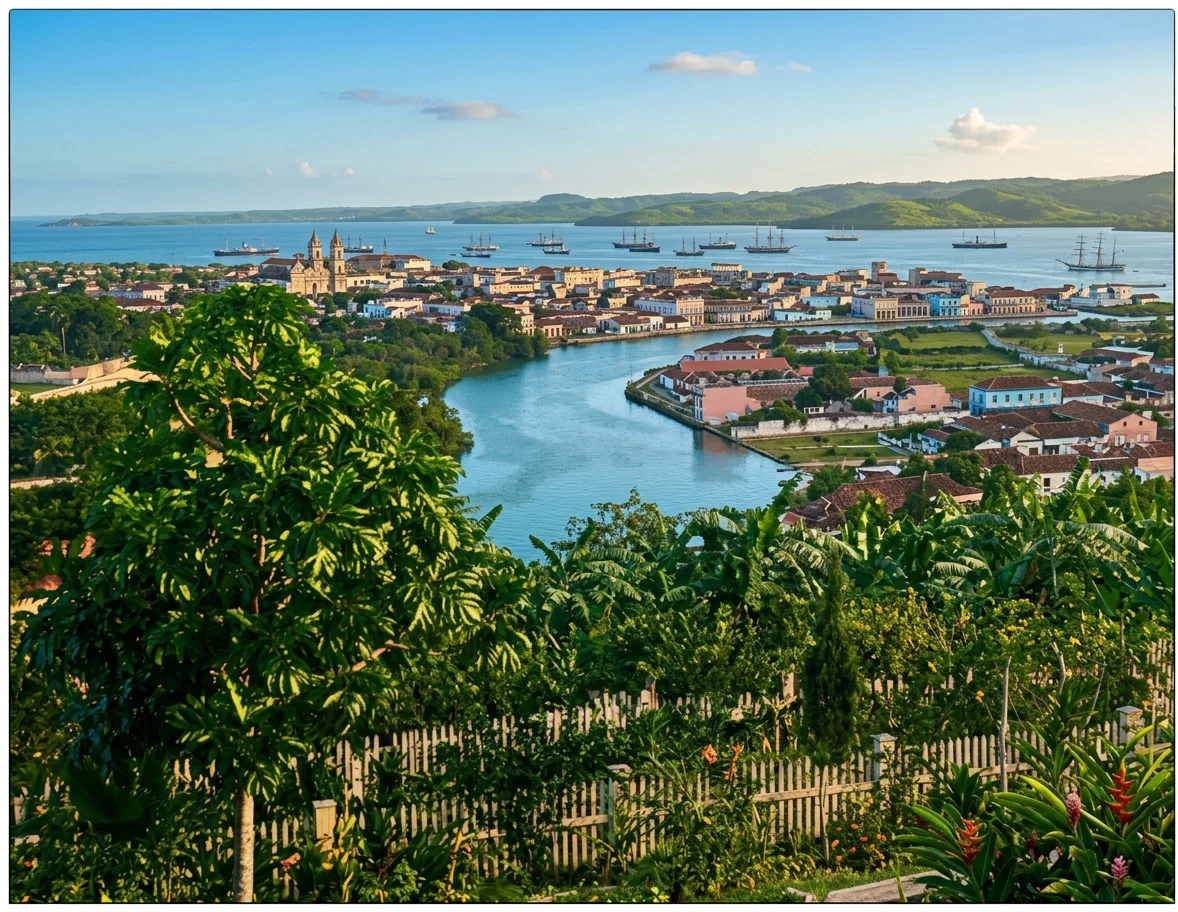
The city of Matanzas, beautifully and healthfully situated on the bay, is next to Havana as a commercial center. Portions of it along the riverside look like a bit of old Venice, the buildings rising directly from the water. The tinted walls and ornamental balconies and pillars would appear gaudy and overdone in America, but under tropical skies it seems perfectly fitting.
The Episcopal Church has long had a mission in Matanzas, and now the Methodists are pushing in successfully with their new missionary program.
Coming in from the east, the Havana railway terminus is at Regla, across the narrow bay from Havana. As one passes down with the crowd to the steam ferry-boat, in waiting for the train, he might easily fancy himself getting into New York from the Jersey City side. We passed close alongside the wreck of the battle-ship “Maine,” which still lifts its tangled mass of ironwork high above the water. Shipping from all the world is anchored in the bay. The population of Havana is about two hundred and forty thousand, and it is the great distributing center for the most populous parts of the country inland. It was carnival week, and Sunday was the high day in the mad revel. The evening was devoted to processions and balls. Grotesque masks and costumes helped the people to act the frivolous parts assigned to all. Next day business was resumed as usual. And Havana is a busy city. The docks are thronged, and the electric street-car system carries immense crowds to and fro. The old business streets are very narrow. In a printing office, on Obispo Street, I saw illustrated one characteristic Cuban institution, the eleven o’clock factory lunch hour. From the proprietor to office boy, all were gathered round the table for the common meal.
Along the water front, on the city side, is the old cathedral, where once Columbus’ dust was allowed a resting place. Here, too, is the old fort built by DeSoto, the conqueror of Florida and discoverer of the Mississippi. Within those walls his wife died, worn out with waiting for his return. Across the bay is the Cabanas fortress, the headquarters of the small Cuban army, and out on the point, facing the open sea, the famous Morro Castle guards the harbor entrance. In the dungeons of this old castle many a life has perished in the days now past, when the banner of Spain, red and yellow—the color of blood and gold—floated from the flagstaff where now the Cuban colors fly.
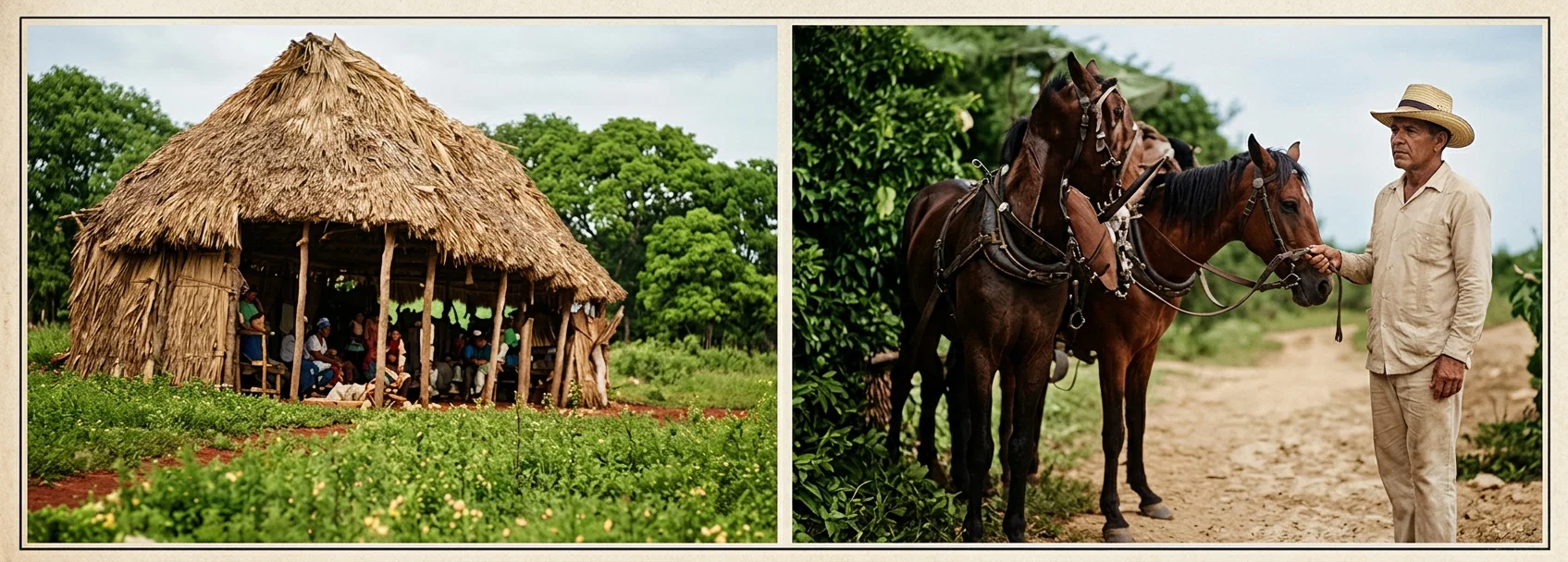
VIEWS IN CUBA
VIEWS IN CUBA
The Cuban government has made steady progress since the settlement. It has maintained and carried further thepublic works inaugurated during the American occupation. For two years now, not a case of yellow fever has developed in Cuba, which once was quarantined against through all the fever season. Millions are being spent in sanitation and roads, and a good school system is growing up. Political factions are getting more sensible, and less inclined to work against the administration in the interests of pet programs. Many American tourists were in Havana. Business men and farmers were there, looking over the country, and nearly all gave good reports.
The pioneer evangelist in Havana is Dr. Diaz, a Baptist, who has labored for his Cuban people over twenty years. His mission headquarters is an old theater refitted as a church, near the main boulevards, and business center. It cost the Baptists about sixty thousand dollars. The troublous war times scattered his flock, but he has now about a thousand members in Havana and outlying parts. He told me that he often had congregations of twenty-five hundred at his quarterly revival services. Again and again, during these years, he has been arrested, and twice he was saved from execution only by the intervention of the United States authorities, inasmuch as he is a citizen of this country.
THE CITY AND HARBOR OF MATANZAS
As illustrating the administration of former times, take the following experience: Dr. Diaz, with three others, had been holding a meeting in a little town near Havana. They were arrested and brought before the local magistrate.
“Well, mister,” said he, turning to one of the preacher’s companions, “what have you been doing up there?”
“I have been reading the Bible,” was the answer given.
“Put him in jail for reading the Bible,” said the mayor.
“Now, sir, what have you been doing?” he said to the other.
“I have been praying and singing.”
“Put him in jail for praying and singing,” commanded the mayor.
“Well,” said he, turning to Dr. Diaz, “what have you been doing?”
“I have been preaching the gospel.”
“Put him in jail for preaching the gospel,” he ordered.
All this is now in the past. The gospel worker may now go freely about. The Methodists have a school in Vertudes Street, just off the Prado, the fashionable drive, with about two hundred children attending. They teach up to the eighth grade. Two Spanish teachers are kept, but some parents do not want their children taught any Spanish studies. They already have the language, of course. The school is mainly conducted in English, and the influence is Protestant and evangelical. It does not quite pay its own way. The Methodists own several houses in the block, for mission purposes, the work being supported by the Southern Methodist body. Congregational and Presbyterian churches in the city have some little mission work in hand, and other churches are also represented. As one worker told me, the people are learning that Protestants are not demons, as Romish teaching has sought to make out.
Only half the population of Cuba can read, and for this class the Havana booksellers supply a very poor article. Most of the literature is imported trash from Barcelona and Madrid, about as bad as it can be. I hope our own Spanish work will soon be producing a small, illustrated, and simple literature in Barcelona. Meanwhile we ought surely to pray the Lord to help us to get into Cuba with the Spanish and English literature that we have. The Lord is laying the burden of Cuba upon some hearts. If finances had permitted it, our Mission Board would surely have had a worker who knows Spanish in that field this summer. But we have to wait, and pray God to arouse us all to understand our times and the urgency of the message. Let us plan to have at least one witness in every unentered land without long delay. It will cost continual sacrifice; but we may pray for it in all assurance; for the Lord’s promise is that we shall quickly carry this message to every nation, and kindred, and tongue, and people. Cuba will not be left out.
Washington, D. C.