Spain, the Land of the Inquisition

6%

Seventh-day Adventist Publishing Association · Battle Creek, Mich. · Mar 31, 1903

FromReview and Herald, Vol. 80, No. 13.

Read the full edition

Spain, the Land of the Inquisition

B. G. WILKINSON
AFTER a careful investigation of the present conditions of Spain, which our visit to this land has permitted us to make, we wonder why the messengers who carry the truths of the third angel's message have not entered this country before. Surely God has gone before us, and doors are standing wide open in Spain for the entrance of present truth.
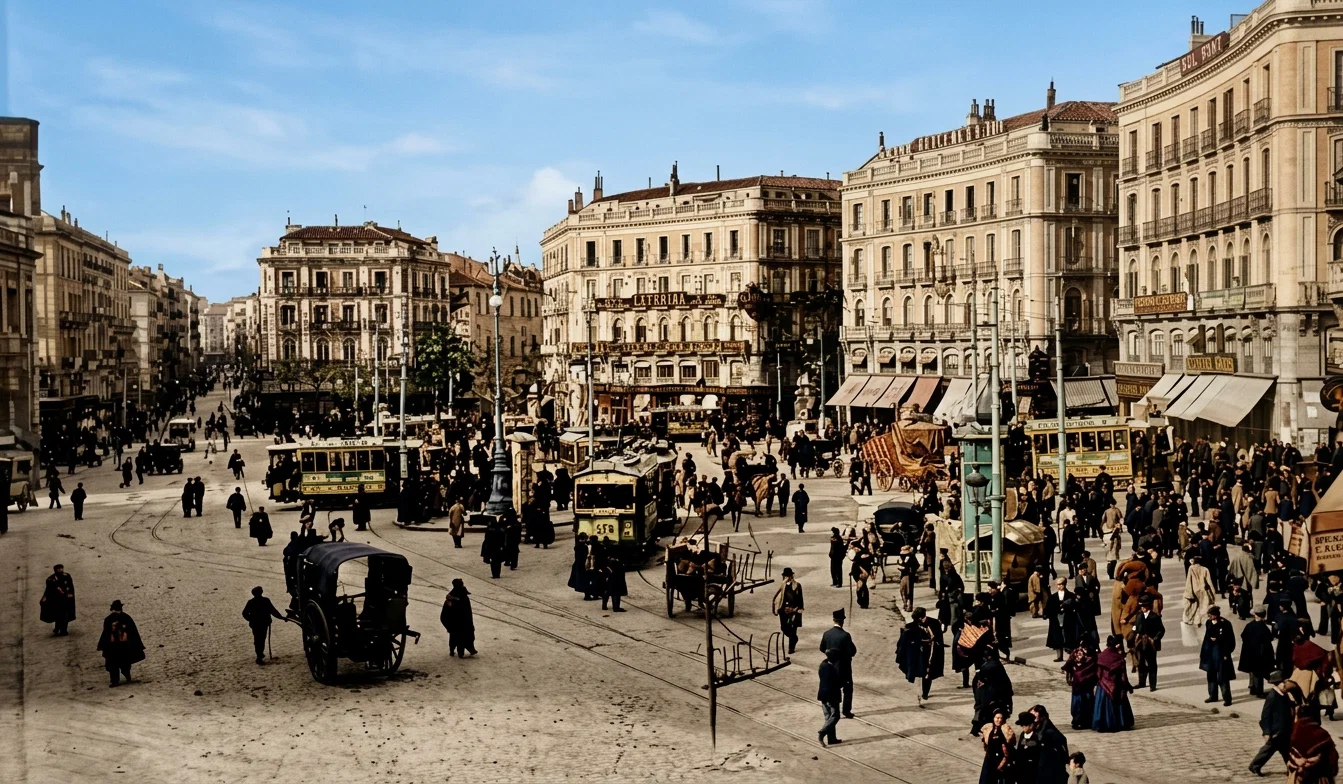
CENTRAL POINT, CITY OF MADRID
February 9 I left Paris, France, for Italy. After rejoining, at Torre Pellice, Brother Chas. T. Everson, who has just come from California to labor in Italy, we went on together to Rome. The city was filling up with visitors who were coming for the pope's jubilee and for the Easter services. Fifty thousand visitors were already in the city, and two hundred thousand were expected before Easter. As Rome is a city of about five hundred thousand inhabitants, it can be seen at once that we had much difficulty in securing an apartment for Brother Everson, his wife, and his sister-in-law, Mrs. Schell. After seven days of hard search from early morning till late at night, we finally found a good apartment, suitably located. I then left for Spain, praying that God's blessing might attend the work in Rome and Italy.
My immediate arrival in Spain gave me favorable opportunity to compare the conditions of this country with those of France and Italy. Upon my arrival at Barcelona, I found Brother J. Robert, of Basel, and Brother J. Vuilleumier, also of Switzerland. Barcelona is situated on the Mediterranean Sea, in the province of Catalonia, which is the northeastern province of Spain. Barcelona is the largest city in Spain, if the suburbs are counted. If not, it ranks second, next to Madrid. Here we found several Protestant churches already established; and an investigation of the religious condition led us to believe that if any opposition should arise to our work, it would come rather from the Protestants than from the Catholics. One minister implored us not to come, but we made the acquaintance of another, who had preached for twelve years, but who felt that he could no longer do so, as he could see no light in some of the doctrines now taught by Protestants. He was much interested in present truth, and asked us many questions ; and as long as we remained in Barcelona, he kindly aided us in obtaining what information we desired, and, as we afterward learned, defended us against the objections of other Protestant ministers.
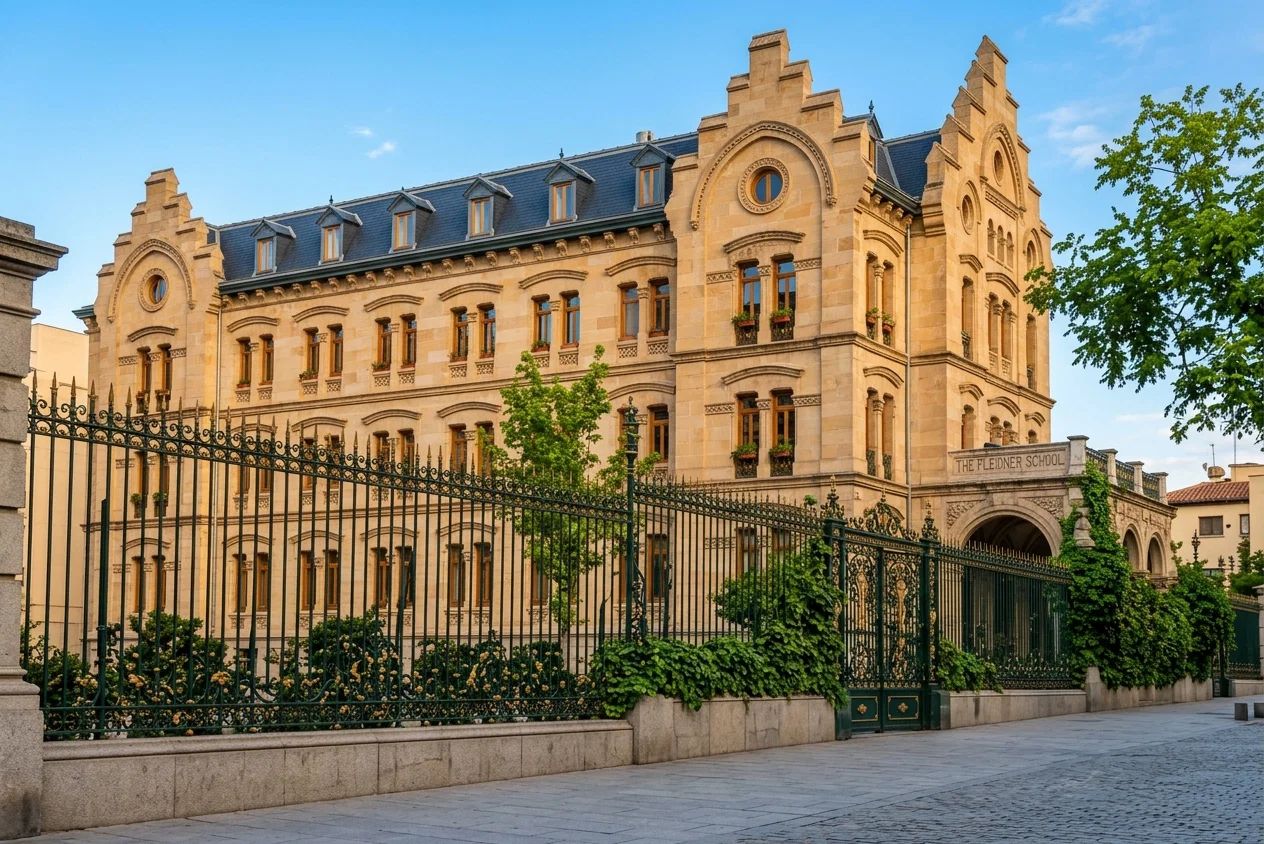
But to show how God has wrought to make us see his great desire that Spain should be evangelized, I will relate the story of Dr. Fleidner, how he was led to build at Madrid the large Protestant school which we had the pleasure of visiting. These facts were related to us by his son.
Dr. Fleidner had his apartment in a house whose concierge (doorkeeper) frowned upon him savagely as a heretic. But the doctor determined to maintain a Christian pleasantness, and see who would win the day. After four years, one day the concierge addressed the doctor very quietly as he was going out, and asked him if he would not like to buy a fine piece of land at a bargain. "O," thought the doctor, "here is just what I am searching for, and what has been so hard to secure in this Catholic city. The hand of God must be in this." "The heir of the land is in the house at this moment," said the concierge, "and this is how I learned that he is pressed for money and wishes to sell." The doctor saw the man, and went to see the land. He found it to be superb land, the most elevated in Madrid, having one hundred and eighty thousand square feet, and offered for nine thousand dollars. But the doctor had only five thousand dollars. He offered this, but the owners laughed at him. "Remember," said Fleidner, "my offer is good only till March 31; this gives you two months to accept." For two months the owners searched all Madrid, and could find no one to buy. March 31 they were on hand, and Dr. Fleidner secured the land for five thousand dollars. But fourteen days after the bargain had been closed, a buyer appeared, and offered the former owners nine thousand two hundred dollars, two hundred dollars more than they asked. "Well," replied they, "had we known this, we would never have sold it for five thousand dollars."
But the land was at some distance from the principal street, and the doctor failed in all his efforts to buy the intervening piece; so he purchased a piece abutting on a side street, for twelve hundred and fifty dollars. At the end of a year, however, he was informed that the city had sold the piece he wanted to an individual who could not pay all, and that the state now offered that piece for sale. The price was seven thousand five hundred dollars, but the doctor had only two thousand eight hundred dollars. He went to his Madrid banker, and told him that that week he was in need of much money. "You may have all you wish," said the banker. So the land was bought. This was the providence of God, as will be seen later.
THE FLEIDNER SCHOOL
THE FLEIDNER SCHOOL
Now comes the wonderful part. If he could at first have bought the third piece of land, he would never have bought the second. But God would make use of the second piece to pay for all the rest, and give money to put into the building. In fact, two years later the city, having need of that piece of land for a reservoir of water, forced a sale upon him, and paid him fifteen thousand dollars. Thus God gave him the land, and twelve hundred and fifty dollars besides, and fulfilled his promise that in giving he would give liberally.
But now came the problem of how to put up the building. No architect in Madrid was willing to accept the job. The power of the clergy was too strong. "Well," said the doctor, "God has given us the land; he will surely give us an architect." He must have the plans of building to submit before he could ask permission to build from the city ofMadrid. It was necessary to seek an architect in Alsace, Germany.
After the plans were ready, two long years passed before permission was obtained from the city to build, and scarcely had he begun to build when the order came to cease. What had happened? The archbishop had passed in his carriage before the building; he had seen the large foundation lines marked out; he had inquired into the project, and learning that it was to be a Protestant school, he sought and obtained from the minister of the interior the command to cease building. The doctor went to the mayor of Madrid, and asked why the command to stop had been given. 'Why,' said the mayor, 'it is a church you are building, and not a school.' He then pointed out to the doctor that his plan indicated a tower and a bell. 'Very well,' said the doctor, 'if that will please you, I will cut off the bell, and make the tower smaller, so you can not confound it with the bell of a church.' The mayor seemed contented, but pointed out a number of other small matters which must be changed. For months the doctor was compelled to go from the architect to one authority and then to another, and back to the architect; but all in vain. At last God threw down the Liberal party, which lent itself to the pope, and put in the Clerical party. Now all hope seemed gone, but still he trusted in God.
He found grace in the eyes of the new prime minister. Consent was given to resume the work of building if the bell, and also the clock, were taken out. But, behold again, he had hardly begun work when the chief of police ordered him to stop. But the doctor told his workers to go on. The chief of police went to the archbishop and to the legate of the pope. The doctor went to them also, and they were astonished to learn that permission to build had been granted by Canovas, prime minister of Spain.
A new effort was made. Cardinal Rampolla, the papal secretary of state, wrote from Rome to the queen of Spain, asking her to stop the building of that Protestant school. Dr. Fleidner had just left for Lisbon, to go to the May meetings at London. At Lisbon he could find no ship, so he came back to Madrid. At the depot a messenger awaited him with the message that the first minister wished to see him immediately. Canovas said to him, 'I find a new difficulty with regard to your school. I know you have made all concessions reasonable. But I beg of you, kindly remove from the facade of your school that Gothic pointed window. The papal legate demands it.' The doctor consented. Canovas continued, 'In the rear of your building you have a semicircular altar; I know it is not an altar, but it is semicircular.' Annoyed and vexed, the doctor replied, 'Then I will make it square.' But instantly he understood that he had made a mistake; for to make it square would spoil the whole building. God gave him the answer: 'Can we not make it an octagon in form?' The minister consented, and the scheme of the papal legate had failed. The building was continued, and in 1897 the school was opened.
Each year brings new openings in Spain for evangelical work. The canvassers of other denominations are now going from village to village. Living is as cheap as in any other country. May God hasten the day when a man of deep faith and proper qualifications shall be chosen of him to enter Spain and carry to it the truths for the last days.