The Message in Brazil

8%

Seventh-day Adventist Publishing Association · Battle Creek, Mich. · Jan 6, 1903

FromReview and Herald, Vol. 80, No. 1.

Read the full edition

The Message in Brazil

J. W. Westphal
In the eight years since the work was started in Brazil, it has had a rapid growth. Brethren Stauffer and Nowlen were the first to enter the field, engaging in the canvassing work. A little later Elder Thurston came to take charge of the work; he was followed by Elder H. F. Graf and others.
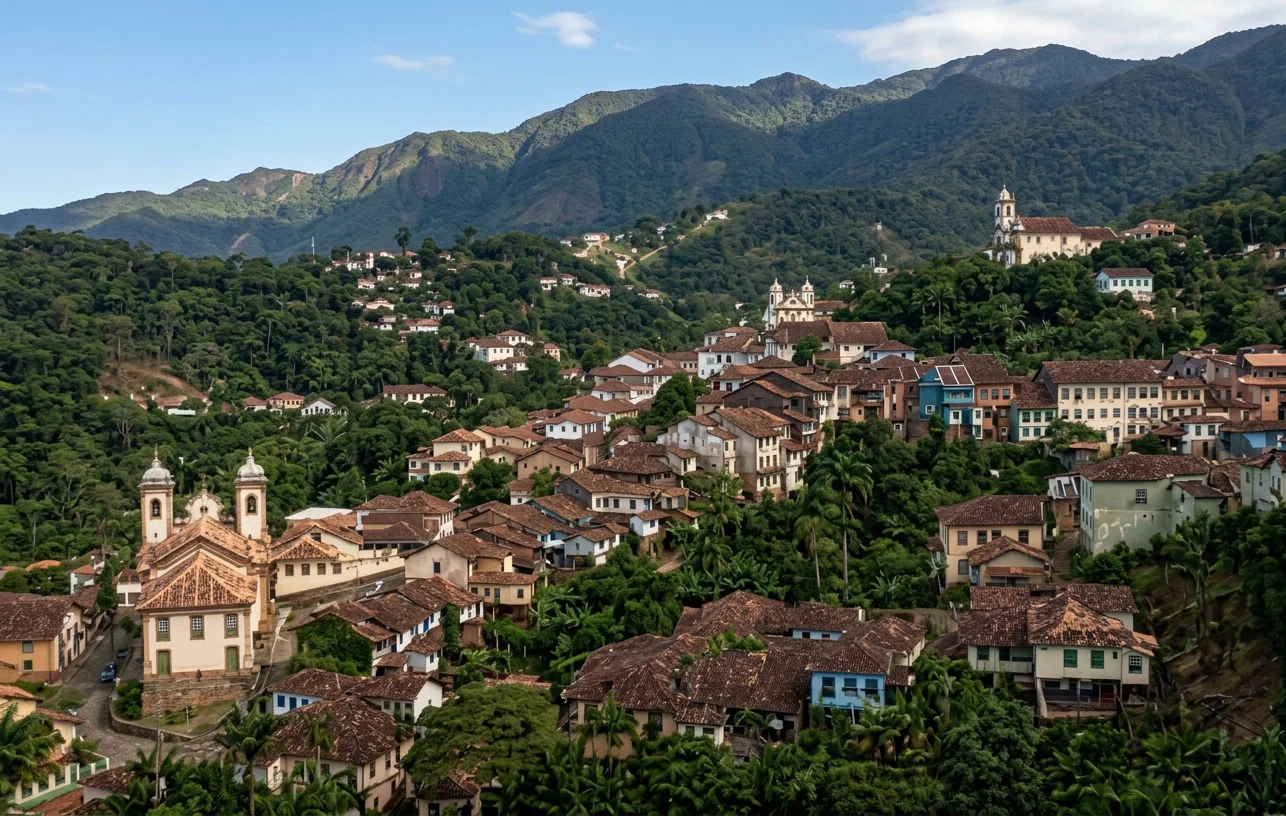
A MOUNTAIN VILLAGE IN BRAZIL
Last May the Brazilian conference was organized with a membership of over eight hundred. Thus the average growth in the number of Sabbath keepers has been over one hundred a year from the beginning of the work.
Brazil is the largest of any of the South American fields, having a territory nearly equal to that of the United States, and occupying almost one half of South America, with nearly one half of the population of that continent. Of her sixteen millions or more inhabitants, there are many Europeans, principally from the countries of Southern Europe, as well as Indians, many of whom have scarcely been in touch with civilization. Only a small percent of the native Brazilians, can read or write. The public school system is crude and inefficient at best, and few can have the benefit of it. The poorer of the country folk simply eke out an existence, and seem not to have an ambition for more.
Thus far the truth has been mostly presented to the German-speaking people. The field laborers have all been Germans, with no knowledge of the Portuguese language before they came. The result is that most of our people are German speaking. However, considering the work done for the natives, there has been a good response. About one hundred and fifty are keeping the Sabbath. This shows that there is here a large and fruitful field awaiting the faithful, devoted laborers.
Reaching Brusque too late to attend the organization of the conference last May, on account of the quarantine against Argentina for the bubonic plague, it was planned for Elder Graf, the conference president, and the writer, to visit several of the Brazilian states, and hold general meetings with our brethren where such meetings could be arranged. This plan we endeavored to carry out. But to do this, one has many difficulties to meet. To reach the several points, we had to go by coast steamers. These are so uncertain and go so irregularly that we could not make appointments in advance. If we did, the brethren were almost sure to be disappointed, for we could seldom fill them. And to leave the appointment of a meeting until one is on the ground, results in a small attendance, especially in a field where appointments travel as slowly as they do here. As the result of this experience we have concluded that the next trip should be made on mules. It will be cheaper, quicker, and much more reliable.
We visited Massaranduba and Joinville in the state of Santa Catharina, Curityba in Parana, Muckery in Minas, Porto Cachoeira, Rio de Janeiro, Santos and Taquari in Rio Grande do Sul. In all these places we realized the blessing of the Lord in our work. At Muckery and Porto Cachoeira over thirty were baptized just a little before we came. At Rio de Janeiro five were baptized, at Curityba two, and at Taquari two. Several had been baptized at the conference at Brusque just before I arrived.
Practical Christianity, the nearness of the end, and the greatness and urgency of our work were dwelt upon principally. Especially did we consider the responsibility resting upon us of giving the message to the millions of Brazil. This means liberal hearts and willing hands. The brethren and sisters accept the responsibility cheerfully. But for some time they will need help. The field is a large and difficult one with but few laborers and facilities as yet to reach them. We have no books in the Portuguese language, but we have a fewsmall tracts, and one well-prepared monthly journal. With these only a small per cent. of the people can be reached. There should be one or more medium-sized books containing present truth that our canvassers could use, and more tracts. About three hundred dollars was raised toward a publishing fund. This is barely sufficient to issue a few tracts. The exceeding scarcity of money on account of low prices and costly transportation makes hard times in Brazil. For instance, thirty-three pounds of coffee sold for thirty-eight cents at one place where we were.
The brethren are also planning a small industrial school on a self-supporting basis in the state of Rio Grande do Sul for the training of workers. A school in Santa Catharina has already been doing good work. The results are seen principally in the number of church schools established in the conference, a most necessary thing in a country where but few have any educational advantages whatever. Canvassers have also gone into the field from the school.
The prospects for the future of the work in Brazil are bright. There are many open doors. Urgent calls are coming from many places, both from the natives and from the Germans. These are due to the work of our faithful canvassers and lay brethren. The brethren are all of good courage in the work.