How the Islands Were Discovered — The Native Savage Tribes — Other Natives of High Order
What the United States Is Doing There — What the Missions Are Doing
By ARTHUR G. DANIELS
THE history of Protestant missions in the Philippines dates from the year 1898, when these islands passed from Spain to the United States. Marvelous changes for the better have been effected during this short period by the earnest, intelligent labors of Protestant missionaries. I know of no people in mission fields more responsive to the gospel message than the Filipinos.
Magellan, the great Spanish navigator and explorer, discovered the Philippine Islands in the year 1521. The first island of the group which he sighted was Mindanao, at the extreme south. Continuing his journey northward, he came to the island of Cebu, where he landed, and maintained his headquarters until he was slain by the natives on the adjacent island of Mactan. After Magellan's death, his men returned to Spain.
In 1565, Miguel Lopez de Lagaspe, who was sent out by Philip II, king of Spain, reached the island of Cebu, discovered by Magellan forty-four years before. Five years later, Luzon, the largest island of the group, was taken. Manila was made the capital, and the group of islands was called the Philippines, in honor of Philip II, king of Spain.
THE PEOPLE
When the Philippines were discovered, there appeared to be three general classes of people inhabiting the islands — the Negritos, the Igorots, and the Filipinos. All together, they numbered less than a million.
The Negritos are believed to be the original inhabitants of these islands. They belong to the family of dwarfs of the Malay peninsula, the Andaman Islands, and the equatorial forests of Africa. The average height of the men is about four and a half feet. The women are still smaller. Their color is dark brown, their hair is woolly, their eyes are large, and their features are regular and well shaped. These people live in the forests, and resist all attempts at civilization.
Another class, known as the Igorots, the Moros, the Manguianes, and others, are supposed to be the descendants of Malayan invaders who found their way to the islands many centuries ago. They are a strong, warlike, savage race, who live in the mountainous regions, resisting, to the present time, all approaches of civilized men.
The third class, those who may be called the real Filipinos, are descendants of a higher and more cultured class, who came to the islands from the Malayan people in the East Indies. “All through the central islands, Cebu, Panay, Negros, Leyte, Samar, Bohol, and northern Mindanao, are the Bisayas, the largest of these peoples. At the southern extremity of Luzon, in the provinces of Sorsogon and the Camarines, are the Bicolis. North of these, holding central Luzon, Batangas, Cavite, Manila, Laguna, Batan, Bulacan, and Nueva Ecija, are the Tagalogs, while the great plain of northern Luzon is occupied by the Pampangos and the Pangasinans. All the northwest coast is inhabited by the Ilocanos, and the valley of the Cagayan by a people commonly called Cagayanes, but whose dialect is Ibanag.”
THE PUBLIC SCHOOLS AND THE ENGLISH LANGUAGE
The Filipinos now number about seven millions, while the savage tribes of the forests and of the mountains are supposed to be only about one million. These people are divided into about seventy different classes or tribes, speaking more than thirty languages and many dialects. Since the occupation of the Philippines by the American government, an extensive and efficient public school system has been established, with the English language as the basis of instruction. The English that is learned by the hundreds of thousands of Filipinos786in the ten thousand public schools in operation is gradually giving the people a common language.
THE ESTABLISHMENT OF PROTESTANT MISSIONS
During the three hundred years of Spanish and Catholic rule in the Philippines, Protestantism had not been allowed to reach the people, nor had the people been permitted to read the Bible in their own language. As soon as Admiral Dewey's victory at Manila became known to the world, various missionary societies took immediate steps to enter the Philippines. They established mission schools, mission presses, medical missions, and evangelistic chapels among the people. They have translated the Bible into many languages and dialects, and have sent Bible colporteurs among all the people, to place the book of God in their hands. Missionaries have learned the languages spoken by the masses, so that they can preach to them the gospel of salvation. They are also training hundreds of the new converts for missionary work in behalf of their own people.
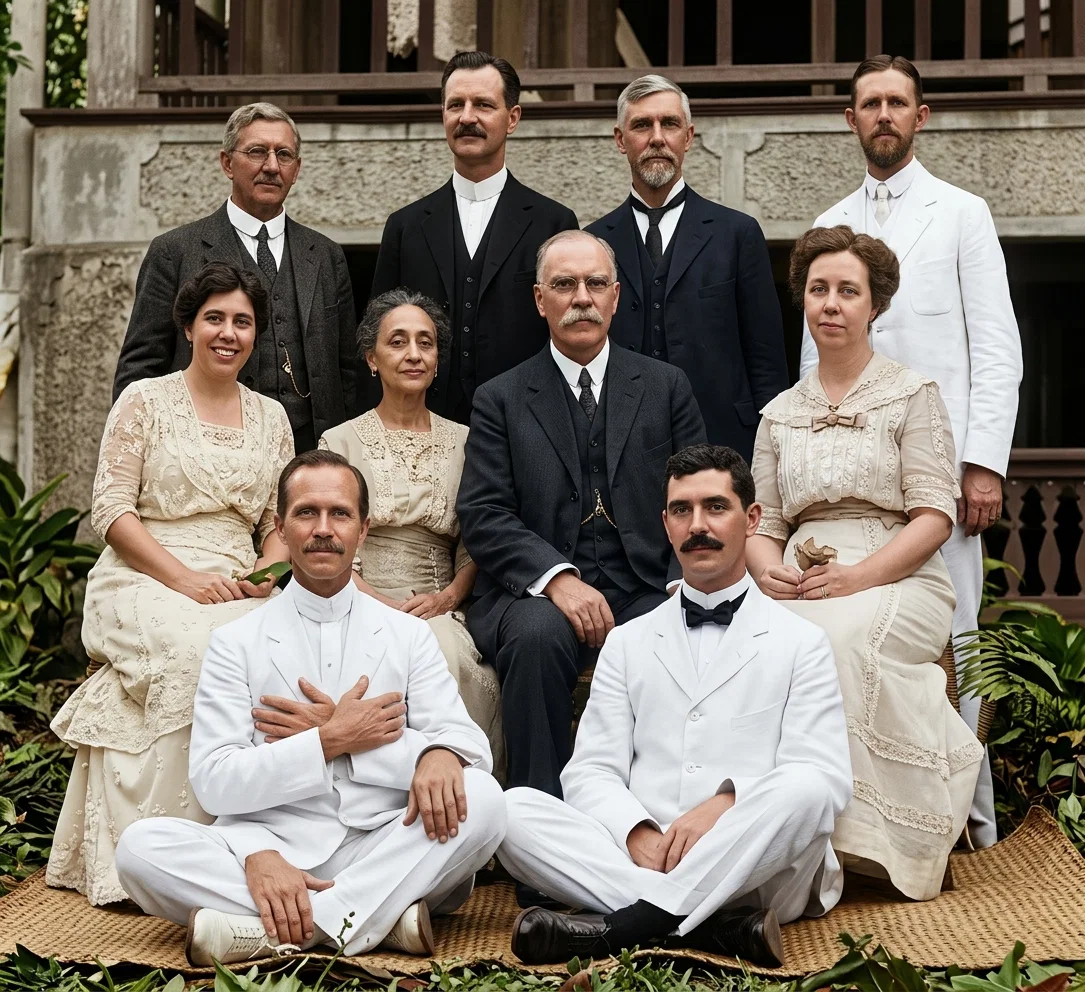
Group of Leaders in Counsel in the Philippines
This service has surely wrought marvelous changes among the people. They have received a new vision of life, a new hope, and a new purpose for which to live. The reformation that has been going on is very manifest to the observant visitor.
OUR ENTRANCE INTO THE PHILIPPINES
In 1905, Pastor G. A. Irwin, president of the Australasian Union Conference, while en route from Australia to China, spent a few days in Manila, gathering information regarding the needs of the people. This visit led to the sending of Brother R. A. Caldwell to the Philippines a few months later, to engage in colportage. In April, 1906, Pastor and Mrs. J. L. McElhany were sent by the Australasian Union Conference to establish a mission in Manila. These workers distributed a large quantity of religious literature printed in the English language. As a result of this work, and of cottage meetings held among Americans, a number of persons were won to the obedience of the gospel. In the early part of 1908, Mr. and Mrs. McElhany were called to New Zealand; and in December of the same year, Pastor and Mrs. L. V. Finster, of Australia, were sent to Manila to continue the work.
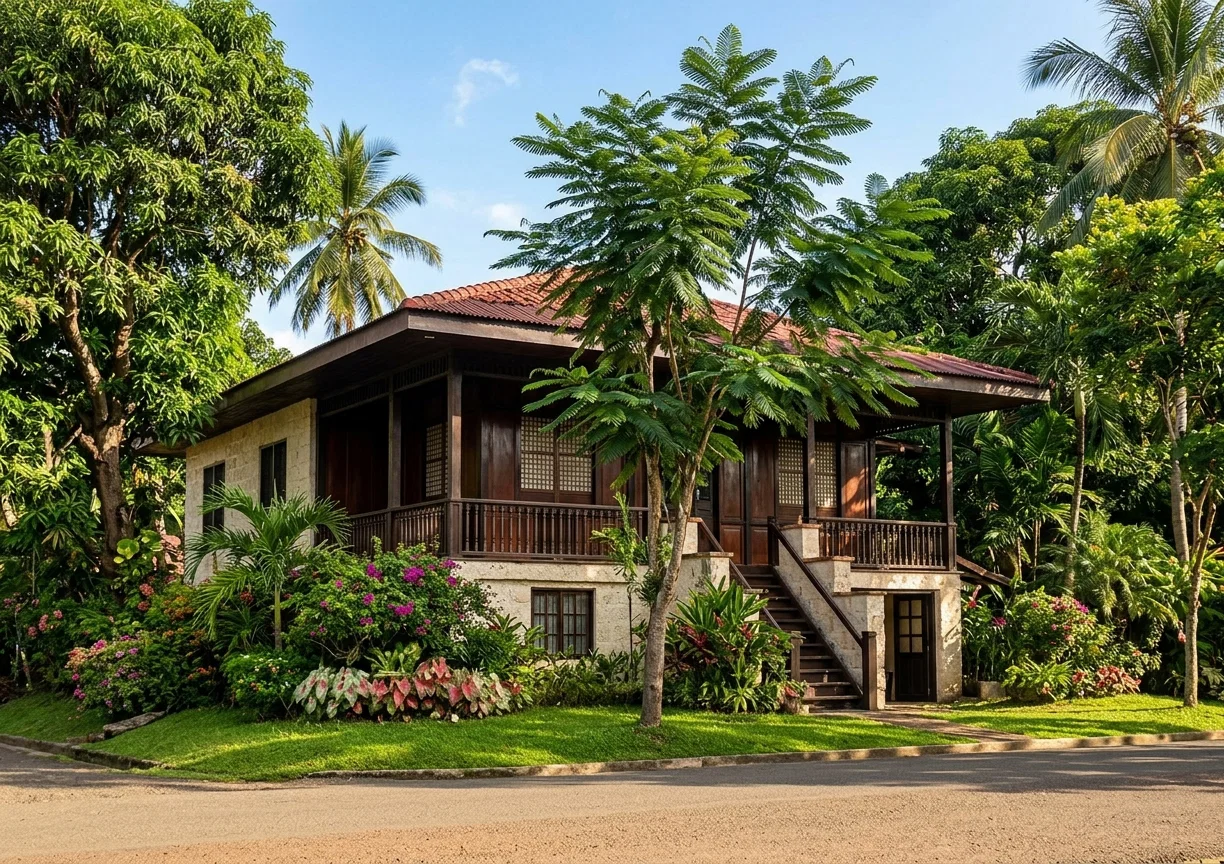
MISSION BUNGALOW
Home of the superintendent of the Philippine Mission.
In the meantime, the literature work was faithfully and successfully carried forward by Brother Caldwell and his wife. They placed in the hands of the people 1,000 copies of “Patriarchs and Prophets,” 1,000 “Coming King,” and 1,000 “Thoughts on Daniel,” in Tagalog. They also distributed many copies of smaller books.
Thus for two full years the work of seed sowing had been going on.
In our next article, we shall tell of the splendid harvest now being reaped in this encouraging mission field.