The Hittites Have Prominent Bible Mention—The Critics Scoffed at the Idea—They Also Rejected Important Sections of Samuel, Kings, and Chronicles—The Monument Inscriptions Have Confounded Them
By A. EARL HALL, B. A.
This is the sixth of Professor Hall’s articles on the reply of archæology to present-day Biblical criticism. His previous articles have stated the position of the higher critics, and their claim that large portions of the Old Testament are myth and fable; but since scholars have been able to read the inscriptions on the monuments and tablets of old Babylon, Assyria, Egypt, etc., they have found, to the confusion of these critics, that the Bible record is true. Many of the very characters mentioned in the Bible, together with the events recorded, are also mentioned in the inscriptions of the monuments, in such a way as to convince, beyond the need of a single doubt, that the divine record is infinitely correct.
Professor Hall’s article in the next issue will tell something in regard to what the monuments reveal concerning Sargon, Sennacherib, and other ancient Bible characters, some of whom the critics had said never existed.
EDITOR.
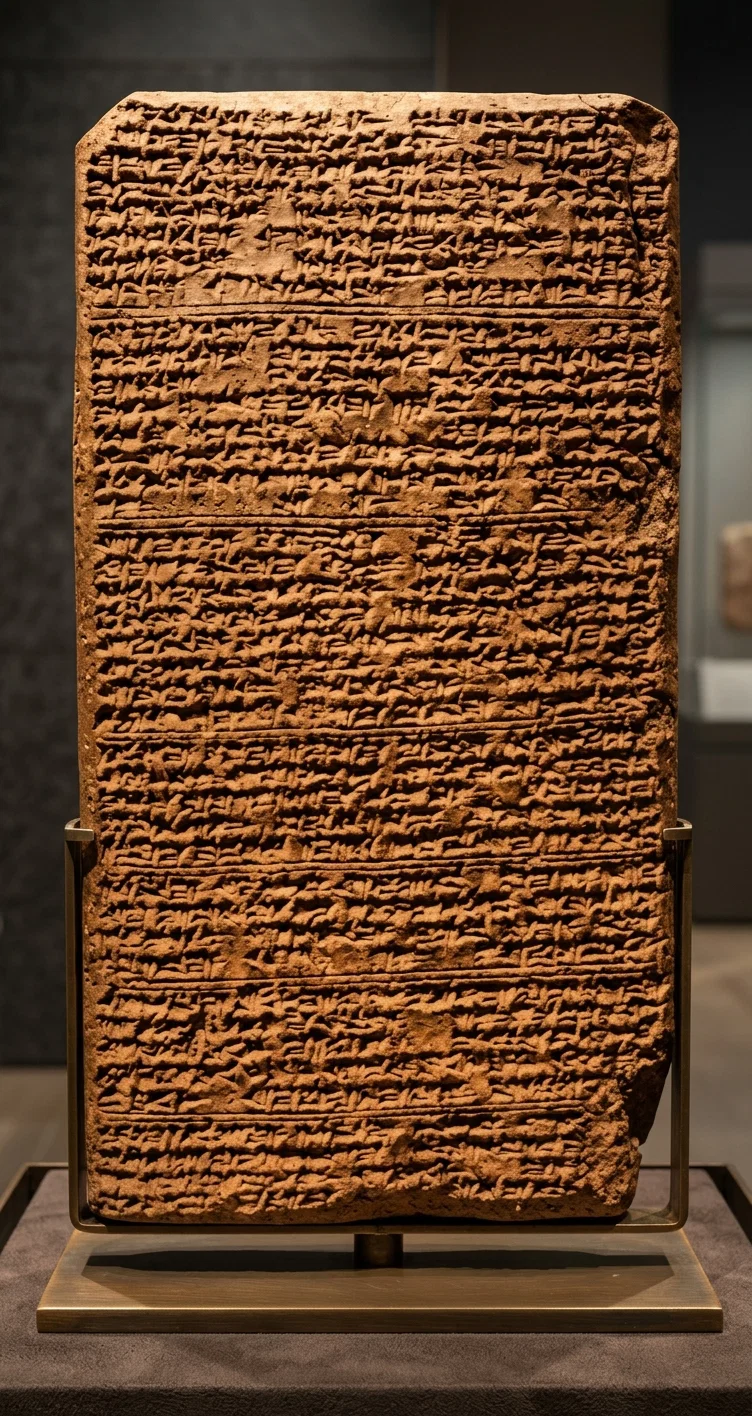
“If these should hold their peace, the stones would immediately cry out.” The Tel-el-Amarna letters or tablets, three hundred in number, most of which are written in the cuneiform characters, were found by the merest chance. A peasant woman in some way knew of them, and the fact was made known to the proper officials, and possession of them was immediately taken. They were found at Tel-el-Amarna, about one hundred eighty miles south of Cairo, in Egypt, the capital during the reign of Amenophis IV.
In general, they consist of letters to Amenophis III and IV from kings, governors, and other officials in Phœnicia, Palestine, Assyria, Babylon, the island of Cyprus, and other places. This fact as to the contents greatly enhances their value, for from them a good description can be had of Palestine, especially before the Exodus.
One ruler in Babylon is very desirous of obtaining gold from Egypt, and Amenophis asks very ardently for a daughter of the former. The desire of both parties is realized, and great satisfaction results. A similar event is noted as taking place between Amenophis and an Assyrian king.
The latter asks for “much gold.” It might be regarded as purchase money for the daughter.
The letters from Palestine are of particular interest. They all speak, to some extent, of trouble and invasions. Enemies are plundering in the north and the south. Some in the north are in league with the Hittites. It is also evident that vassals of Egypt are turning traitors. In letters from Urusalim—Jerusalem—reference is made, a number of times, to the destruction by a people called Sagas, or Habiri.
The letters from southern Palestine do not speak of the Hittites. Of the one hundred fifty cities mentioned in the collection, about one hundred have been identified. A high state of civilization is revealed by these letters, which are in harmony with evidence found elsewhere.
NO GREATER DISCOVERY
A few statements further as to the value of the material will be of interest.
Clay says, “No discovery in recent years has had a greater bearing upon questions of historical criticism, or has thrown so much welcome light upon Palestine.”—A. T. Clay, “Light on the Old Testament from Babel,” page 251.
“This first discovery [referring to the mummies] was eclipsed in 1887, by a second [the letters] still more extensive in its bearings.”—James Orr, “The Problems of the Old Testament.”
“No discovery of the past quarter century has so fired enthusiasm in Oriental research. . . . Their importance can be perceived when we think that they give us some of the real international life of western Asia and Egypt before a single word of the Old Testament was written.”—Price, “Monuments and the Old Testament,” page 66.
“These letters are the most important historical records ever found in connection with the Bible, . . . and most fully confirm the historical statements of Joshua, and prove the antiquity of civilization of Syria and Palestine.”—C. R. Conder; quoted in “Bible and the British Museum,” page 68.
CLAY TABLET FROM TEL-EL-AMARNA
“Finally, the discovery of the Tel-el-Amarna tablets . . . threw the full light of day upon the subject—referring to existence of law in connection with the code of Hammurabi.”—M. G. Kyle, “Deciding Voice of the Monuments,” page 85.
CRITICS SAID THERE WERE NO HITTITES
A leading archaeologist of Europe wrote to M. G. Kyle in 1904, “I do not believe there ever was such a people788as the Hittites, and I do not believe ‘Kheta’ in the Egyptian inscriptions was meant for the name ‘Hittites.’ Dr. Kyle says that the ruins of Troy indicate the right of her people to a place in real history, and the ruins of Boghazköi—a Hittite city—bid fair to afford a more striking vindication of the Bible representation of the Hittites. (Id., page 31.)
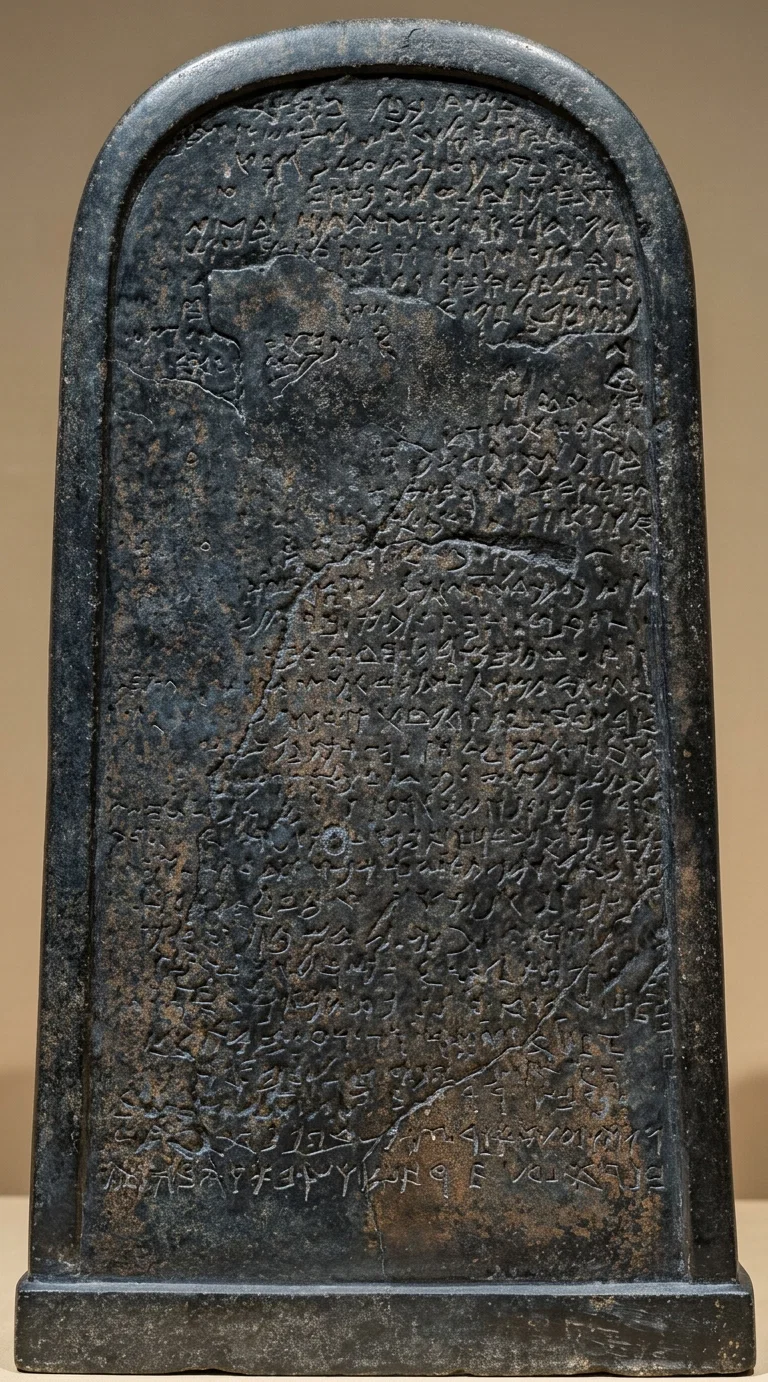
THE MOABITE STONE
“A prominent English Biblical critic declared, not many years ago, that an alliance between Egypt and the Hittites was as improbable as would be one at the present time between England and Choctaws.”—“Fundamentals,” volume 11, page 15.
Another prominent person said: “As, however, no ancient writer knew anything about such a power [as the Hittites], these Scriptural allusions to them were, as usual, treated as unhistorical, or as mere rhetorical flourishes.” (Quoted in “Problems of the Old Testament,” page 425, James Orr.)
Many more like statements could be given to show the light in which this matter has been regarded. One will here be given that indicates very plainly the present position:
“The apologetic interest is due to the fact that one time a few critics were disposed rashly to question the existence of such a people as was indicated in the Biblical texts.”—“New Schaff-Herzog Encyclopedia,” volume 5, article “Hittites.”
While many scholars are working on the Hittite characters, no results that are satisfactory have yet been produced. Sayce claims to have a scheme that has made possible the translation of a few words, but the question of a decipherment of the characters is still open. The reader will understand that our knowledge of this people is from other sources, chiefly Egyptian and Assyrian.
MAP OF HITTITE EMPIRE
From one of these sources, it is known that as early as 1750 B.C. there was an expansion of this people in the direction of Babylonia. The late edition of “The Encyclopedia Britannica” contains an excellent map showing the extent of the Hittite empire. Carchenish, on the upper Euphrates, was the eastern capital. Their influence in northern Palestine was noted in the section on the Amarna letters. At least ten of these tablets mention the Hittites directly. Two are in a script not yet known, and it may be the Hittite.
Perhaps the most interesting fact has to do with the long series of wars of the eighteenth and nineteenth dynasties of Egyptian monarchs in western Asia. One of these campaigns of Rameses II is to be noted especially. During one engagement, he was drawn into an ambush, and came very near losing his life. The court poet, Pentaur, celebrated the prowess of his lord in a long poem. Victory was claimed by Rameses. According to the custom of the time, marriage relations were arranged to bind the treaty. The Hittite copy was engraved on a silver tablet, which has not yet been found. The Egyptian copy has been found and translated and corrected. The cuneiform original was found by Winckler in the ruins of Boghazköi in 1907.
CRITICS MUST RECKON WITH THE HITTITES
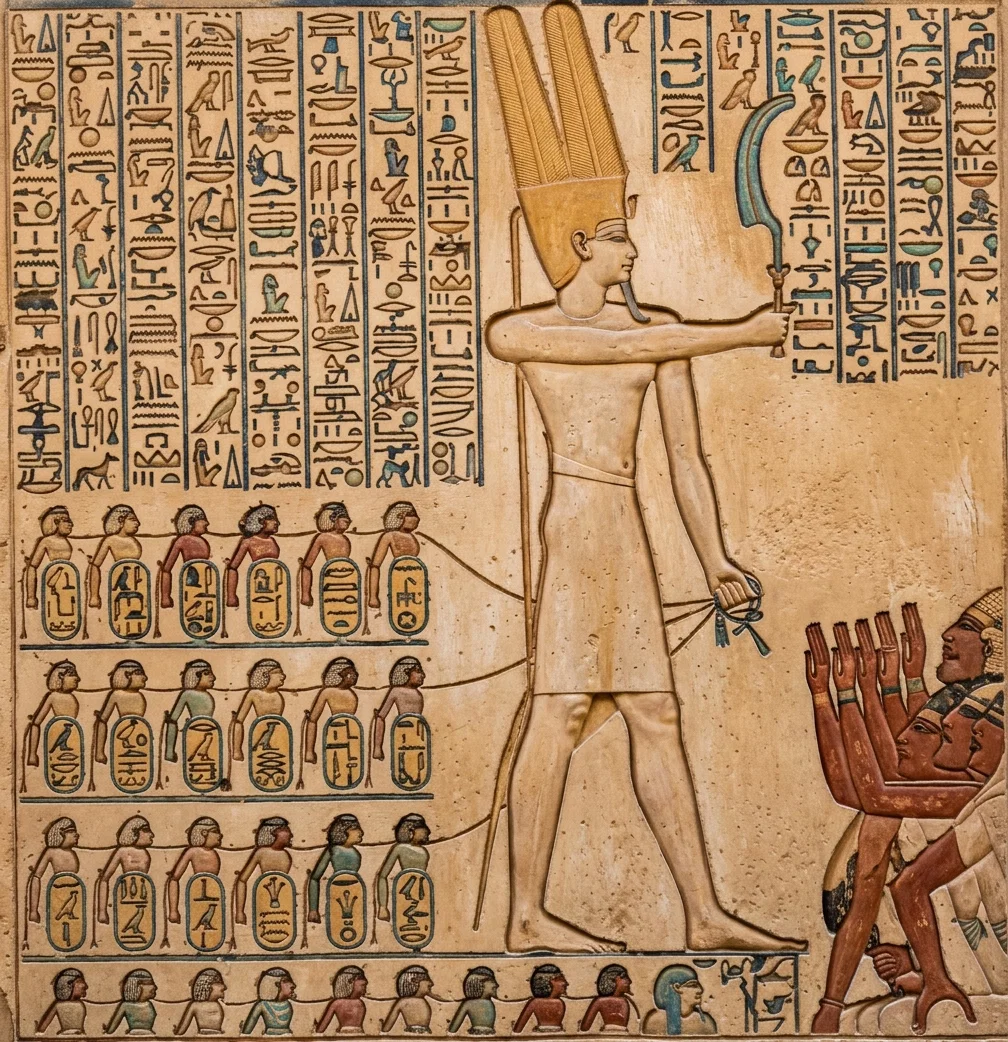
INSCRIPTION AT KARNAK, SHOWING SHISHAK WITH HIS PALESTINE CAPTIVES
When it is remembered that the Egyptian kingdom was at its height during this period, and that the battle mentioned was really a draw, possibly in favor of the Hittites, it can be seen that the Hittites were a people concerning whom the nineteenth-century critics now have an opportunity to change their views.
Other Egyptian rulers refer to the Hittites. The Assyrian monuments speak of them as being prominent in districts north and west of the Euphrates, in the reign of Tiglath-pileser I, about 1100 B.C. Shalmaneser II, in the first part of the ninth century before Christ, speaks of them in connection with other kings and rulers of his day. In the record of one of his campaigns, he states that their “assistance was engaged,” thus confirming the expression in 2 Kings 7:6, where the word “hired” is used. The term “kings” is also used by him. Notice that the term is in the plural, indicating, as does the Bible record, that the country was not governed by one monarch. Tiglath-pileser III reduced them to submission in northern Syria, and in the region of the Orontes River, in 739 B.C. In 717 B.C., Sargon II captured Carchenish, their eastern capital, and made it an Assyrian center. The Hittites then disappear from any prominent part in the world’s history. It will be seen that, according to the date given, they were a great nation of western Asia for about a thousand years—a longer period than the existence of the famous Holy Roman Empire.
“A people that once played an important part in the history of the civilized world has been again revealed to us after centuries of oblivion, and a forgotten empire has been again brought to light.”—Sayce, “Fresh Lights from the Ancient Monuments,” page 93.
THE KARNAK TEMPLE INSCRIPTION
This subject makes it necessary to take a long trip to another continent, Africa. As we sail up the Nile, our eyes are greeted with ruins on every side. But there is one special temple we are looking for, and we will soon reach it—the temple at Karnak. These ruins are of no more interest than others to the ordinary archaeologist; but we are looking for evidence concerning an event mentioned in 1 Kings 14, with a more complete account in 2 Chronicles 12.
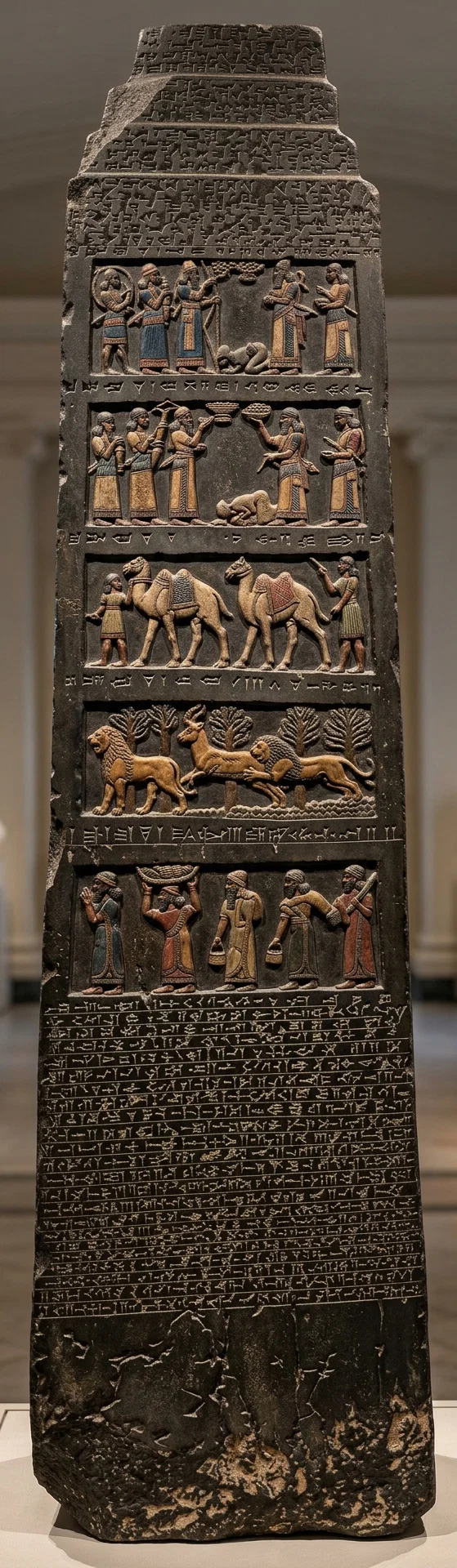
OBELISK OF SHALMANESER
According to the critics, the historical value of the Chronicles is small. In fact, they do not depend on them in the study of Hebrew history.
“Certain narratives are described as ‘frightful examples’ of Jewish imagination.” “The books [Samuel and Kings] are now regarded not as history, but as an exposition of the author’s views, illustrated by supposed historical events.”—Hastings’s Bible dictionary.
“Like other historical parts of the Old Testament, they may have lived in the mouths of the people for generations, forming a powerful means of religious education before they were committed to writing.” The “history,” therefore, occupies no higher level than legend and popular tradition. (Quoted in “Archæology’s Solution of Old Testament Puzzles,” pages 45, 20, 21, by John Urquhart.)
Let us see what the picture and writing on the walls of this ruin at Karnak will tell us concerning the claims of the so-called scholars. The inscription tells of 156 places that were taken by Shishak during the campaign recorded in the twelfth chapter of 2 Chronicles. He even went as far north as Megiddo. The names of the towns are inscribed on shields, which cover the front part of the bodies of the captives, and among them we find the name of Jerusalem, and many others mentioned in the Old Testament. It seems that this record is correct.
This event is not selected as a test case by the zealous Bible student who is anxious to see the Bible vindicated. Many others will be given in succeeding articles.
According to the Bible, this invasion took place in the fifth year of the reign of Rehoboam. This record helps us in verifying the Egyptian chronology. But another interesting “find” in Palestine also bears upon the books under consideration in this article.
THE MOABITE STONE
While Europe and the United States were in distress and turmoil resulting from wars, and some nations were busy preparing for future wars, an event of much importance occurred in Palestine. In 1868, at Dhiban, in the country of Moab, Mr. Klein, a German missionary, one day found a large stone on which were inscribed thirty-four lines in Phœnician letters. He did not know the value of the discovery, but copied a few words, and endeavored to secure it for the museum of Berlin. Later the French consuls sent men to take impressions of it, and offered the natives a much larger sum of money than was previously promised them by the Germans. Trouble arose, during which time the Arabs, thinking that the rock must be very valuable, because in the meantime the local governor demanded it for himself, built a fire under it, and then poured cold water on it. The fragments were distributed among the Arabs, and used as charms.
“This looks like a fitting result of the contention of the national representatives at Jerusalem, and an irreparable loss to the science of archæology. But fortunately, some time after, M. Clermont-Ganneau succeeded in recovering most of the broken pieces; and by means of the impressions taken before the stone’s destruction, he reset the fragments. The restored stone may now be seen in the Louvre in Paris.”—Price’s “Monuments and the Old Testament,” page 143.
This monument to the accuracy of Old Testament history is about two feet wide, four feet high, and fourteen and a half inches thick. The information is of a most interesting nature. It gives facts relating to the reign of Omri, Ahab, Jehoram, and Jehoshaphat, covering a number of chapters in 1 and 2 Kings and 2 Chronicles, especially789facts recorded in 2 Kings 1:1; 3:4, 5, and the remainder of the chapter. We quote again from Professor Price, who gives the essential facts gained from this source:
“Its contribution to the historical situation of Israel is of first importance. We learn (1) that Omri was obliged to resubjugate Moab in the early years of his reign; (2) that he occupied the cities captured during his campaign; (3) that this occupation suddenly ceased in the middle of the reign of Ahab; (4) that the expulsion of Israel was accomplished only after a series of battles; (5) that the cruelty visited on the captured cities resembled the methods employed by Joshua in the conquest of Canaan; (6) that the cities and fortresses retaken were strengthened for future defenses; (7) that the territory recaptured was repopulated; (8) that the methods of warfare and marks of civilization were similar to those found in Israel.”—Id., pages 146, 147.
Think of it. Here is a letter written by Mesha, king of Moab, almost 2,800 years ago. It has been preserved all this time, and now it arises from the earth to check the inroads of destructive criticism upon this and other Biblical accounts.
THE BLACK OBELISK OF SHALMANESER II
This obelisk was found by A. H. Layard, near Nineveh, and is now in the British Museum. It records some of Shalmaneser’s military campaigns. The great coalition of twelve kings of the West—eleven are named—against him is here told in detail. We learn that Ahab sent a contingent of ten thousand soldiers as his part in the alliance. The battle of Karkar which resulted seems to have been indecisive.
In addition to the writing, lines of captives are sculptured on the stone. Near the top in the second group are seen a company of Jews bringing tribute, under which are these words: “Tribute of Jehu, son of Omri, silver, cups of gold, buckets of gold, lead, bowls of gold, chalices of gold, a royal scepter, staves, I received.” (From photograph in Price, fronting page 293.)
Shalmaneser is the first one to mention a king spoken of in the Bible, but the Bible makes no mention of him. Besides Ahab and Jehu, Ben-hadad and Hazael, Syrian kings, are mentioned by Shalmaneser in the inscription.
A large part of this article has dealt with three cases of archæology versus higher criticism. What is the verdict? There are no twelve men here to decide by vote, no lawyers to plead on either side, and there is no judge to announce the verdict. The facts are before us, the “source books” are in the museums and on the temple at Karnak, and the writer of Kings stands “not guilty.”
The next article will tell of more voices from the dust of Assyria’s mounds.