The Beauties and Blessings of the Cloudy Day—A Life That Was Filled with Sadness, yet the Sun Shone Through
By CLARA EDNA ROSENCRANS
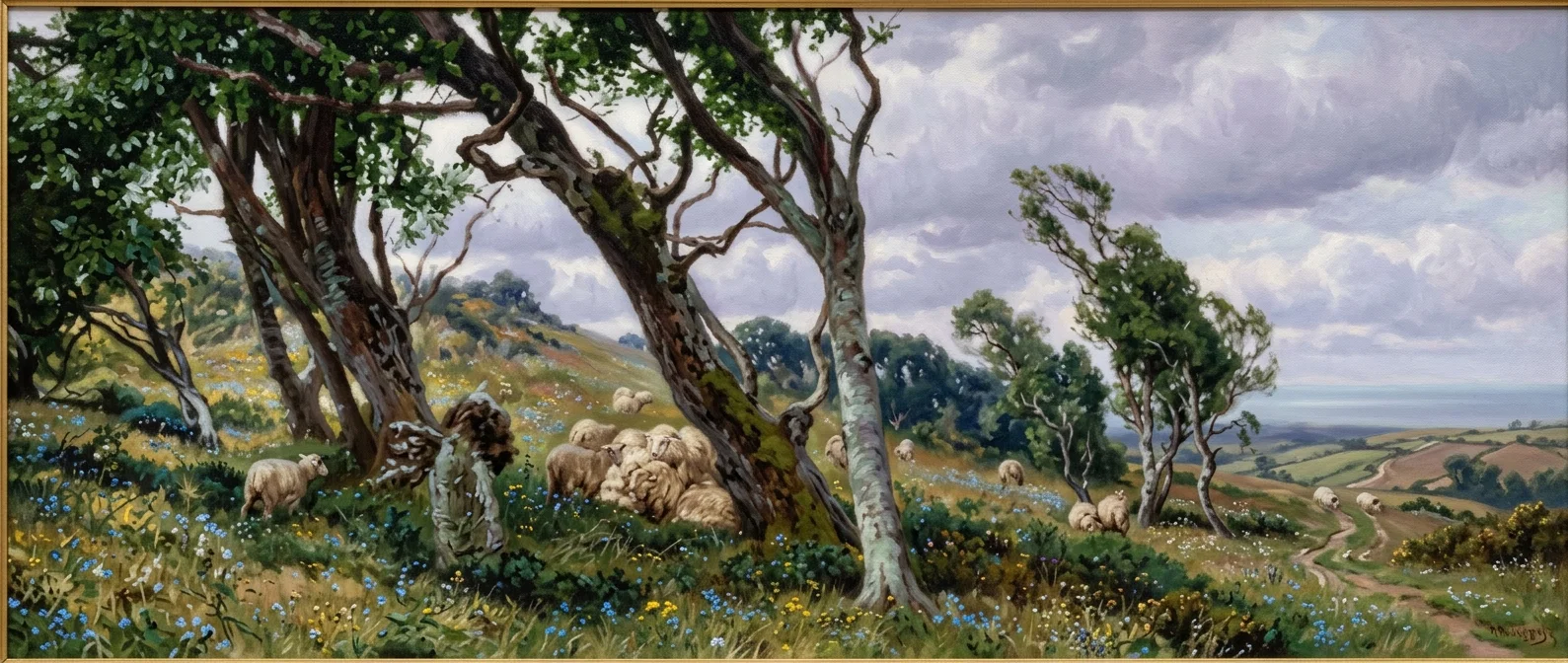
THERE is something very beautiful to me about a cloudy day in early summer. The softened gray light falling through the pale green leaves, and the cool, often chilly breeze that turns up their white undersides till the trees look as if they were wearing their dresses wrong side out, make a picture that is very pleasing to the eye.
There are no extremes of light and shadow, as on a sun-lighted day; and the whole landscape lies wrapped in mystery, through which one seems to walk as in a pleasant dream. There are no jubilant outbursts of bird music. All the feathered songsters seem hushed and quieted by a presence that makes their music soft and low, just as in the shadowy aisles of some vast cathedral the voice sinks to a whisper, awed by the dim, unguessed beauty of the place.
SOME FLOWERS AT THEIR BEST UNDER CLOUDS
Flowers that close up when the sun shines brightly, now stay open all day; and the lover of botany may find many specimens that he would never come upon at any other time—delicate, tiny, fragile things, that dread the intense light seemingly, as a quiet, retiring nature dreads the limelight of notoriety.
The farmer and the gardener love these cloudy days, for experience has taught them that frost never falls when the earth is wrapped in a thick gray mantle of clouds; and when the wind blows cool from the north or the west, the tender green things will suffer no harm. Then, too, much sunlight is not good for plants, any more than it is for human beings.
I often think that if it were not for these cloudy days, we would not appreciate the sunlight as much as we do. When clouds hang low, we should gather up all the sunny memories of the bright days, the way the flowers do, so that we may have a store of sunshine that will carry us through the cloudy, sorrowful times.
SHE HAD A SPEAKING FACE
She was a tall, fine-looking woman, with what one writer calls “a speaking face.” In her brown eyes there dwelt a deep, tender light of resignation that was far more beautiful, to me at least, than the golden radiance of girlhood’s sunny smiles.
She had had, and still continued to have, a bitterly hard life, as I learned after I had known her for several years—learned it from others, not from her, for she never mentioned the matter, even to her own people.
The way nature adjusts itself to one of these cloudy, gloomy days about which I have been writing, makes me think of her. Sickness, death, the ruin of a noble husband through the drug habit—all these she had borne. The chill of poverty, averted faces, hard, unremitting toil, and absence of everything that makes a woman’s life pleasant,—all these things brought the clouds so low, made the wind so bleak and chilly, that sometimes I have wondered at her sunny disposition and the happy heart she carried.
HER DISAPPOINTMENTS AND HER SUNSHINE
Her children were a bitter disappointment to her, none of them turning out as she had hoped; and toward the end of her life, intense physical suffering was added to her other trials. Yet how patient she was through it all! How hopefully she continued to pray for her loved ones, till the bright, cheery spirit sank in death, and she attained to the rest she never had known here!
And how many such lives there are, if we could but know of them, that seem to be set apart from birth to bear the burdens, and to drink the bitter cups of life, cheered only by a hope beyond and above this fleeting earth scene! When I think of the barrenness, the utter lack of all beauty and joy, and then compare it with the eternal weight of glory, my mind staggers and is faint at the vastness of the reward that will be theirs.
And so, when the dark clouds gather, and the winds blow chill and bleak, let us think of the good days that are coming, and of the good days that have been for us, and take close home to our hearts the words of that dear old song,
“Somewhere the sun is shining,
Somewhere the song birds dwell.”
Let us try to lift the burden from some other heart, and “just be glad.” I think that when we come to the end of the journey, the one thing which gives the greatest comfort will be the thought that we tried to put a little brightness into the lives of others, and that when clouds hung low, we tried to drive away the shadows with the bright smiles which find their inspiration in a happy heart.