British Rule, Civilization, and Religious Freedom — Mixed Nationalities — Rubber and Tin — Our Headquarters and Progress There
By ARTHUR G. DANIELLS
ONE of the divisions of our Malaysian Mission Field is the territory of the Federated Malay States. These states are four in number — Perak, Selangor, Negri Sembilan, and Penang. They occupy the central part of the peninsula, extending across the entire peninsula, from the Straits of Malakka to the China Sea. The total area of these states is 26,380 square miles. The population is but a little more than a million, or only about forty persons to the square mile.
A BRITISH PROTECTORATE
In 1896, the British government secured a protectorate over these states. This protection means “direct administration and complete control save only in matters affecting the Mohammedan religion.”
Besides the four Federated States, there are five other states in the southern part of the Malay peninsula. These are Kedah, Kelantan, Trengganu, Perlis, and Johore. In 1909, Siam transferred to Great Britain the protectorate she held over the first four of these states. This established British paramountcy over the whole of the southern part of the peninsula.
The dominant influence of Great Britain over the Malay peninsula has brought great advantages and blessings to the people. It has established stable and just government, it has brought Western civilization and commercial prosperity, and it has guaranteed both civil and religious liberty to all classes. All this has proved most favorable and helpful to the work of missionaries of the gospel.
OUR HEADQUARTERS
The headquarters of our work in the Federated Malay States are located in the city of Kuala Lumpur, the administrative capital of this territory. This city is in the state of Selangor, about two hundred miles north of Singapore. It is on the railway line which runs from Singapore to Penang.
Kuala Lumpur ranks next to Singapore in the Malay peninsula. The site is in many respects ideal. A beautiful river runs through the city, and carries off the heavy rainfalls in a short time. Good buildings have been erected for both government and business purposes. Beautiful gardens of tropical foliage adorn the residence portions of the city. It “knows neither simoom nor serious drought; it apprehends neither prairie fires nor tidal waves; it has no hot weather season, and no cold, damp, drizzling weather.”658
MIXED NATIONALITIES
The statistics for 1911 represent the different nationalities of the Federated Malay States as follows: Chinese, 433,200; Malays, 419,700; Indians, 172,500; Europeans and Eurasians, 6,000; and a mixed lot — Tamils, Bengalis, Singhalese, Javanese, and Sikhs — about 5,000.
A few of the original inhabitants, the Negrito — semi-negro — tribes, are still to be found scattered through the states; but they live in the jungles, and are practically wild tribes.
About the middle of the seventeenth century, the Malays of Sumatra crossed the Straits of Malakka, and settled among the Negritos on the peninsula. Later the Chinese found their way to this region; and discovering natural resources of great value, they formed large settlements, until they now outnumber the Malays, and have come into possession of much of the wealth of the country.
FURNISHES ONE HALF THE TIN
The greatest natural resource of the Federated Malay States is the tin ore. From this small area of the earth’s surface, about 26,000 square miles, nearly one half of the world’s tin is obtained. The annual output approximates thirty million dollars.
The mines are nearly all alluvial. The black tin sand is easily shoveled into bags, in which it is conveyed to running streams to be washed. That which remains after the washing, contains seventy per cent of tin. This is again put into bags, and taken to the smelters. Most of this mining is carried on by the hard working Chinese, who reap good profits from the industry.
THE RUBBER INDUSTRY
In recent years, the rubber industry has come to be very profitable in these states. Some twenty years ago, plants of the rubber tree were brought from Brazil. These seemed to do as well in Malay as anywhere in South America. This industry has proved so profitable that very large tracts of land are now covered with rubber forests. Even coconut and coffee plantations have been turned into rubber forests. It has become a vast industry, yielding large dividends to the growers.
The rubber tree grows rapidly. When of sufficient age and size, it is tapped by slight, long cuttings on the surface of the bark. The white liquid rubber oozes from these cuts in the bark, and slowly runs down the tree to an open spout fastened into the bark near the ground. From this it drips into small cups. Each morning, these cups are emptied into large receptacles, where the liquid is left to coagulate. Later the surplus water is pressed out by machinery, and the sheets are dried, and packed for shipment to the world’s markets.
OUR PROGRESS IN KUALA LUMPUR
In 1911, an urgent call came from Kuala Lumpur to the superintendent of our Malaysian field at Singapore for a missionary. In response to this call, Pastor and Mrs. Montgomery went to that city. This resulted in the establishment of a permanent mission there. The work is now carried on by Pastor G. A. Thompson and wife and a number of native workers. A church has been organized; and the members are encouraged to engage in the circulation of religious literature, and in various lines of missionary service.
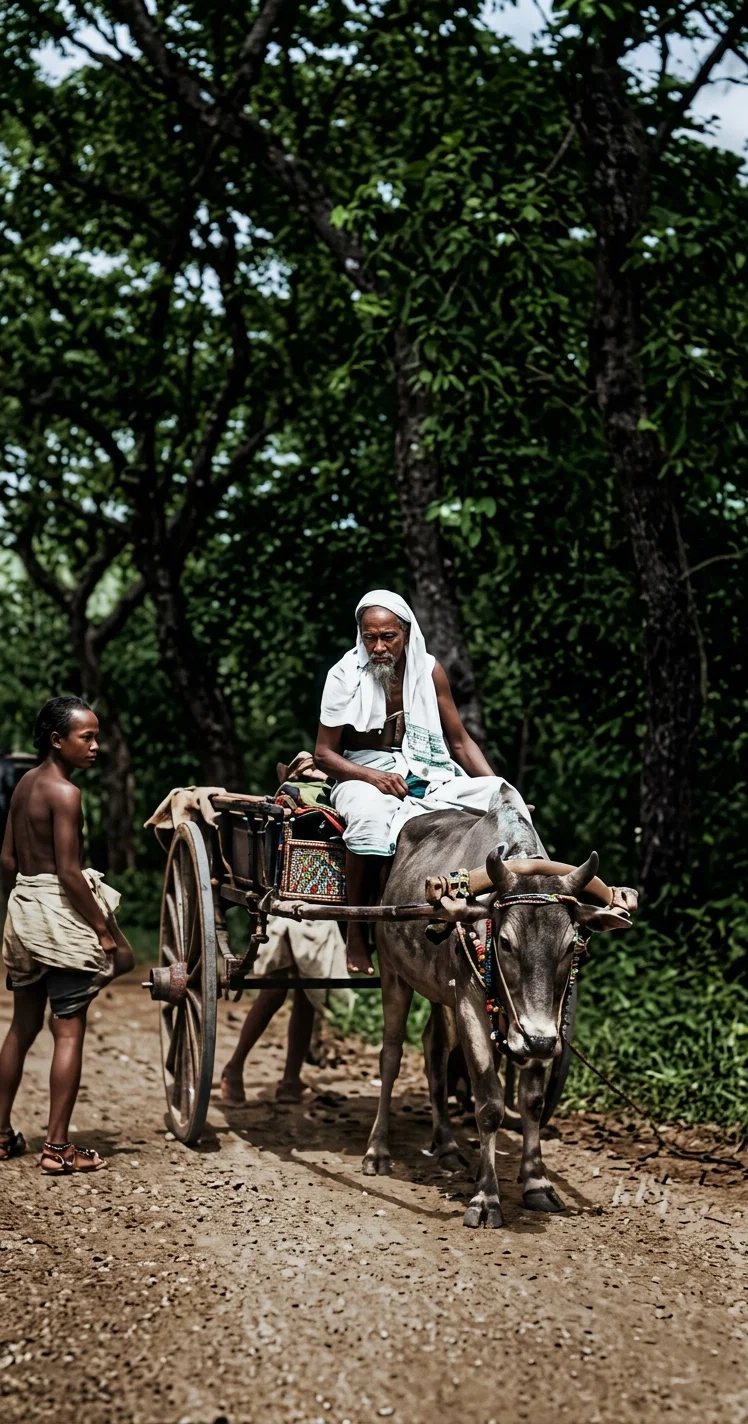
NATIVE TRAVELER IN KUALA LUMPUR
The scattered condition of the people generally, the mixture of races and religions, and the separation of the people from their native lands, all combine to make gospel work very difficult in that part of the world. The need of the saving, uplifting power of the gospel is as great there as in almost any other place on the earth. Yet even there it has been demonstrated that there is power in the gospel to work a marvelous regeneration in the character and lives of those who will give it a place in their minds and hearts.
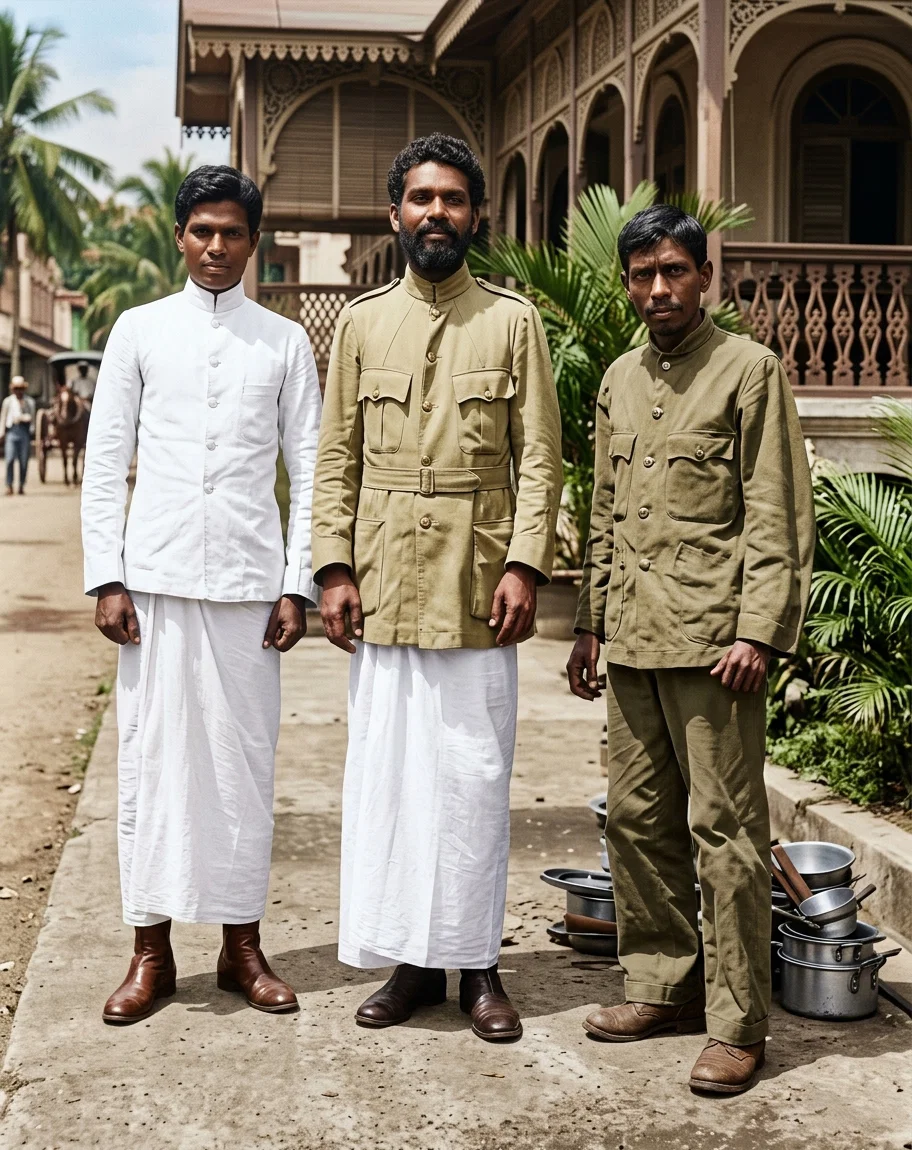
SOME TAMIL CONVERTS IN KUALA LUMPUR
As our missionaries see one after another lifted, by the grace of God, to a higher life, they are inspired to toil on. Let all who pray, remember them at the throne of grace.