BAPTISM IS A BURIAL

5%

Pacific Press Publishing Association · Mountain View, California · Sep 7, 1915

FromSigns of the Times, Vol. 42, No. 35.

Read the full edition
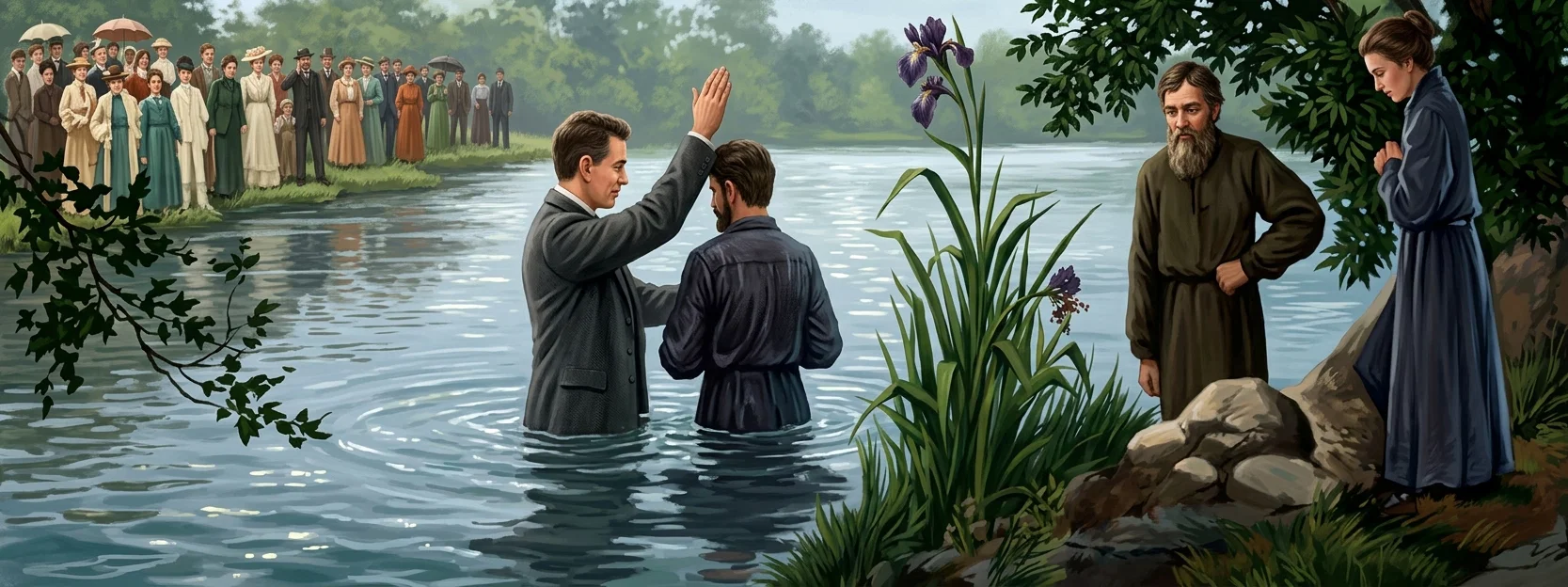
BAPTISM IS A BURIAL

Fitting Symbol of the Death to Sin — More than a Few Drops Required to Plant and to Bury
By H. G. THURSTON
It seems that many people must have overlooked the real significance of the sacred and important rite of baptism; for there are some modes in use among those desiring to follow Jesus which are not taught in the Scriptures and are entirely foreign to the real meaning of the ordinance. In Rom. 6:1-4, the mode of baptism is illustrated by a sad but most familiar occurrence among all nations.

“BURIED WITH HIM”

We read: “What shall we say then? Shall we continue in sin, that grace may abound? God forbid. How shall we, that are dead to sin, live any longer therein? Know ye not, that so many of us as were baptized into Jesus Christ were baptized into His death? Therefore we are buried with Him by baptism into death: that like as Christ was raised up from the dead by the glory of the Father, even so we also should walk in newness of life.” This language is plain. The burial service is here used to illustrate what baptism is, and what it means.
In burial, the dead are placed under the ground — entirely surrounded by earth. No one would think of placing a few small pinches of dust, or even a handful of earth, upon the head of a corpse, and declaring the burial finished. What funeral director would leave a dead body in the cemetery under such a condition, and report the body buried? And as we all conclude this is not at all proper in things earthly, how do we expect a similar course in things spiritual will please God?
As a fitting burial should be provided the dead, even so God has made known a most appropriate manner of burial to all who, hearing God's voice, and leaving their former service of sin, by faith accept Him as their portion, that they may forever be united with Him in this new life, and be heirs with Him of all His great possessions of wealth, and beauty, and life, and love. God Himself has used the burial service as a symbol of this great change and the proper manner of celebrating it.
For further and conclusive proof that water baptism, as taught in the divine Word, is by immersion only, we examine the records, and find that many people were baptized in the river Jordan (Mark 1:5), and that Christ was Himself baptized in Jordan (verse 9), and that after He was baptized in Jordan, He came up out of the water (verse 10).

WENT DOWN INTO THE WATER

Another plain record is given in Acts 8:38, 39. We are here told that “they went down both into the water, both Philip and the eunuch. . . . And when they were come up out of the water, the Spirit of the Lord caught away Philip,” and the eunuch “went on his way rejoicing.” This was truly a most remarkable occurrence. This Ethiopian eunuch learned of Jesus, accepted Him by faith, and obeyed God by being baptized in water. He arose from his water burial to a new life, and went on his way rejoicing. Philip was caught away by the Spirit, and was carried by divine transportation to another field of loving labor for his Master. Both had obeyed the divine instruction and were truly happy.
Had Philip followed some notion of his own in the method of baptism as “just as good as the right one,” who can believe he would have had that wonderful journey through the air, borne by the eternal Spirit! Philip had obeyed the great commission to teach and baptize (Matt. 28:19), and was blessed. He who was baptized in strict harmony with God's plan was also blessed.
Further testimony is found in John 3:23, where it is written that John was baptizing in a certain place because there was “much water.” Some modes of baptism certainly do not require “much water.”

PLANTED IN HIS LIKENESS

Another figure is used in the book of Romans, chapter six, to illustrate what baptism really is. We read in verse 5, “For if we have been planted together in the likeness of His death,” etc. It is truly possible to be “planted together” with Him “in the likeness of His death” in a river of water, after experiencing the death agonies when we died to sin; but where is the likeness when but a small glass of water is used?
No intelligent farmer, expecting a profitable crop, would take a basket of dust and proceed to sprinkle but a small pinch upon the kernels of corn in the field in planting time. It would be a hard matter to convince him that there would be much profitable likeness in that to real planting.
In the matter of baptism, strict, childlike obedience always brings a blessing, while substitutes do not always bring the longed for peace.

SUGGESTS CLEANSING

Water suggests cleansing, and is repeatedly used in the Scriptures as an emblem of cleansing from sin; and while no possible amount of water can take away sin, it would hardly be possible to cleanse a man's body with a few drops of water, or by a small amount poured upon his head; but he might be cleansed by having sufficient to surround his entire body. Even so, God has given us, in baptism, the complete submerging of the body in water, to represent most fittingly that every member of the body — the entire being — is involved in the mighty work of God in the man, so that now, soul and body and spirit — the man — are henceforth wholly the Lord's, the body itself being the temple of the Holy Ghost. 1 Cor. 6:19, 20.