An admirable character, to one without religion, if not merely a wonder of nature, is like a triumphal arch, standing a beautiful and yet solitary and useless monument of human achievement. Religion, from such a standpoint, seems but superficial, a temporary, false work, helpful in raising the structure, but as well torn down when it is finished.
To the nominally religious, instead, character may appear a bridge by which man can journey toward life with God, and He communicate with man, while religion, as a strong central pier, is set midstream for its support. The non-Christian feels that the burden of its building rests mainly upon man; but Christ’s follower, in so far as he accepts this view, trusts God as the chief architect and guarantor of its security.
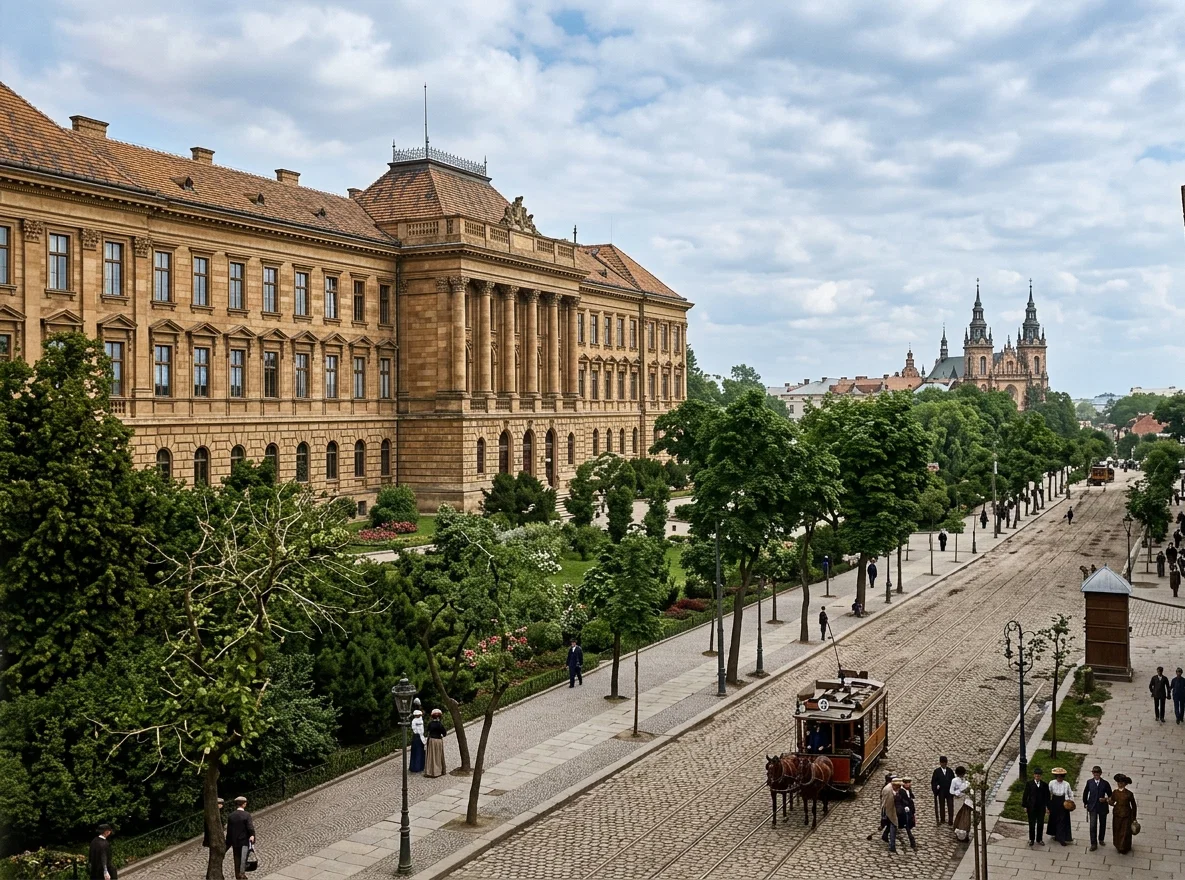
THE HOUSE OF PARLIAMENT IN LEMBERG
Yet while, to the Christian view, character, because it is the work of God, is not less beautiful and wonderful for its own sake, and on this account is only more secure as a way to eternal life, it is something different still; for rather than a creation of God in the past, or a means of reaching Him, it is a manifestation of His constant presence, a temple that He is building for His dwelling place. Though the temple be unfinished, though the owner may not fully cooperate, but defile it with idols, and keep it imperfect, the usefulness, strength, and beauty that are there are from the great Architect of all. Then for the Christian, religion is a system of the principles of the construction; worship, an acknowledgment of their perfection, and that of their Originator; life, their practice in cooperation with Him. And when finished, this work of God does not stand alone nor solely for either utility or ornament. It is both a part and a support of the greater temple, His church—a chapel, as it were, in the great cathedral of His universe.