A Great Alluvial Plain—Saluted with Bombs—An Itinerating Physician and His Success
By ARTHUR G. DANIELLS
THE Punjab province is one of the greatest in all India. It is one great alluvial plain; and since the British government has completed a system of irrigation for the province, this plain has been turned into one of the most productive spots on the earth.
The Punjabis are a progressive people. A report made public by a large, influential committee while I was in that part of the country, takes strong ground for the education of women, the removal of the purdah, the destruction of the caste system, etc. It is in the Punjab that the great mass movements toward Christianity are now taking place.
EXTENSIVE AND PROMISING FIELD
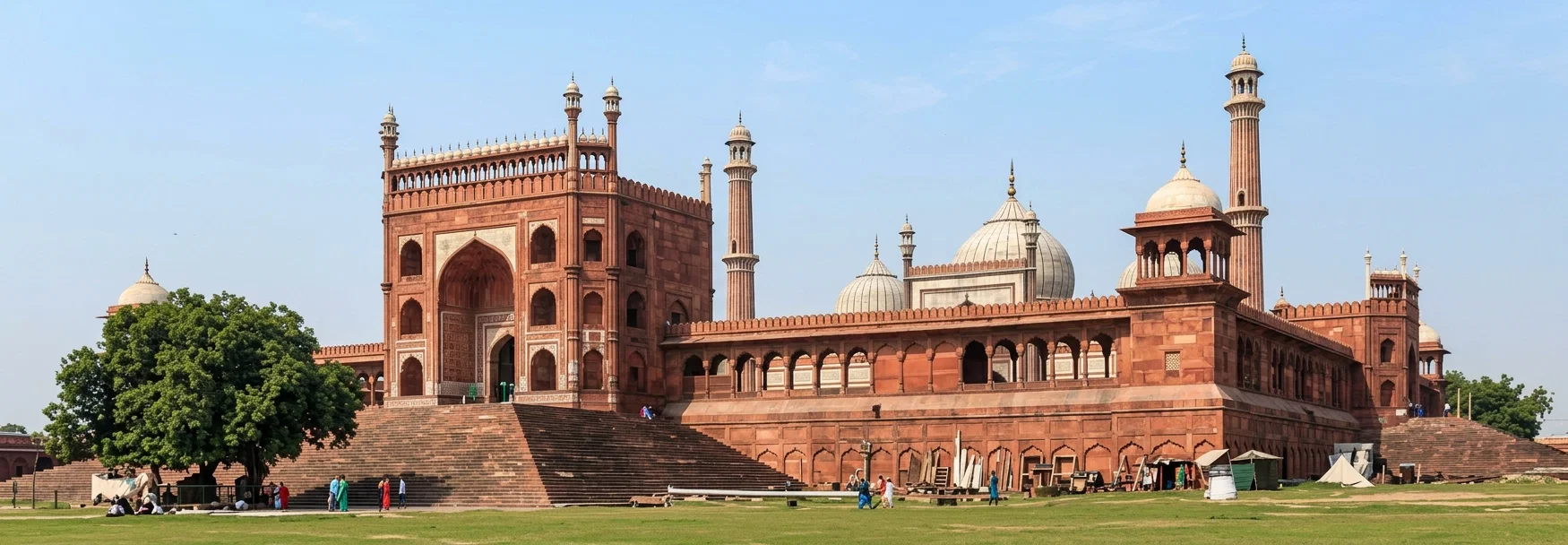
The Northwest Indian Mission was set off at the biennial conference held in Calcutta, December 18-28, 1914. It embraces the Punjab province and its states, the Northwest Frontier province, Kashmir, and Sind. Occupying the extreme northwest corner of the Indian Empire, it extends from the Himalayas southward along the eastern boundaries of Afghanistan and Baluchistan to the Arabian Sea. The population is given at 33,000,000, divided as follows: Punjab and its states, 24,000,000; Northwest Frontier province, 2,000,000; Kashmir, 2,000,000; Sind, 4,000,000. Delhi, the capital of the empire, and Simla, the summer headquarters of the government, both lie within the boundaries of this mission. The scope of the territory, the number of people, and the variety of races all combine to give almost boundless opportunities for missionary endeavor. The conditions in the Punjab make that part of India a very promising field.
The circumstances connected with our entering the Punjab are most interesting and encouraging. These were related by Pastor Wellman at the Calcutta conference as follows:
“In the fall of 1913, while traveling down to Lucknow from Simla, I met on the train an Indian preacher, Mr. S. Samuel, of the Plymouth Brethren Mission of the Gajranwala district of the Punjab. We became acquainted, and for the eight hours we traveled together, a constant conversation on the points of our message was continued. When we parted, Mr. Samuel asked for literature, and pressed me to visit his district and tell his people the views I had explained to him.
“In December, I made a brief visit to the Punjab, and spent a part of two days in these villages. I was impressed by what I found here, and felt that we might make a beginning in this most promising province. Returning to Lucknow, I explained the situation to Professor Salisbury, and it was decided that we would visit these people as soon as we could find the time to do so. In March, 1914, we carried out our plan, spending two full days in the villages, visiting several places. We were deeply impressed that we should not delay to enter this field that seemed to have opened so providentially.
“Brother Frank Loasby was immediately called to this field, and with Sister Loasby, located in Lahore in May, 1914. In October, Dr. L. V. Mann and his family joined Brother Loasby, and together these brethren have been working among the villages the best they could under the circumstances.”
As Professor Salisbury was anxious that I should visit the Punjab, we went from Simla to Lahore, where we met Dr. Mann and Brother Loasby. From Lahore we went into the country to spend a few days among the villages. Our first stop was at Dhaban Sing, forty-five miles distant, where we482arrived at 9:30 P. M. Here we were met by Brother Samuel, who had first invited us to this district. With him were fifteen or twenty men who had gathered from a number of surrounding villages to welcome us.
SALUTED WITH BOMBS
They surely gave us a rousing reception. According to native custom, twenty or more homemade bombs were exploded at intervals of about one minute, as a salute. We were then placed in a two-wheeled vehicle, and taken some distance from the station. To do us full honor, the horse was taken from the cart, and four men drew us back to the station. This was a new kind of reception to me, one I would have objected to under ordinary circumstances; but the brethren acquainted with Indian ways assured me that the better course would be to keep still and let our hosts have their way.
I must say that my heart was touched by the simple, whole-hearted earnestness of these people, who wanted to tell us how glad they were to have us come to see them. I felt deeply impressed that God would hold us responsible for the influence we exerted over them.
The reception proceedings ended with a light repast of rice and fruit, which they had prepared for us. When all was over, and we were allowed to retire, it was midnight, and we were a weary lot.
We were up early the next morning for a strenuous day's work. When breakfast was over, we were requested to meet a company of about fifty who had gathered in an open lot near the station for a religious service. Native hymns were sung, a Scripture lesson was read, and prayer was offered. Then Brother Samuel read an address to us from those who had gathered to meet us.
In responding to their address, Professor Salisbury and I explained to them, the best we could, the meaning of our message, the object of our missionary enterprises, and our methods of work. We also told them we believed the providence of the Lord had brought us to them in much the way it took Paul to Macedonia, and that we sincerely hoped that a great blessing would come to us all by our association together.
The meeting having ended, Professor Salisbury and I started off with Dr. Mann and Brother Loasby to visit some of the villages near. In order to transport the dispensary and stereopticon outfits, we were obliged to get some of the men to draw them in a one-horse wagon we secured. After going a mile, we came to a place where the vehicle could be taken no farther. Then the men carried the boxes another mile on their heads.
The doctor set up his dispensary outfit on an open plot of ground. Quicker than one would think it possible, the whole village seemed to have been notified, and the people with ailments of all sorts began to flock around the dispensary. This was a revelation to me of the terrible condition and needs of these villagers, and the untold amount of good a medical missionary can do for them. The doctor seemed quite at home, and by his every act showed his love and tender sympathy for these unfortunate, suffering people.
Thus we tramped about until it was too dark to do more, and then found our way back to the railway station, where we were able to sleep for the night.
THE WHOLE VILLAGE PROFESSES CHRISTIANITY
Early the next morning, we left for another large center thirty or forty miles south. The particular village we wanted to visit was a Christian village in which there was not living one professed heathen. This is a rare thing to find in India. Brother Samuel, with a large circle of relatives, lives in this village. We found Mrs. Samuel to be more than an ordinary Indian woman. We were especially impressed with the superiority of his uncle and aunt. They had a good house, a nice little farm, and well kept cattle. They received us with manifestations of Christian love. Tears were in the old man's eyes as we bade them good-by. We believe that these people are not far from the kingdom.
What may ultimately be found by weeks of visiting among these villages, no one can tell; but we do feel that “a great door and effectual” has been opened to us in the Punjab, and that no time should be lost in prosecuting the work. Dr. Mann and Brother Loasby are thoroughly interested in this field and the work they find to do. They are seriously crippled, however, by the conditions in which they are placed. Their homes are from thirty to fifty miles from these villages. There is not a dwelling nearer in which they can place their families. But they are planning to erect buildings in the district as soon as possible.
SELECTING HEADQUARTERS
They showed us the town, on the railway line, which they believe will make a great center from which to work. In every direction are to be seen villages in which thousands of people are living. It is proposed to erect a hospital in this center, from which the doctor and the nurses can go out to the villages, and to which a certain class of the seriously ill can be brought. There is not a hospital, nor a dispensary, nor a doctor, nearer than Lahore, forty miles distant. We shall have an advantageous position there. While Dr. Mann carries on the medical work, Brother Loasby will push forward with the evangelistic work. These brethren have a clear vision regarding what is needed and how to proceed. It did my heart good to see their faces turned from the city to that forest of villages.
BIG FIELD FOR MEDICAL MISSIONARIES
Now is the time for our movement to be pushed in the Punjab. What a work could be done if the Mann-Loasby combination were multiplied a hundredfold? Here indeed is a field for medical missionaries. May the Saviour of men lay the burden of this work on the hearts of those who will count it a joy to go to these suffering, hopeless, groping millions with the light of life.
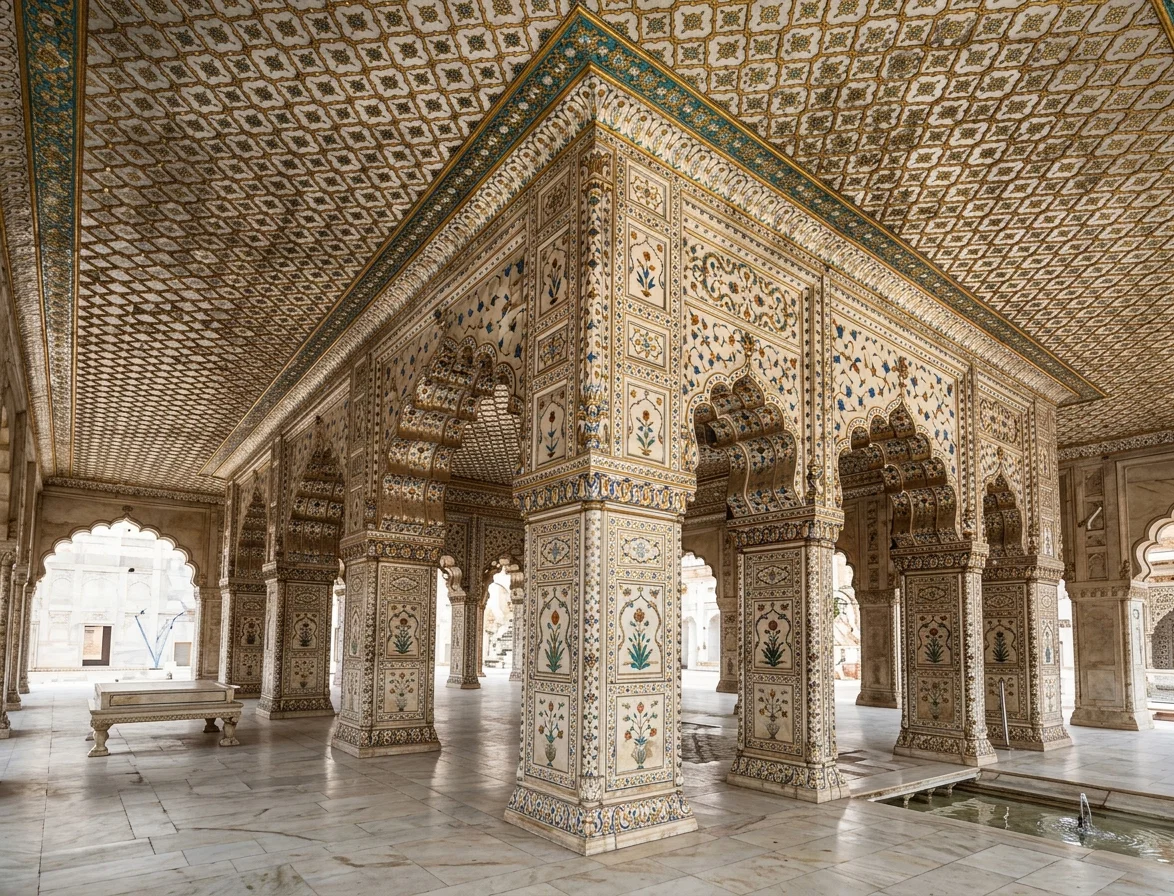
INTERIOR VIEW OF “PRIVATE HALL OF AUDIENCE,” DELHI, INDIA