A TIME OF TROUBLE

4%

Pacific Press Publishing Association · Mountain View, California · Apr 6, 1915

FromSigns of the Times, Vol. 42, No. 14.

Read the full edition

A TIME OF TROUBLE

Such a Time Never Before Since the Existence of Nations—Some Things Foretold by the Master in Matthew 24
By Calvin P. Bollman
This is the second of some five or six articles by Elder Bollman on the Saviour’s prophecy in the twenty-fourth chapter of Matthew. Each article is independent, and may be read with profit by itself. Next week he will consider the forces that “shortened” the papal persecutions of the Middle Ages.
Editor.
The first part of the twenty-fourth chapter of Matthew, as the reader will readily agree, refers largely to the destruction of Jerusalem. Passing that by, therefore, as something long ago fulfilled, let us see if we can learn how much of our Lord’s great prophecy has met its fulfillment since the year A. D. 70, when the city of Jerusalem fell before the fierce assaults of the Romans, and the Jews were scattered among all nations.
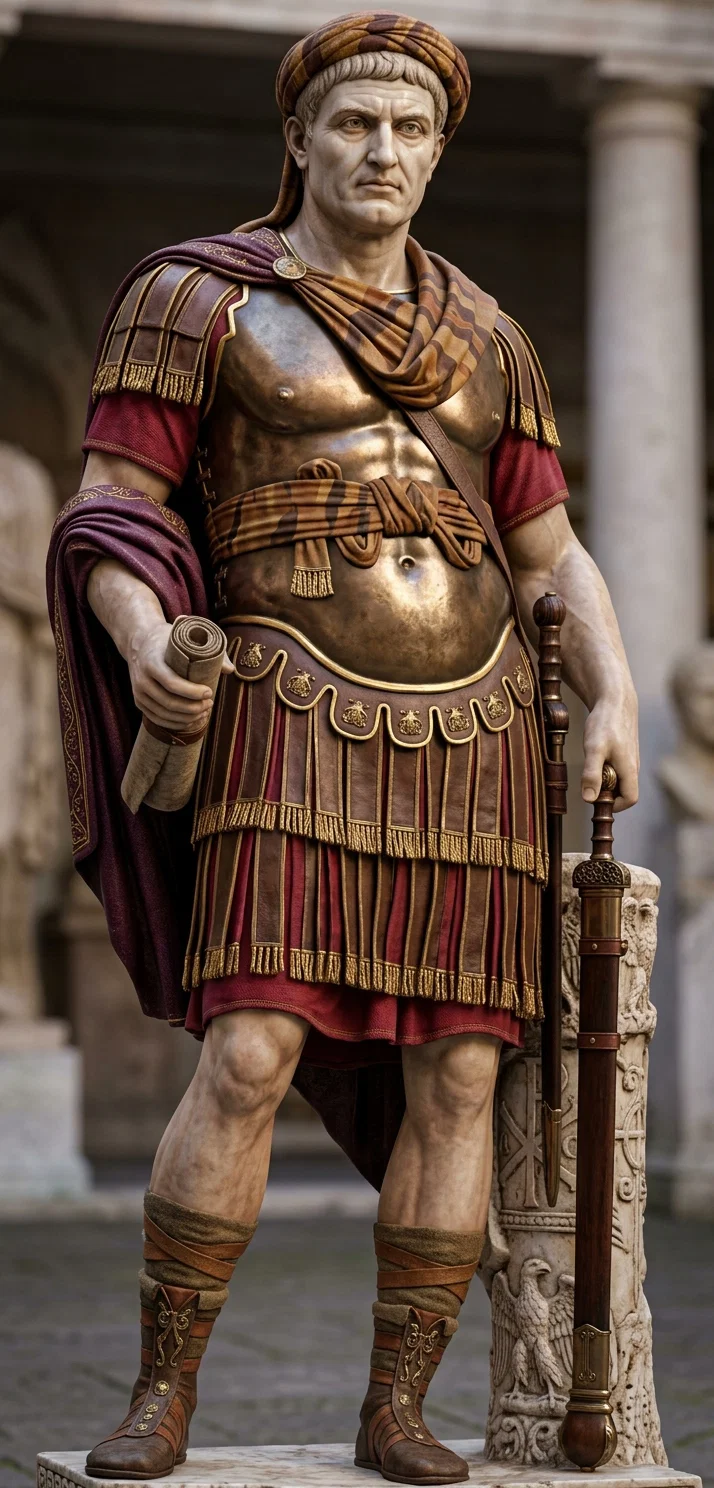
THE EMPEROR CONSTANTINE

The Time of Tribulation

Terrible were the scenes through which the Jews passed during the siege of their city; and still more terrible, if possible, were to be the scenes and trials that would come to Christian believers during the long centuries to which our Lord referred when He said:
“For then shall be great tribulation, such as was not since the beginning of the world to this time, no, nor ever shall be. And except those days should be shortened, there should no flesh be saved: but for the elect’s sake those days shall be shortened.” Matt. 24:21, 22.
Turning, therefore, from the scenes of the Jewish age, which in a sense overlapped the Christian dispensation by seventy years, or until by their final dispersion the Jews ceased to have a land and a national history of their own, we come at once to a study of some of the leading events of the present era, especially as they relate to the growth and experiences of the Christian church.

The Four Periods of the Christian Era

Ecclesiastical historians agree practically in dividing the time that has elapsed since the beginning of the Christian era into four periods; the first from the birth of Christ to the time of Constantine, early in the fourth century; the second from Constantine to Charlemagne, in the latter part of the eighth and the early part of the ninth century; the third from Charlemagne to Luther, early in the sixteenth century; and the fourth from Luther to the present time.

Persecuted by Jews and Pagans

During that part of the first period that lay between A. D. 34 and A. D. 70, the church of Christ suffered more or less persecution at the hands, first of the Jews, and then of the pagans instigated by the Jews. But soon the pagans began to persecute on their own account. Especially was this the case after the destruction of Jerusalem, the persecutions under Nero and Domitian both falling within the latter half of the first century A. D.
The second century was marked by considerable persecution, that under Marcus Aurelius, a little after the middle of the century, being perhaps the most severe. It was at this time that Justin Martyr and Polycarp suffered death.
During the early part of the third century, the Christians were favored rather than otherwise by several of the emperors. Indeed, during this time some Christians held important offices, both civil and military, under the Roman government. But about the middle of this century came the terrible persecution under Decius. Gallus, who succeeded Decius, continued the persecution for some time. The latter part of this century was, however, a time of comparative rest for the church.

A Church and State Union

But the early years of the fourth century were marked by fierce persecution under Diocletian and his son-in-law Maximianus. Then followed the reign of Constantine, and the reign of his three sons, Constantine II, Constantius, and Constans. During these years there was no persecution. There was, however, that which during the next two centuries developed into something a great deal worse; namely, the beginnings of a union of church and state, which resulted in the year A. D. 538, in establishing the bishop of Rome as “head of all the churches,” and a few years later, “corrector of heretics.” It was this that ushered in “the time of trouble” foretold by the Saviour in Matt. 24:21, 22: “For then shall be great tribulation, such as was not since the beginning of the world to this time, no, nor ever shall be. And except those days should be shortened, there should no flesh be saved: but for the elect’s sake those days shall be shortened.” This same period of time is mentioned in Dan. 7:25 as “a time and times and the dividing of time”; in Rev. 11:2, 3 as “fortyand two months,” and “a thousand two hundred and threescore days”; in Rev. 12:14 as “a time, and times, and half a time”; and again in Rev. 13:5 as “forty and two months.” It will be observed that this time—for it is a single definite period expressed in different terms—is a part of several lines of symbolic prophecy.
“Times,” “months,” and “days,” being introduced among symbols, must themselves be symbols. A “time” is merely another expression meaning a year. According to Dan. 4:23, Nebuchadnezzar was to be insane, and to have his dwelling with the beasts of the field, until “seven times” should pass over him. Josephus tells us (“Antiquities of the Jews,” book 10, chapter 10, last paragraph) that the seven times were seven years. Moreover, in the margin of Dan. 11:13 we have this reading: “At the end of times, even years.” Therefore “times” two, “time” one, and “the dividing of time,” or a “half time,” would be three and one half years, or “forty and two months.” “Forty and two months,” thirty days to the month, would be just “a thousand two hundred and threescore days.”

Prophetic Day a Literal Year

How much literal time is represented by 1,260 symbolic days, we may judge from Num. 14:34 and Eze. 4:6. These texts both speak of “a day for a year.” Acting upon this hint, commentators have agreed that these symbols mean literally 1,260 years; and beginning A. D. 538, they must end 1798.
It is a matter of considerable interest to note that both at the beginning of this period and at its close there were two events, separated in each case by the space of five years. At the beginning of the 1,260 years was a letter, or as it is generally termed, a “decree,” by Justinian, in the year 533, styling the bishop of Rome “head of all the churches.” Five years later—that is, in 538—came a crushing defeat of the eastern Goths before the city of Rome, which exerted a powerful and far-reaching influence in making effective the decree of five years before.

Declared the Papacy Abolished

In like manner, the closing of the period was similarly marked by a decree, followed five years later by a military campaign giving practical effect to the decree. In 1793, the states-general of France abolished the Roman Catholic worship, and established in its stead the worship of Reason. Five years later—namely, in 1798—a French army under General Berthier entered Rome, declared the papacy abolished, and made the pope himself a prisoner, carrying him to France, where he died in exile.
It is true that this is not the only instance in which a pope was forcibly deposed from his office, but it is the only instance in which this was done in an effort to abolish and utterly destroy the Roman Catholic civil and ecclesiastical system. It is therefore very justly cited as the close of the “thousand two hundred and threescore days,” or years, during which that power dominated the Christian world, persecuting and destroying all who dared in any way oppose the pretensions of the bishop of Rome to that universal headship ascribed to him by Justinian in 533, and made effective by the practical overthrow of the only political and military power which at that time was at all disposed to resist the papal claims; namely, the Ostrogoths, the last of the Arian kingdoms to fall before the arms of a Catholic emperor.