The Helpless May Have Help—“Blessed Are the Poor in Spirit”
The Disease of Sin May Be Cured
By Rufus A. Underwood
This is the first of several short articles by Elder Underwood, setting forth the fundamentals of the gospel. The articles are based on the first part of the fifth chapter of Matthew. Each one may be profitably read alone; but persons who read them all, will have the far richer feast.
EDITOR.
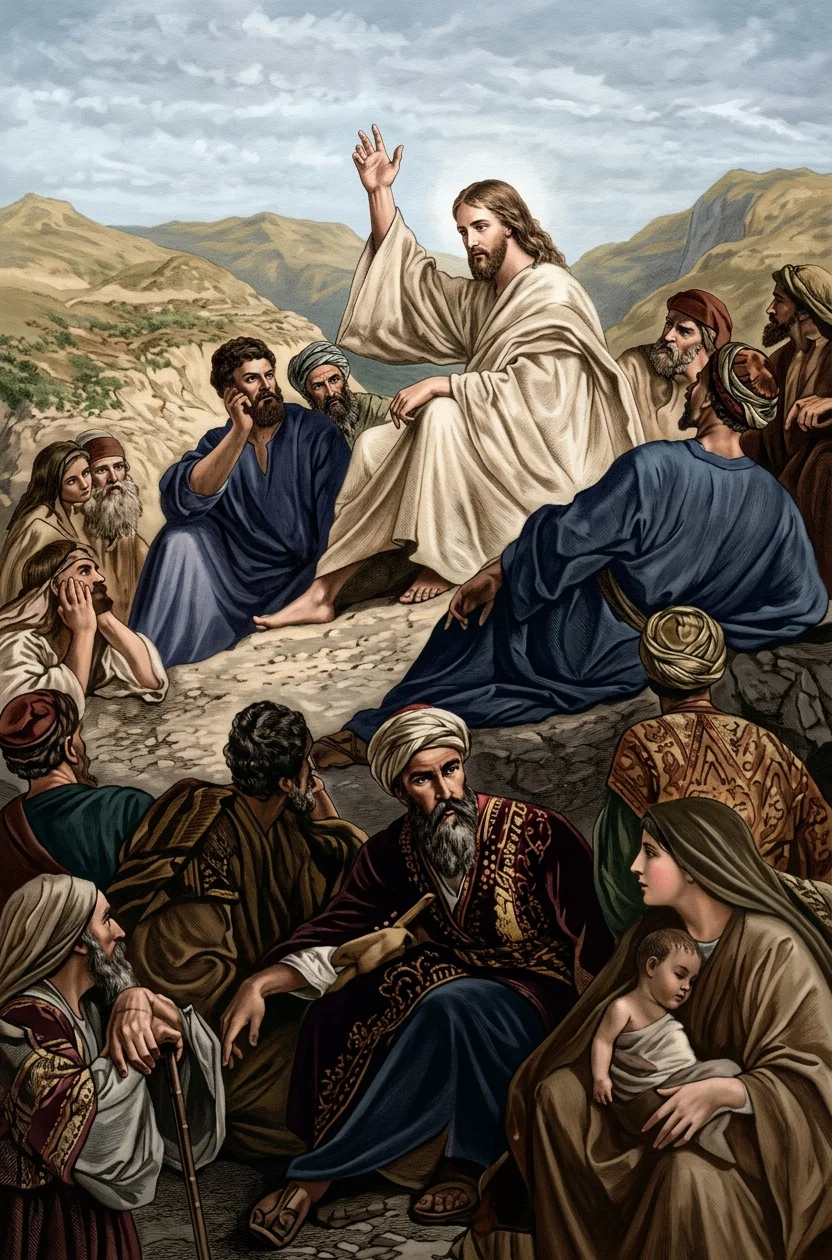
A STUDY of Christ's sermon upon the mount shows it to be the greatest exposition of gospel truths of all time, and applicable to all people. It is the purpose of the writer to notice, in a few brief articles, some of the most precious gospel truths the Bible contains, which are clearly set forth in the opening part of the Sermon on the Mount.
“And seeing the multitudes, He went up into a mountain: and when He was set, His disciples came unto Him: and He opened His mouth, and taught them.” In this opening statement, or Matthew's preface to Christ's sermon, we have a glimpse of Christ as He taught, not the multitudes that had followed Him for healing only, but the vast multitudes of the unborn millions of all time in a sin-cursed world. His precious words, freighted with hope, come ringing down even to our day.
Christ Greets the Whole Human Family
Another has said: “The beatitudes are Christ's greeting to the whole human family. He seems to have forgotten for a moment that He is in the world and not in heaven, and He uses the familiar salutation of the world of light.”
Christ, the world's greatest teacher and preacher, presents in this, His opening sermon to the disciples, the essential steps that must be taken on the part of a lost soul to be transformed from sin to salvation. He begins with the A B C of the gospel, and shows the successive steps that must be taken if the soul of man attains to the high excellence of character essential to pass from this world into the kingdom of glory. The simplicity and science of the process in changing the character of man, filled with darkness and selfishness, into that of light, love, and righteousness, is worthy of the best attention that man can give.
Man's Need of Salvation
“Seeing the multitudes, . . . He opened His mouth, and taught them, saying, Blessed are the poor in spirit: for theirs is the kingdom of heaven.” This promise brings to the lost soul a gleam of hope,—to all who have felt their need of a power outside of themselves to bring deliverance, and who are ready to accept the proffered help.
The contrast is made between those who say, “I am rich, and increased with goods, and have need of nothing,” and the “poor in spirit.” The first class is well represented by the Pharisee who could stand and pray to himself, “I thank God that I am not like other men,” and boast of his deeds; while the poor publican, represented by those who are “poor in spirit,” could smite his breast, and ask God to be merciful to him a sinner.
“He seems to have forgotten for a moment that He is in the world and not in heaven, and He uses the familiar salutation of the world of light.”
The publican felt his poverty and need. To all such, heaven stands ready to respond. There is no promise to the self-righteous, who feel that their superior excellence is able to save them. None of this class are permitted to enter into the audience chamber of Christ, where the inexhaustible riches and wisdom of the great Teacher are dispensed.
It was at the entrance door of Christ's kingdom of grace that Saul, a poor, lost man, saw himself bound limb to limb, hand to hand, and face to face to the putrid body of sin, with no power in himself to deliver his soul. In this condition he cries out, “O wretched man that I am! who shall deliver me from this body of death?” Saul of Tarsus found that he was sold a slave under sin, and doomed to eternal death unless he could find a power that could deliver him. “Ye have sold yourselves for naught,” are the words of inspiration.
Can the Leopard Change?
Thus it is, dear reader, with every child of Adam. No human effort alone is able to cure the disease of sin. The question involved in the change of life in a regenerated soul is raised by the prophet in these words: “Can the Ethiopian change his skin, or the leopard his spots? then may ye also do good, that are accustomed to do evil.” Jer. 13: 23. No, this cannot be done; but the poor sinner who feels his need and calls for the great Physician, has the promise that there is nothing too hard for Him to undertake (Jer. 32: 17), and the assurance is given that “ye shall be redeemed without money,” and “theirs is the kingdom of heaven.”