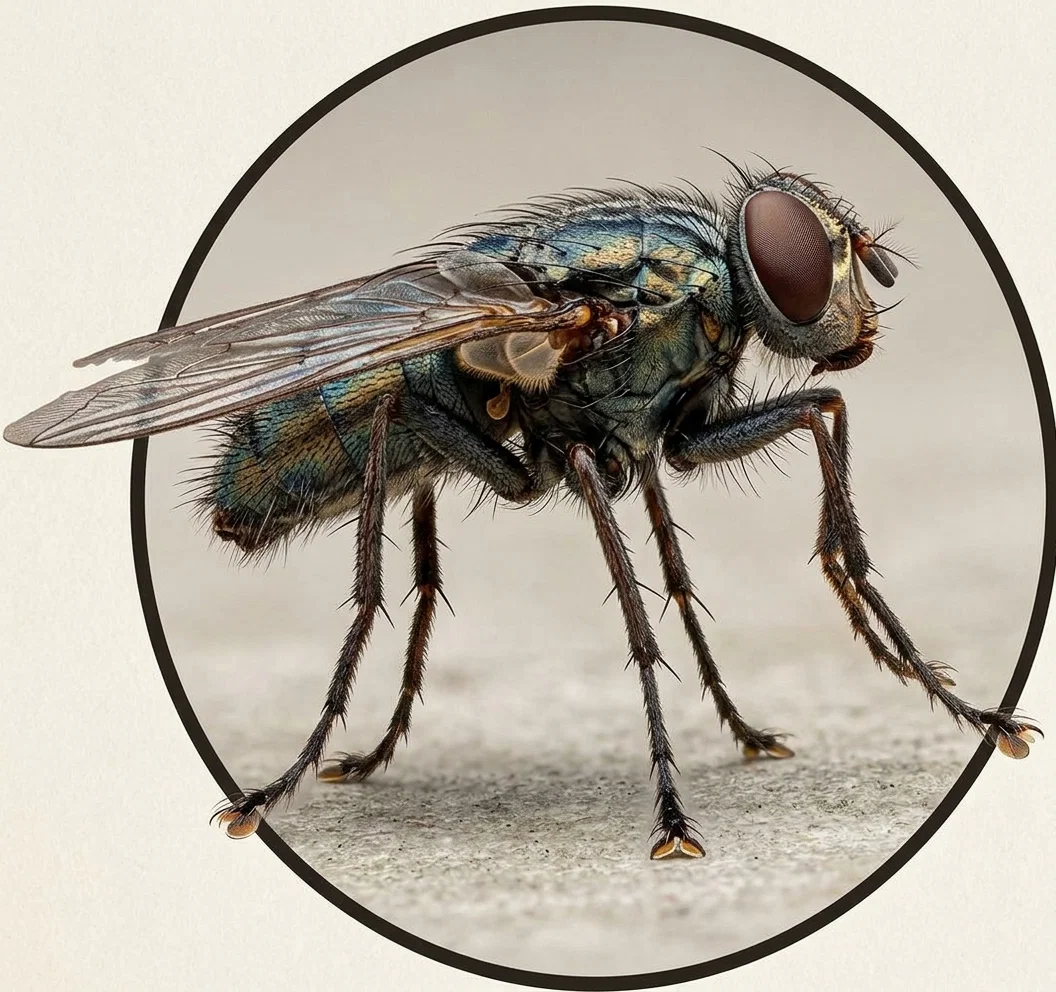
The Dirtiest Creature of Its Size—How It Spreads Disease and Death: How to Get Rid of It
By D. H. Kress, M. D.
During the Civil War, four men died of germ diseases to every one killed by the bullet. During the first five months of the Spanish-American War, there were 158,000 admissions to the hospitals, and thirteen men died to one man killed by the enemy.
It Was Death to Go to Panama
A few years ago, conditions were such at Panama that when a man from the north went there to work, friends and relatives bade him an affectionate farewell. They did not expect his return. Death was almost a certainty.
Throughout the Middle Ages, whole nations were stricken with epidemics of disease, and half of the population were frequently laid low. Cholera, yellow fever, bubonic plague, smallpox, and other messengers of death, waged a relentless warfare upon the race.
To-day these things are possible only where ignorance and superstition reign. Unable at that time to discover the causes of these epidemics, the people resorted to fasting and prayer. Their prayers have been heard, and these epidemics have been stayed—not miraculously, but through an increase of knowledge. The people had been “destroyed for lack of knowledge.”
The Fly, the Flea, and the Rat Together
The bubonic plague, it has since been discovered, is due to a germ that is spread through the medium of the flea, often using the rat as a vehicle. The relentless warfare against the rat has aided in suppressing this epidemic.
Yellow fever, it was found, was communicated by means of the mosquito. By exterminating the mosquito, yellow fever has practically been wiped out.
The mosquito and the flea are not our most deadly enemies, by any means. It is probable that the ordinary house fly is responsible for a greater number of deaths than even the mosquito. The deaths during the Civil and the Spanish-American War were probably chiefly due to the fly. It indirectly causes most of the deaths in infancy, and many of those in adult life. During the summer months especially, thousands of little innocents will fall victims to diseases spread by the fly.
For its size, the fly is the dirtiest creature that exists. It is bred in filth, it lives in filth, and it feeds on filth. In fact, it cannot exist without filth. Wherever filth is, the fly is. Where filth is not, the fly is seldom found.
Where the Fly Comes From
The fly comes from the barnyard, from the cesspool, or from a feed on tubercular sputum. Unceremoniously it enters our homes without even wiping its feet. Other visitors prefer the sitting room or the parlor. It prefers to remain in the kitchen, the pantry, or the dining room. There it may plunge into the dish of milk, or alight on the butter or other foods.
It may carry anywhere from fifty thousand to fifty million bacteria on its legs and back. Germs of disease are in this way planted in these foods, and under favorable conditions they multiply with enormous and almost unbelievable rapidity. In some homes, the milk, containing millions instead of a few bacteria, is fed to the innocent children. A child sickens and dies. Its parents wonder why. Lack of knowledge is the cause of death.
A few seeds of tuberculosis or typhoid planted on a piece of meat, in a milk pail, or in other suitable soil, in a few short hours have produced a crop of their kind. The food is served to the family. Then we marvel that one fourth of our young men and women die of tuberculosis, and that typhoid fever so mysteriously enters our homes. The fly is undoubtedly a chief agency through which germs of disease are conveyed from places of filth to man, and from man to man.
How to Get Rid of the Fly
To keep the fly out of the house, it is merely necessary to screen the windows and the doors, and to make a liberal use of fly paper. But it is possible for a fly to carry infectious diseases from one person to another on the outside. Epidemics of sore eyes are frequently spread by the fly. It seems to have a special preference for this delicate member, and may carry infection from one child to many others. Even syphilis, that dreadful malady, may be conveyed from man to man in this way. The aim should be not merely to shut flies out of our homes, but to get rid of them. This cannot be accomplished by the ordinary means we have thus far employed. This is evident.
They Did It at Panama
At Panama, people could not dispose of the mosquito by the ordinary means they had employed up to six or seven years ago. While they were killing a dozen mosquitoes, they were at the same time cultivating in breeding beds a million to take their place. There is truth in the saying, “Kill one mosquito, and a dozen will come to the funeral.” Panama and Cuba did away with mosquitoes by doing away with their breeding places. The mosquito needs warm, stagnant water, in which there is dead organic matter, for the purpose of propagation.
Clean Premises Do the Work
Flies may be avoided in the same manner. It is not so difficult a problem, in fact, to get rid of them as it is to get rid of mosquitoes. Flies are cultivated chiefly in manure heaps, around stables, in garbage tins, and in outhouses. A proper disposal of manure and garbage will go far toward disposing of the fly. Clean premises and proper sanitary conditions will eliminate it. Garbage cans should be kept covered or screened, to prevent breeding. So long as the kitchen is kept scrupulously clean, cleaner than the outside of the house, the flies naturally prefer to remain on the outside. But when meats are cooked, and animal fats are freely used in frying foods, flies are attracted. Persons who subsist upon grains, breads, fruits, and nuts chiefly, find it less difficult to keep flies out of their dwellings.